




Bronze Bust Art
When you search for bronze bust art, you find sculptural portraits cast in metal, carved from stone, or moulded in clay from the nineteenth and early twentieth centuries.
Bronze Bust Art
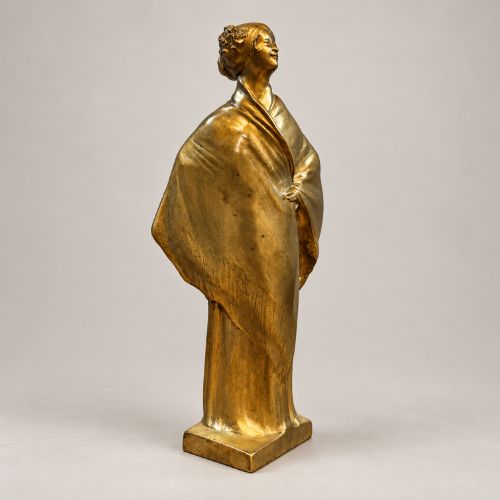
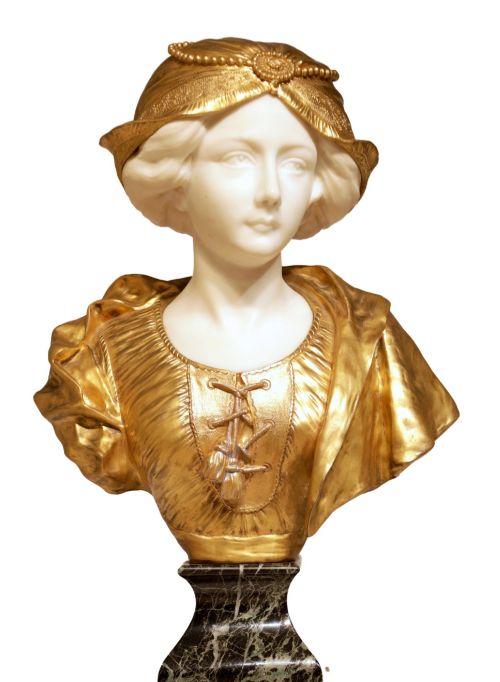
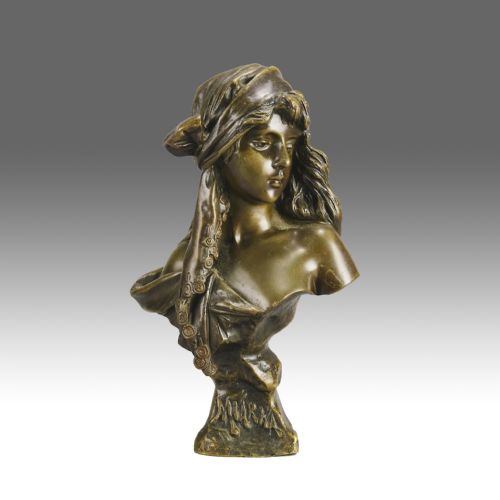
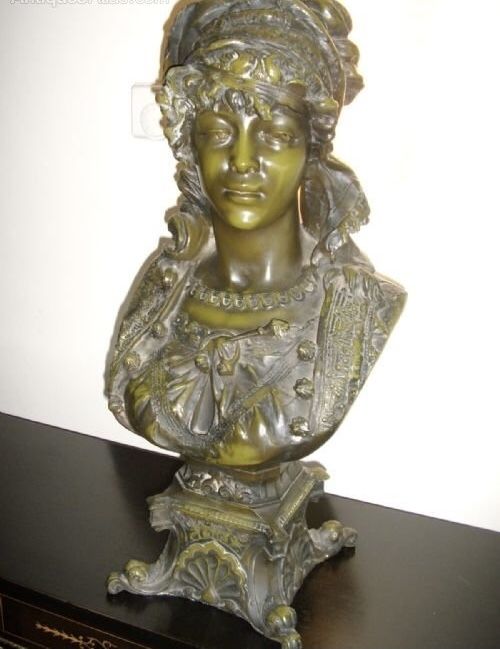
Bronze bust art comprises portrait sculptures and allegorical figures created across the nineteenth and early twentieth centuries, spanning periods from the Victorian era through Art Nouveau and Art Deco. These works capture specific individuals, literary heroines, and idealized types, often mounted on integrated socles or distinct stone bases.
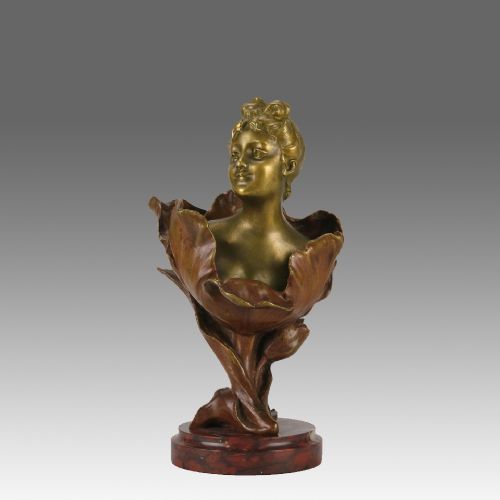
You will most frequently encounter French Art Nouveau examples on this page, particularly female figures cast in bronze or patinated metal bearing signatures like Emmanuel Villanis. Alongside these foundry casts appear terracotta studies, plaster models, and mixed media pieces combining carved marble with metal elements.
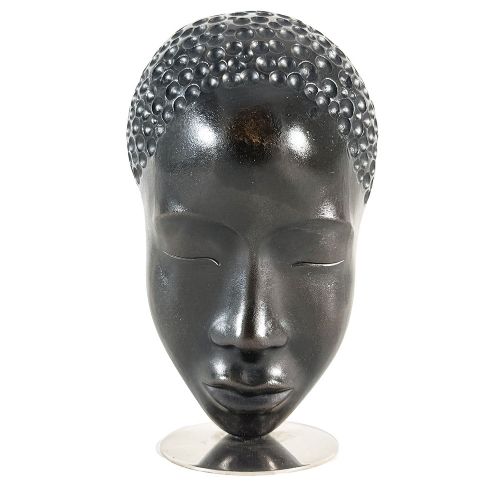
The selections range from miniature cabinet sculptures to large floor-standing advertising mannequins and portrait studies of historical figures. Makers from Belgium, France, and Austria contribute to the diverse mix of classical allegories and tribal forms represented.
How they were made
Foundries produced the metal works using traditional casting methods, capturing fine details in the hair, drapery, and facial expressions before applying chemical patination to colour the surface. Gilt bronze and ormolu variants received thin layers of gold or gold-coloured brass finishes.
Alternative materials like terracotta and plaster were hand-moulded or cast from clay originals, sometimes receiving paint layers or surface treatments to mimic metal. Sculptors also carved white and portoro marble directly, mounting the stone components onto contrasting bases.
Bronze Bust Art Retail Price Guide 2026
Typical asking prices for bronze bust art among the pieces listed under this phrase on Sellingantiques today, from the lower quarter to the upper quarter. They describe what is for sale here now, not the wider market.
Listings feature works from the nineteenth and twentieth centuries, spanning Victorian, Art Nouveau, and Art Deco styles.
What varies in quality
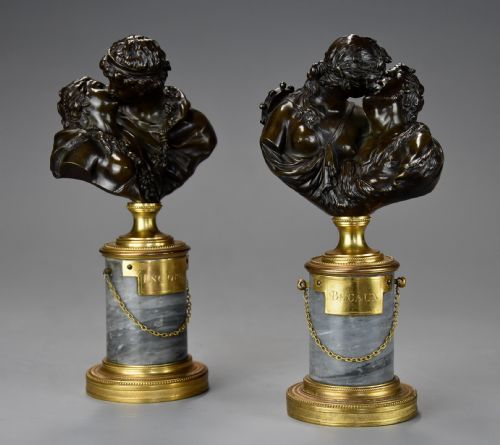
Material combination and base selection also define the standing of a piece. Works set upon heavy multi-coloured marble plinths or combining carved stone with gilt bronze demonstrate greater ambition than simple plaster or painted alternatives.
Hagenauer·Affortunato Gory·Emmanuel Villanis·Henri Godet·Georges-Charles Coudray·George Minne·Hans Müller·Georges Van Der Straeten·Henri Plé·Goldscheider
The Bronze Bust Art Glossary
- Patinated bronze
- A metal sculpture treated with chemical solutions to produce a specific surface colour or dark brown tone. This finish protects the alloy and enhances the modelling of the portrait.
- Ornaments and bases
- Portoro marble. A distinctive black Italian marble featuring bold golden-yellow veins. Sculptors frequently utilised this striking stone for the architectural plinths supporting bronze busts.
- Spelter
- A zinc alloy commonly utilised as a less expensive alternative to bronze during the nineteenth century. Figures cast in this material often received a bronze-coloured paint finish.
- Socle
- A short plinth or pedestal supporting a bust. Many portrait sculptures integrate this base directly into the cast metal form.
- Terracotta
- Fired unglazed clay possessing a reddish-brown earthy tone. Artists used this medium for direct sculptural modelling before potential translation into metal.
Bronze Bust Art: Frequently Asked Questions
How do I clean a bronze bust?
Dust the surface gently with a soft, dry brush to prevent dirt accumulation in the recessed details of the hair and drapery.
Avoid using water, soap, or chemical polishes, as these substances can strip away the historical patinated finish.
What is the difference between bronze and spelter?
Bronze is a durable copper and tin alloy that accepts fine foundry detail and holds a rich patination over centuries.
Spelter is a softer, zinc-based metal utilised for mass production, which feels lighter and often shows grey metal beneath worn paint.
Where were most of these busts made?
The majority of these sculptural works originated in European workshops and foundries, particularly in France, Belgium, and Austria.
Parisian foundries dominated the production of Art Nouveau portrait busts during the late nineteenth and early twentieth centuries.
How do I identify the subject of a bust?
Many nineteenth-century pieces bear inscribed titles on the front of the socle or signatures from the sculptor on the shoulder.
Subjects often represent classical figures, literary characters, or allegories of seasons rather than specific portrait sitters.