





Bronze Book Supports
These bronze book supports anchor a shelf with unmistakable weight and style, ranging from animal figures to classical motifs.
Bronze Book Supports
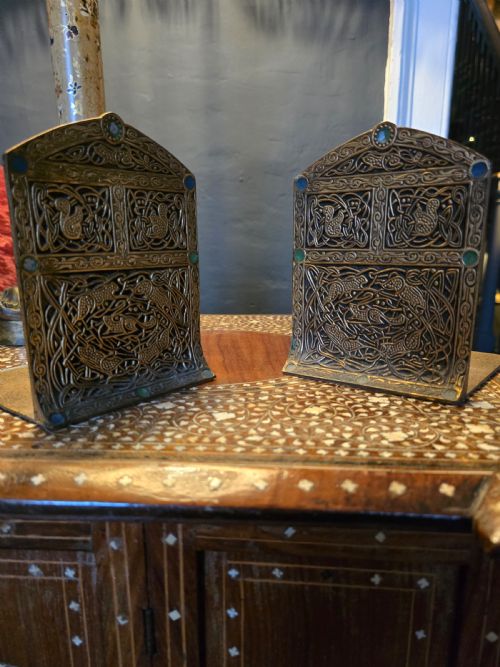
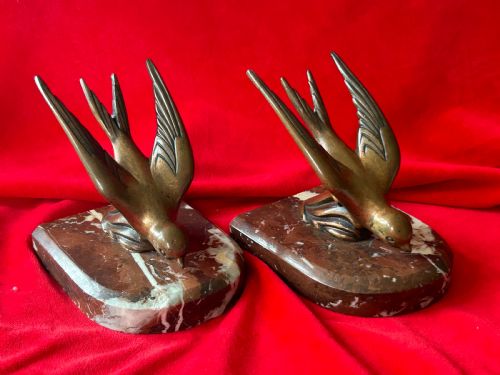
Bronze book supports, also known as bookends, serve to keep volumes upright on shelves while doubling as decorative objects. The selections here include figural designs shaped as animals, birds, and literary figures alongside architectural or floral forms.
The objects span multiple eras, notably the Art Deco period, Edwardian years, and the Regency period. Buyers encounter materials such as solid bronze, cold painted bronze, gilt bronze, spelter, marble, alabaster, glass, chrome, and wood.
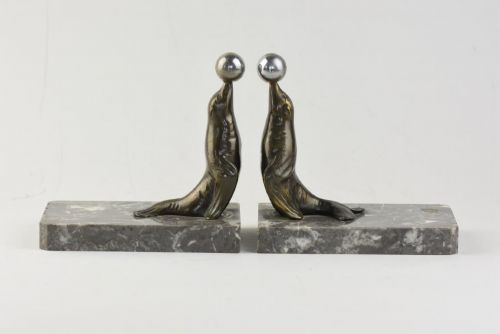
Origin points encompass English, French, and Austrian workshops, reflecting both domestic manufacture and continental artistry. Animal subjects like sealions, squirrels, owls, elephants, spaniels, and bulldogs appear frequently across the decades.
How they were made
Foundry techniques utilised for these book supports involve casting metal, whether through traditional bronze casting or the use of spelter. Artisans often combined metals with heavy bases of marble, alabaster, or wood to provide the necessary heft for holding books in place.
Finishing methods include cold painting, gilding, and chrome plating to enhance the surface texture and visual appeal of the metal figures. Signed pieces and works from specific studios demonstrate deliberate artistry applied to functional desk and shelf accessories.
Shelf-bound menagerie featuring alert owls, steadfast bulldogs, and poised sea lions keeping guard over heavy literature.
What varies in quality
Quality reveals itself in the crispness of the casting and the sensitivity of the modelling, particularly in figural subjects like animals or portraits. Superior examples display refined chisel work, retained surface finishes such as cold paint or gilding, and substantial, well-fitted heavy bases.
Materials dictate the underlying character, with solid bronze and gilt bronze demonstrating greater durability and prestige than softer metals like spelter. The integration between the decorative metal upper section and the stone or wooden base also defines the standard of construction.
Tiffany Studios New York·Franz Gruber·C Omin·Herzig
The Bronze Book Supports Glossary
- Spelter
- A zinc alloy frequently utilised as a cost-effective substitute for bronze in decorative figures and bookends during the early twentieth century. It accepts patination and metallic finishes readily.
- Cold painted bronze
- A manufacturing technique where bronze sculptures are painted with cold natural paints rather than fired in a kiln. This finish is particularly vulnerable to chipping over time.
- Gilt bronze
- Bronze that has been coated with a thin layer of gold or gold leaf to enhance its brilliance and resist tarnishing. It is sometimes referred to as ormolu in French decorative arts.
- Art Deco
- A design style spanning the 1920s and 1930s characterised by streamlined geometric forms, stylised animal figures, and modern industrial materials. It dominates the later pieces in this category.
- Regency period
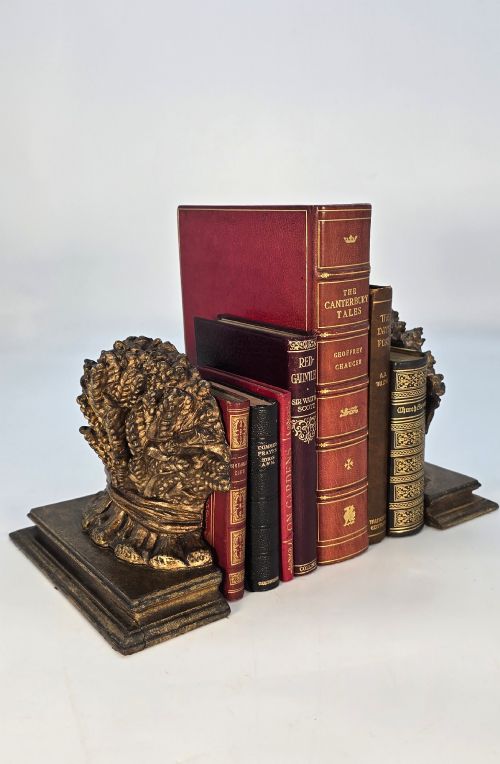
- An era of British design spanning the early nineteenth century known for classical revival motifs, elegance, and balanced proportions. Pieces from this time often incorporate traditional agricultural or architectural symbols like wheat sheaves.
Bronze Book Supports: Frequently Asked Questions
How heavy should these book supports be?
These supports require sufficient mass to hold a row of books upright without sliding or tipping over. Many examples achieve this density by mounting metal figures onto substantial bases of marble, alabaster, or wood.
Heavier pieces naturally accommodate larger volumes, while lighter decorative pairs suit smaller novels or lighter shelf displays.
How do I distinguish bronze from spelter?
Bronze possesses a heavier, denser feel and a warmer resonance when tapped, whereas spelter is a softer zinc alloy that feels lighter and more brittle. Examining the underside often reveals the greyish metal beneath a worn finish on spelter items.
Artists and foundries utilised spelter extensively for decorative figures during the early twentieth century as an accessible alternative to solid bronze.
How do I care for cold painted bronze?
Cold painted surfaces require gentle dusting with a soft, dry cloth and protection from direct sunlight and moisture. Because the paint was applied without kiln firing, moisture or harsh cleaning agents can cause the pigment to flake.
Displaying them in stable indoor environments preserves the original colouration and delicate detailing on the metal.