




British Watercolor Artist
A british watercolor artist brings the changing light of coasts, rivers and city streets onto paper through fluid pigment.
British Watercolor Artist
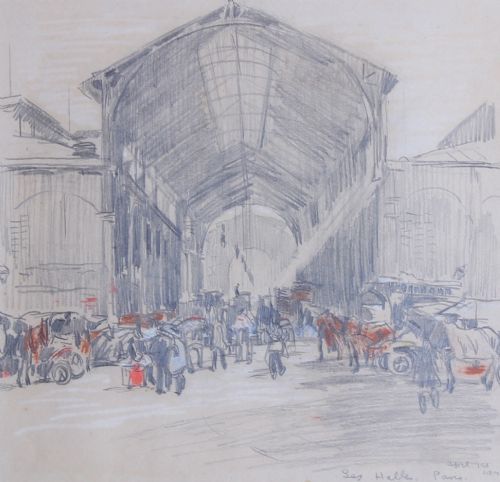
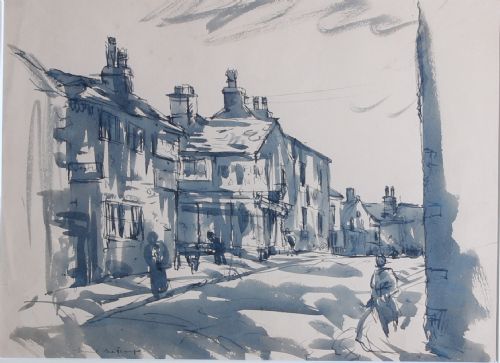
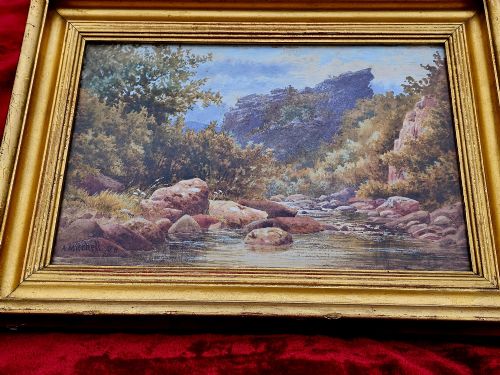
When you search for a british watercolor artist, you encounter works on paper spanning from the Victorian period through the mid-twentieth century. These pieces capture landscapes, townscapes, coastal scenes and rural life created by named practitioners of the medium.
The selections available here showcase regional subjects from Yorkshire and the Isle of Man alongside Venetian canals and Spanish views. Paintings range from intimate rural studies to expansive coastal compositions executed in the nineteenth and twentieth centuries.
How they were made
Artists applied watercolour pigment onto paper support, sometimes combining ink, bodycolour or gold leaf to build tone and detail. Works are preserved under glass, often within period frames suited to the Victorian or Edwardian eras.
Techniques varied from rapid plein-air sketching with ink outlines to carefully layered washes that capture atmospheric coastal light and moody rural skies.
British Watercolor Artist Retail Price Guide 2026
Typical asking prices for british watercolor artist among the pieces listed under this phrase on Sellingantiques today, from the lower quarter to the upper quarter. They describe what is for sale here now, not the wider market.
Listings span from the 19th century through the 1960s, featuring materials such as watercolour pigment, ink, gold leaf and paper.
What varies in quality
Quality rests in the surety of the brushwork and the artist's command of light, atmosphere and perspective across the paper surface. Stronger compositions demonstrate confident handling of pigment and effective capture of movement, whether in crashing waves or busy street scenes.
Condition plays a role, with vibrant retention of watercolour pigment and minimal fading distinguishing superior examples from lesser sheets affected by light exposure or acidic mounts.
Fred Lawson·Thomas Ellison·James Smetham·Arthur Wardle·William Manners·William Hoggatt·Rowland Henry Hill·F J Aldridge·Henry Bailey·James Watson·Owen Bowen·Nora Cundell·Sir Herbert Hughes-Stanton·Ernest F Hill·John Hobson Nicholson·Charles Clifford Turner·Stephen John Batchelder·George Stanfield Walters·Roland Batchelor·William Tatton Winter·Ralph Todd·William Lee Hankey·Arthur H Enock·Francis William Topham·Charles Branwhite
The British Watercolor Artist Glossary
- Watercolour
- A paint consisting of a pigment suspended in a water-soluble binder, applied to paper surfaces in transparent washes. It allows for luminous effects and rapid application.
- Works on paper
- A category encompassing drawings, watercolours and prints executed on paper supports. These items require protection behind glass to prevent atmospheric damage.
- British Impressionism
- A painting style adopted by British artists influenced by continental movements, focusing on natural light, everyday scenes and loose brushwork. It emerged strongly in the late nineteenth and early twentieth centuries.
- Newlyn School
- An art colony based in Cornwall during the late nineteenth and early twentieth centuries, known for naturalistic plein-air painting of local fisherfolk and coastal life.
British Watercolor Artist: Frequently Asked Questions
How should I frame an antique watercolour?
Watercolours require framing under glass with acid-free mounts to protect the paper and pigment from ultraviolet light and humidity.
Keep them away from direct sunlight to prevent the washes from fading over time.
What subjects did these artists paint?
Artists focused on diverse subjects including Welsh hound packs, Venetian canals, Yorkshire landscape views and Isle of Man coastal scenes.
Townscapes and everyday rural activities also featured prominently in their output.
How do I identify a Victorian watercolour?
Victorian watercolours often display detailed figurative work or picturesque landscapes accompanied by signatures, dates or period framing.
The paper stock and framing style frequently align with nineteenth-century manufacturing methods.
Where were these paintings created?
Works originated across Great Britain, from Cornish fishing villages and Yorkshire dales to London street scenes and international travels in Venice or Spain.
Artists frequently travelled to specific painting colonies or rural retreats to capture local scenery.