



British Military History
British military history gathers portraits, battles and campaigns across centuries, offering collectors tangible records of service.
British Military History
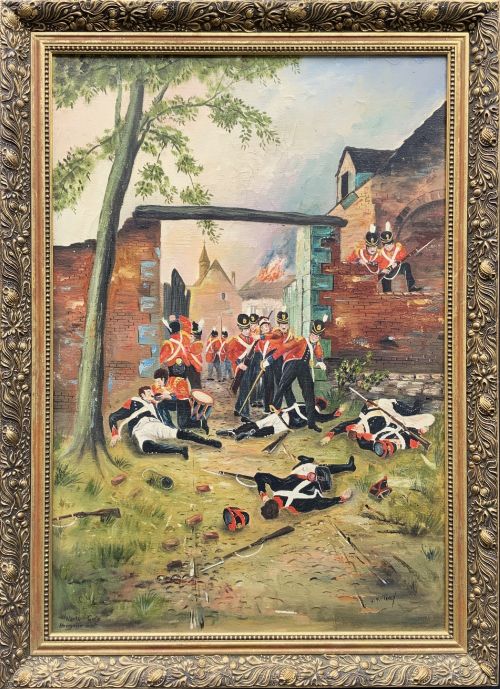
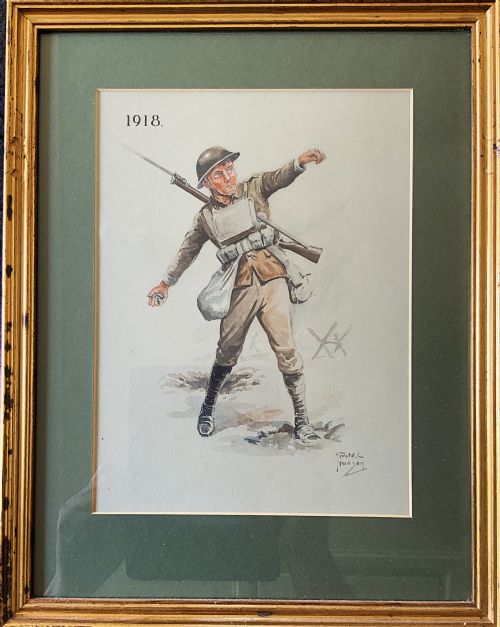
British military history encompasses framed paintings, oil paintings, prints and engravings documenting officers, regiments and naval engagements. Collectors encounter works originating from the Georgian, Victorian and mid-twentieth century periods.
Portraits of military officers, admirals and soldiers dominate the selection, often executed in watercolour, ink or oil paint. These pieces capture specific regiments such as the East Lancashire Regiment and historical figures including Admiral of the Fleet David Richard Beatty.
Works range from detailed wood engravings depicting campaigns like the Second Anglo-Afghan War to lithographs recording First World War artillery actions. Such pieces appeal to historians and art collectors seeking authentic visual records.
Materials and Techniques
Artists utilised oil paint, watercolour, ink and wash upon canvas and paper to record military subjects. Many works employ fine gold leaf detailing within frames that complement the period aesthetic.
Printmakers employed wood engraving and authentic lithography to produce multiple impressions of historical campaigns and battles. These graphic works rely on precise line work and tonal variation to convey action.
British Military History Retail Price Guide 2026
Typical asking prices for british military history among the pieces listed under this phrase on Sellingantiques today, from the lower quarter to the upper quarter. They describe what is for sale here now, not the wider market.
Listings feature works created across the nineteenth and twentieth centuries, incorporating oil paint, watercolour, canvas and paper.
Evaluating Quality
Execution and authorship define the distinction between standard records and superior works, particularly when identified artists or studio circles are involved. Masterly handling of oil paint or watercolour reveals the depth of the practitioner's skill.
Documentation of the subject elevates a piece, with named sitters, specific regiments and recorded campaigns providing greater historical context. The preservation of the paper, canvas and original framing further influences the standing of the work.
Sir John Gilbert·Sir Muirhead Bone·Henry L Gates·Maurice Codner·Sir William Charles Ross·Sir Richard Westmacott
The British Military History Glossary
- Wood Engraving
- A relief printing technique where an artist carves into the end grain of a hard wood block. This method allows for exceptionally fine lines and intricate detail.
- Lithography
- A planographic printing process based on the repulsion of oil and water on a stone or metal plate. Artists use this technique to achieve tonal gradations resembling chalk drawings.
- Wash
- A technique involving diluted ink or watercolour applied in broad, flat areas to create shadows and backgrounds. It provides depth behind primary pencil or pen lines.
- Circle of
- A term used when a work is not by the master, but is closely associated with their style and period. It indicates an artist working under the direct influence of a named figure.
British Military History: Frequently Asked Questions
What periods do these pieces date from?
The works span from the Georgian and Victorian eras through the First and Second World Wars into the mid-twentieth century.
Each period reflects distinct artistic conventions and historical events, ranging from nineteenth-century campaign engravings to twentieth-century officer portraits.
How were these military portraits and battle scenes created?
Makers utilised oil paint, watercolour, ink and wash on canvas and paper, alongside wood engravings and lithographs.
Artists recorded sitters and actions using techniques appropriate to their medium, from detailed portraiture to graphic battle narratives.
How should I care for framed works on paper?
Protect framed watermarks, drawings and engravings from direct sunlight to prevent fading of the pigments and paper degradation.
Maintain stable humidity levels in the room to preserve both the artwork and its historical frame.
How do I identify specific regiments in portraits?
Examine uniform details, collar badges, lapel insignia and accompanying text or inscriptions recorded within the work.
Records often note specific units such as the East Lancashire Regiment or the Bengal Army to assist identification.