



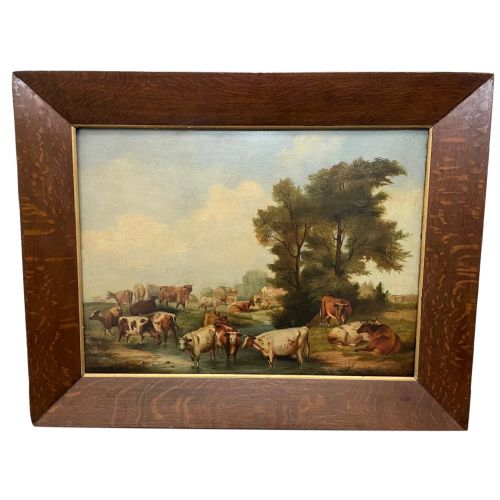

British Livestock Art
British livestock art captures the rural economy through painted cattle, sheep and horses.
British Livestock Art
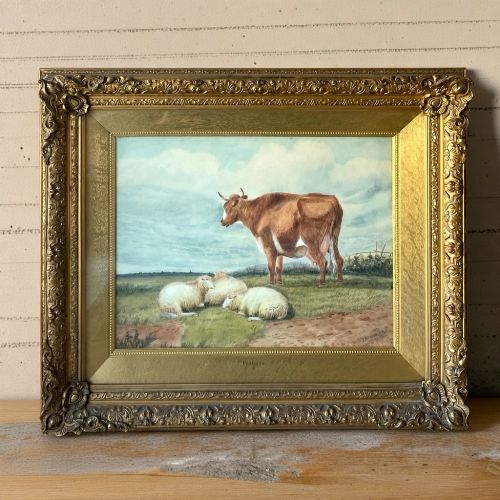
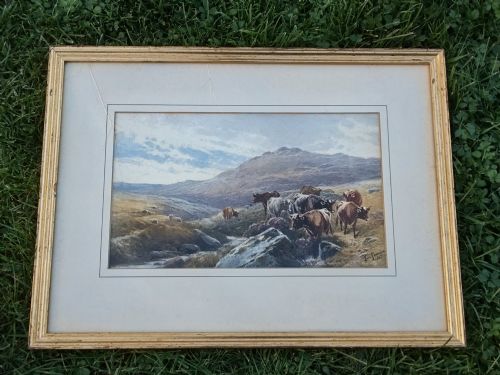
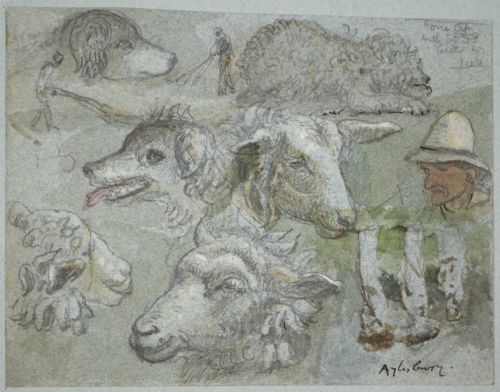
British livestock art encompasses painted and drawn representations of farm animals, primarily cattle, sheep and horses, set within rural landscapes and pastoral settings. These works record agricultural life and prized farm stock across various periods from the Georgian era through to the early twentieth century.
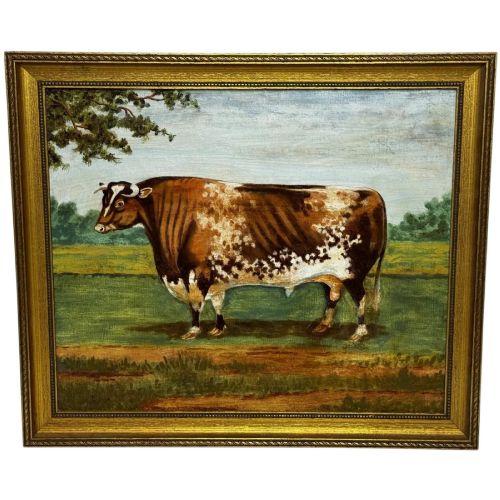
Buyers encountering this genre will most frequently find nineteenth-century oil paintings on canvas and watercolours on paper. The subjects range from individual portraiture of prize-winning shorthorn bulls to broader pastoral scenes featuring herds gathered by rivers or sheltering in barns.
Distinguishing Quality
Quality rests upon the anatomical precision of the animal subjects and the adept handling of light and rural atmosphere by the painter. Stronger examples display careful observation of texture in fleeces and hides set within a coherent landscape.
The distinction between standard works and finer pieces often lies in the provenance and the specific hand of the artist, particularly when associated with established schools of pastoral realism.
British Livestock Art Retail Price Guide 2026
Typical asking prices for british livestock art among the pieces listed under this phrase on Sellingantiques today, from the lower quarter to the upper quarter. They describe what is for sale here now, not the wider market.
Ducks frequently share riverbanks with heavy livestock, occasionally upstaging the prized bulls.
James Smetham·A M Gauci·William Henry Mander·Frederick Septimus Lewis·Ernest Pile Bucknall·Thomas Sidney Cooper·Claude Cardon·Frederick Richard Lee·W A Clark·Henry Brittan Willis·William Sidney Cooper·Ernest Higgins Rigg·Owen Bowen·A Davis·Thomas E Francis·Thomas Baker of Leamington
The British Livestock Art Glossary
- Oil on Canvas
- Pigment bound in a drying oil applied to a stretched woven fabric support. This combination allowed artists to build rich textures and deep tones.
- Watercolour
- A paint consisting of pigment suspended in a water-soluble vehicle, typically applied to paper. It produces transparent washes of colour.
- Giltwood
- Wood carved and covered with a thin layer of gold leaf or gilt composition. Such frames frequently accompany antique paintings.
- Pastoral
- A genre of art concerning the rural life of shepherds, farmers and agricultural landscapes. It idealises country living and domestic animals.
- British School
- A term used to classify artists trained or working within Britain. It groups together stylistic traditions across centuries of native painting.
British Livestock Art: Frequently Asked Questions
What periods do these paintings come from?
The available works span from the Georgian period through the Victorian era and into the early twentieth century, reflecting shifting tastes in rural representation.
Most pieces date specifically from the nineteenth century, encompassing both Victorian pastoral painting and later British impressionism.
How were these artworks created?
Artists worked primarily with oil paint on canvas or watercolour on paper, capturing rural scenes with varying degrees of realism and atmospheric lighting.
Original wooden and giltwood frames frequently accompany these paintings, maintaining their historical presentation.
What subjects appear in these paintings?
The primary subjects are farm animals, including prized shorthorn bulls, grazing cattle, resting sheep and horses set within rural landscapes.
Many compositions also incorporate figures such as farmers, shepherds and drovers alongside rivers, clifftops and barns.
How do I display antique livestock art?
These works suit traditional interiors, study spaces and living rooms where rural and agricultural themes complement the decor.
Placing paintings away from direct sunlight protects the pigments in both the oil canvases and watercolours on paper.