

British Horse Artwork
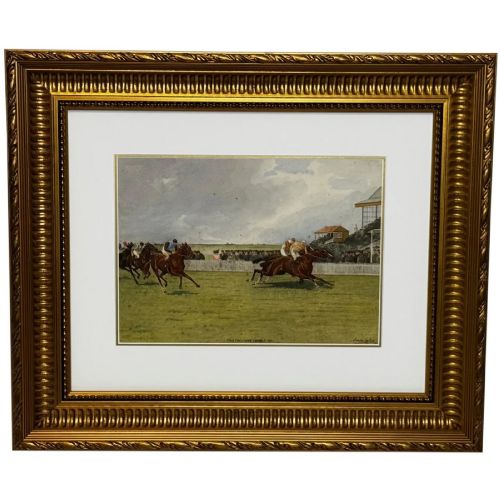
British horse artwork captures the power and character of equines through traditional oil paintings, watercolours, and prints.
British Horse Artwork
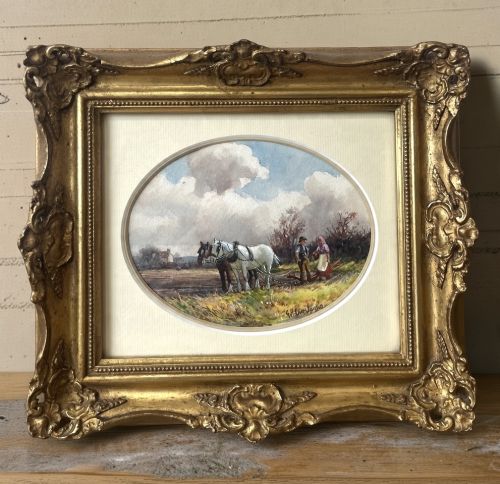
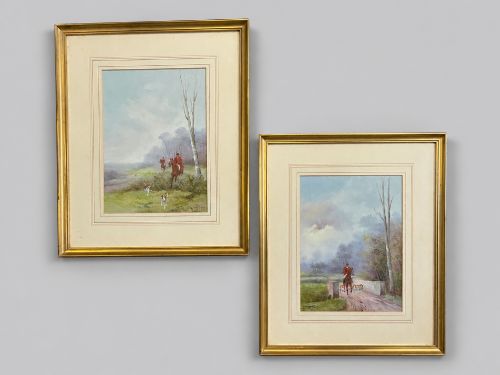
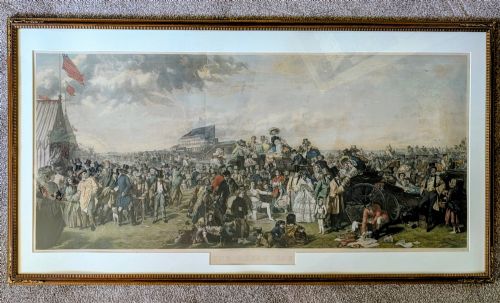
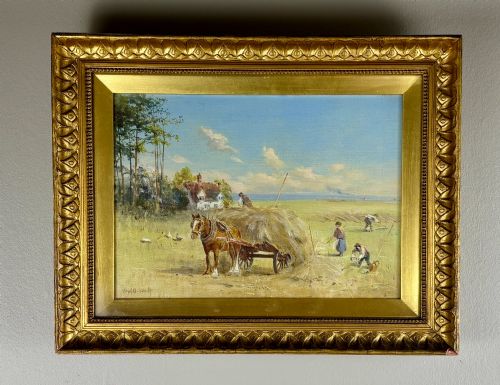
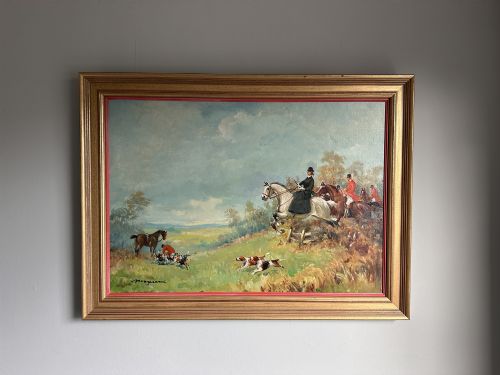
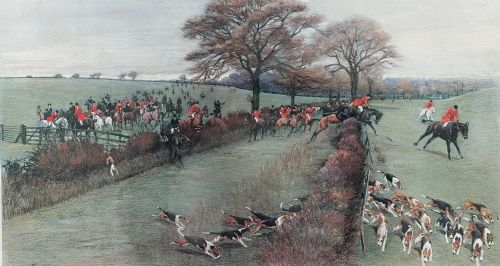
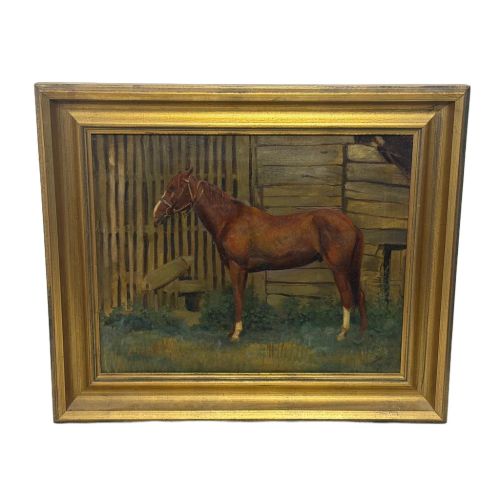
British horse artwork encompasses historical oil paintings, watercolours, chalk drawings, and prints focusing on equines, hunting scenes, and rural life. These works span from the nineteenth century through the Edwardian era and into the mid-twentieth century, recording the changing role of horses in society.
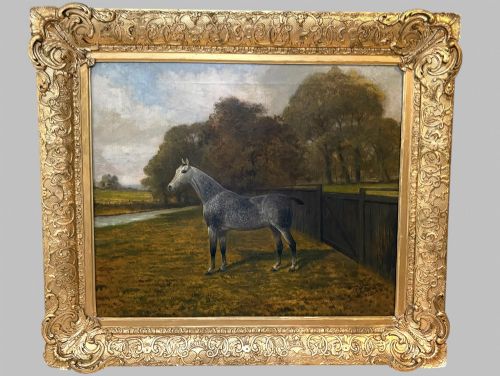
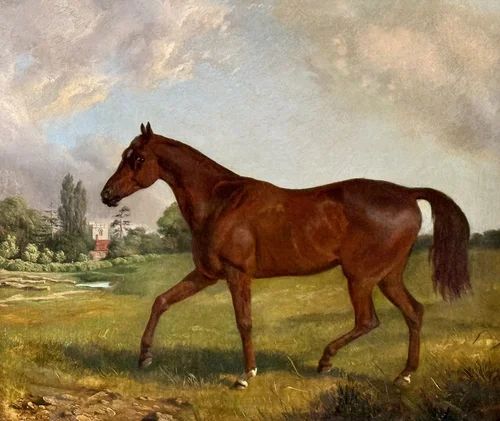
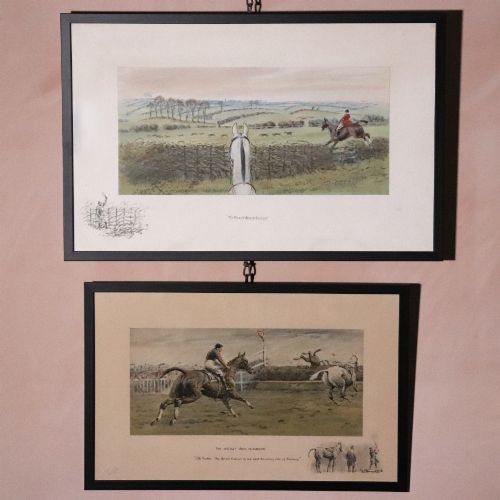
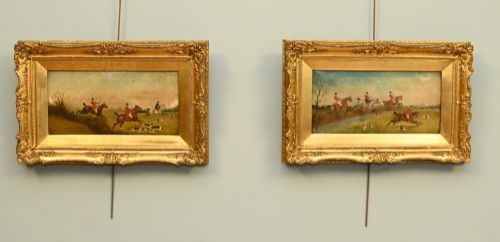
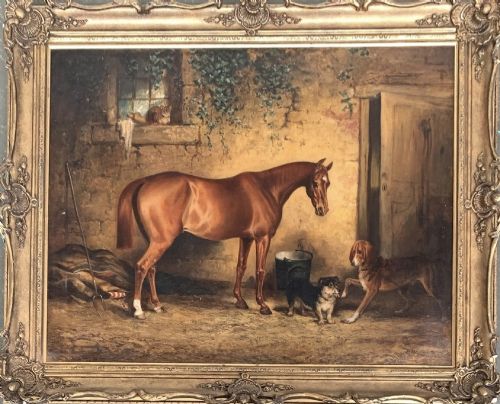
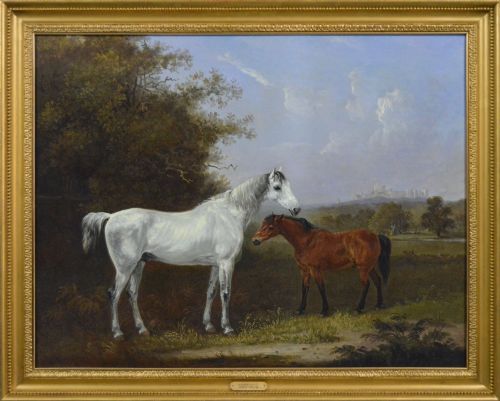
A buyer examining this page will most frequently encounter nineteenth-century and early twentieth-century oil paintings on canvas or wood panels. These range from detailed portraits of named hunters and racehorses to energetic depictions of coaching scenes, farm work, and fox hunting.
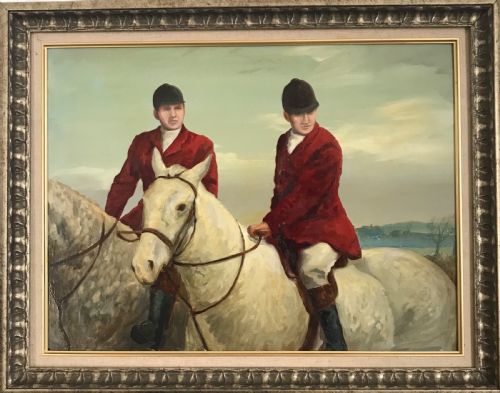
Later mid-century pieces introduce a different artistic vocabulary, utilising looser brushwork and modern compositions to capture ponies, rodeo riders, and racing subjects. Framed watercolours and pastel drawings on paper also appear regularly, offering a more intimate scale than large oil canvases.
Materials and technique
Artists relied primarily on oil paint applied to canvas or wood panels, building up layers of pigment to render the gloss of a horse's coat and the play of light across muscle and sinew. Many works are housed in their original giltwood or walnut frames, which complement the tones of the composition.
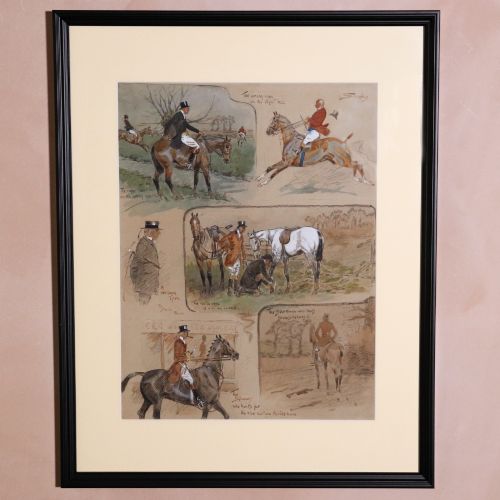
Works on paper utilise watercolour, chalk, gouache, and pastel, often fixed to coloured paper or card to achieve subtle tonal depth. Etchings and prints provide another avenue of production, employing inked plates to transfer detailed lines onto paper.
British Horse Artwork Retail Price Guide 2026
Typical asking prices for british horse artwork among the pieces listed under this phrase on Sellingantiques today, from the lower quarter to the upper quarter. They describe what is for sale here now, not the wider market.
Materials documented across the items include oil paint, watercolour, chalk, gouache, etching ink, canvas, paper, and giltwood.
Factors determining quality
Quality rests upon the artist's anatomical precision, the vitality of the brushwork, and the ability to convey the distinct personality and movement of the animal. Superior works capture correct bone structure and muscular tension rather than relying on stiff formulae.
The integration of the horse within its landscape or stableyard setting further distinguishes finer examples, alongside the preservation of the original paint surface and the suitability of the accompanying period frame.
Henry Barraud·Edmund Bristow·William Joseph Shayer Senior·Thomas Smythe·Albert Clark·Ernest Payne·Edward Priestley·John Ferneley Senior·Herbert Dicksee·John Rattenbury Skeaping·Cecil Charles Windsor Aldin·Charles Walter Simpson·Harry Freckleton·Hazel M Barnett·John Sanderson Wells·Charles James Lauder·Philip Henry Rideout·John Augustus Atkinson·John Linnell
The British Horse Artwork Glossary
- Equestrian
- Pertaining to horses, horse riding, or the representation of horses in art. This term groups together portraits, hunting scenes, and working horse compositions.
- Giltwood
- Wood that has been coated with a thin layer of gold leaf or gilt pigment. It is commonly found on traditional frames enclosing nineteenth-century oil paintings.
- Gouache
- An opaque watercolour paint mixed with a binding agent to produce a heavier, more solid finish. It allows for vibrant highlights on paper works.
- Etchings
- Prints produced by incising a design into a metal plate with acid before applying ink and pressing it onto paper. This technique permits fine, precise lines.
- Provenance
- The documented history of ownership of an artwork. It helps verify the authenticity and background of a piece.
British Horse Artwork: Frequently Asked Questions
How do I identify the period of an artwork?
Examine the framing materials, the style of clothing worn by any human figures, and the physical backing of the canvas or paper. Records and artist signatures often provide definitive dates.
Changes in artistic style also reflect the era, moving from nineteenth-century realism to mid-century modern interpretations.
Were these pieces intended for domestic display?
Many sporting paintings and horse portraits were commissioned by landowners and stable owners to document prized animals or hunting memories. They hung in country houses and rural residences as symbols of status and sport.
Smaller watercolours and prints were suited for more modest domestic interiors and studies.
How should I care for a framed oil painting?
Keep paintings away from direct sunlight and steady temperature fluctuations to prevent the canvas from warping and the paint from cracking. Dust the surface and frame gently with a soft, dry cloth.
Avoid using liquid cleaners on the paint or the giltwood frame.
What is the difference between an oil painting and a pastel drawing?
Oil paintings utilise slow-drying pigments suspended in oil on canvas or wood, offering rich textures and deep colour layering. Pastels consist of powdered pigment sticks applied directly to paper, creating a soft, matte finish.
Pastel works require protective glass glazing, whereas oil paintings on canvas typically remain open to the air.