




British Floral Art
British floral art captures centuries of botanical studies, still life painting, and decorative vessels spanning Victorian gardens to mid-century modern canvases.
British Floral Art
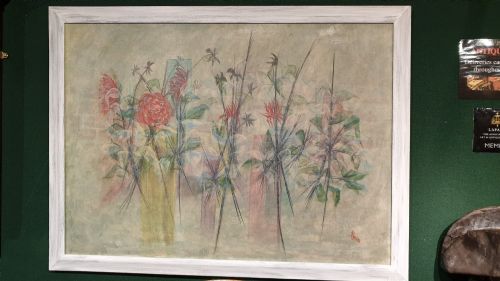
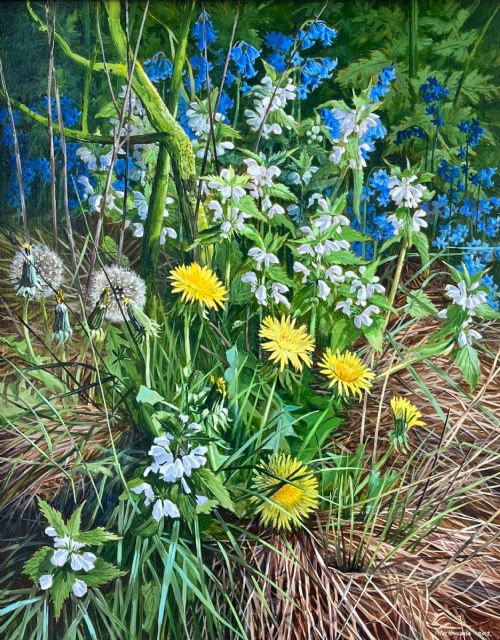
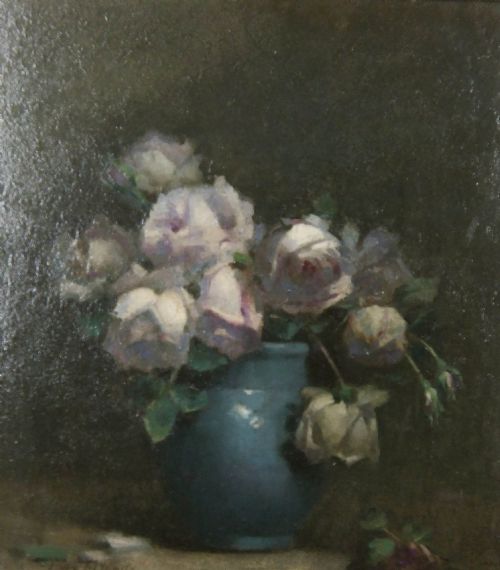
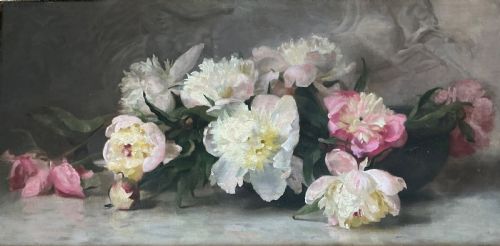
When you search for british floral art, you encounter a concentrated selection of oil paintings, watercolours, gouache, pastels, and stoneware vases depicting blossoms, garden landscapes, and still life arrangements. The pieces span from the late nineteenth century through the Edwardian period, the 1930s, and into the mid-twentieth century.
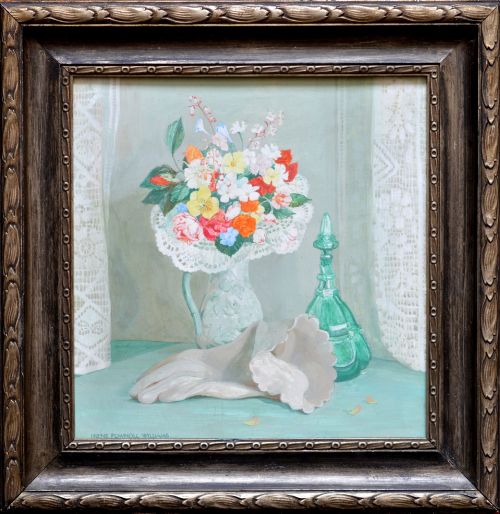
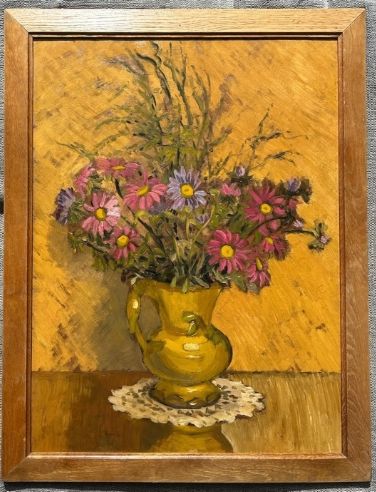
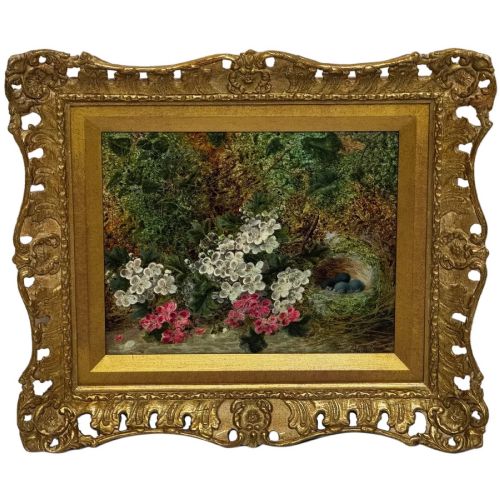
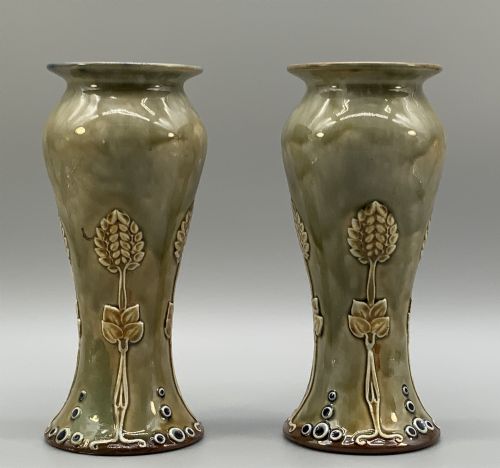
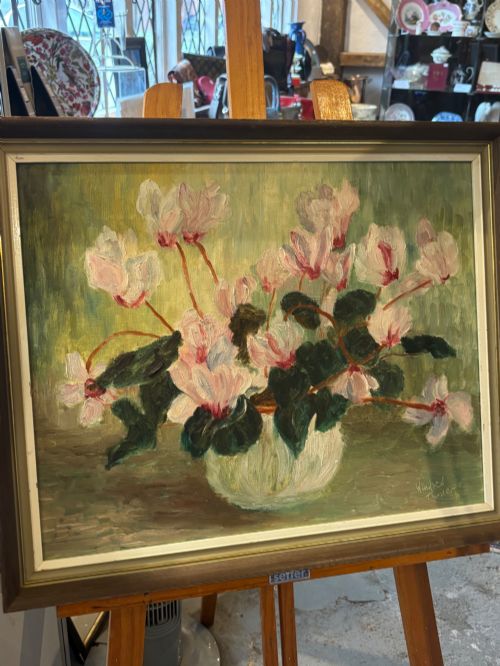
The versions you are most likely to meet on this page are framed still life watercolours and oil paintings on canvas or board, often showing cut flowers in jugs, bowls, or baskets. Alongside these flat works, the selection includes stoneware vases featuring floral and botanical motifs from makers associated with the era.
Makers and artists represented across the periods include named painters such as Owen Bowen, James Tower, and Freda Marston, working in styles from Victorian realism to British Impressionism and modern British abstraction.
How they were made
The paintings on this page rely on traditional media including oil paint on canvas or board, watercolour pigment on paper, tempera, gouache, and pastel. Artists applied these materials with varying brushwork to capture the light, texture, and colour of botanical subjects.
Three-dimensional pieces utilise stoneware ceramic techniques, shaped and fired before receiving decorative glazes or slip work to render plant forms and patterns in relief.
Listings span from the nineteenth century through the 1960s, uniting watercolours, oil paintings on canvas and board, and stoneware vases.
What varies in quality
Quality in these works rests upon the confidence of the brushwork, the balance of the composition, and the artist's ability to render light and form convincingly within a still life or landscape. Stronger pieces demonstrate deliberate handling of pigment and secure draughtsmanship, whereas lesser works may appear hesitant or formulaic in execution.
For ceramics, quality shows in the crispness of the moulded or incised botanical detail, the richness of the glaze application, and the overall proportion of the vessel. The best examples display a harmony between the physical form of the object and the floral ornamentation applied to its surface.
Royal Doulton Lambeth·Irene Christobelle Pownoll Williams·Kenneth Cozens·Oliver Clare·Mark Ingram·Peter Newcombe·William Thomas Wood·Owen Bowen·James Tower·Gertrude Hayes·Winifred Turner·Thomas Bromley Blacklock·Arthur Hopkins·William Edward Fox·Florence Hess·Theresa Stannard·Lester Sutcliffe·Ernest Higgins Rigg·Kershaw Schofield·Sir Matthew Smith·Lilian Stannard·Edith Barrow·Freda Marston·Rowland Henry Hill·Stuart Armfield
The British Floral Art Glossary
- Still life
- A painting or drawing depicting inanimate objects, such as cut flowers in a jug, fruit in a bowl, or garden baskets. These arrangements allow artists to focus entirely on colour, light, and texture.
- Watercolour
- A paint consisting of pigment suspended in a water-based solution, typically applied to paper to create translucent washes of colour. It requires swift, sure handling as corrections are difficult.
- Tempera
- A permanent, fast-drying painting medium consisting of coloured pigments mixed with a water-soluble binder medium, such as egg yolk. It produces a flat, matte surface with subtle depth.
- Gouache
- An opaque watercolour paint that includes a white pigment filler, resulting in heavier, denser coverage on paper. It allows for solid blocks of colour and fine linear highlights.
- Stoneware
- A robust type of pottery fired at high temperatures until vitrified, making it impermeable to liquids even without glaze. It provides a durable base for applied decorative motifs.
British Floral Art: Frequently Asked Questions
What subjects are common in british floral art?
The works primarily feature cut flowers in jugs, bowls, and baskets, alongside garden views and botanical studies. Common blooms include roses, peonies, dahlias, and spring hedgerow growth.
Artists captured these subjects across different decades, reflecting shifting artistic approaches from Victorian detail to mid-century modern abstraction.
How should I frame and hang these paintings?
Most works on paper require conservation mounting behind glass to protect the pigment from light exposure and atmospheric moisture. Oil paintings on canvas or board are typically framed in wood moulding suited to the period of the piece.
Position paintings away from direct sunlight and damp environments to preserve the integrity of the paint and paper over time.
How can I identify the period of a piece?
Dating relies on stylistic clues, framing materials, artist signatures, and known working dates. Victorian works often show dense, highly finished realism, while 1930s and mid-century pieces lean towards looser brushwork and modernist compositions.
Examining the reverse of the canvas or paper often reveals artist inscriptions, exhibition labels, or gallery stamps that confirm the era of creation.
What is the difference between oil and watercolour?
Oils use pigment suspended in drying oils applied to canvas or wood board, allowing for thick impasto texture and rich colour depth. Watercolours employ pigment on paper, creating translucent layers and luminous white paper highlights.
Both media offer distinct visual qualities that influenced how artists approached botanical and still life subjects throughout the twentieth century.