



British Farm Painting
British farm painting captures the agrarian life of the countryside through canvases and watercolours spanning the Victorian era to the mid-twentieth century.
British Farm Painting
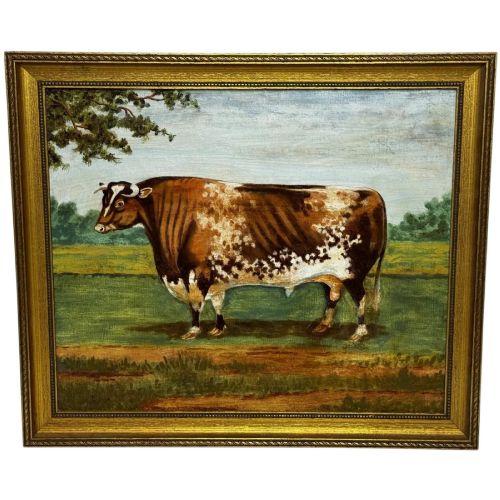
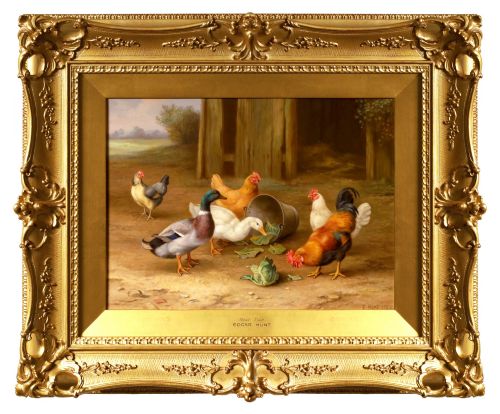
A British farm painting typically portrays rural scenes involving livestock, farmyards, labourers, and surrounding landscapes. These works reflect both the daily toil of agricultural life and the pastoral ideals of various periods.
The most common formats encountered here are oil paintings on canvas or board and watercolours on paper. Pieces range from intimate depictions of farm buildings to larger landscapes featuring shire horses, cattle, and sheep.
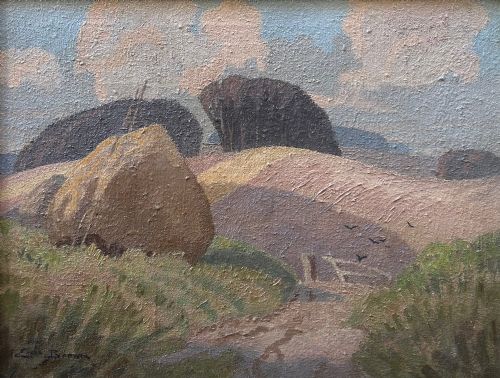
The styles shift across the decades, moving from Victorian pastoral and British realism towards British impressionism and post-impressionist interpretations of the countryside.
Materials and Technique
Artists worked primarily with oil paint or watercolour applied to prepared canvas, wooden panels, paper, or board. Oil paint allowed for layered brushwork and rich textures, particularly suited to capturing livestock and changing light.
Watercolours provided a more fluid medium, often utilised for atmospheric landscape studies and tonal sketches. Support materials varied from traditional stretched canvas to sturdy boards used by artists working plein air.
British Farm Painting Retail Price Guide 2026
Typical asking prices for british farm painting among the pieces listed under this phrase on Sellingantiques today, from the lower quarter to the upper quarter. They describe what is for sale here now, not the wider market.
Several canvases manage to capture cows staring intently at the viewer with an expression of profound bovine judgement.
Assessing the Works
Quality rests upon the artist's ability to handle light, atmosphere, and anatomical accuracy within figures and animals. Superior examples demonstrate confident brushwork and a coherent sense of space rather than stiff composition.
The integration of human workers and livestock into the surrounding landscape distinguishes a masterful painting from a formulaic regional record. Preservation of the original surface and support also influences the standing of a piece.
Edgar Hunt·Herbert Royle·John Linnell·Ernest Higgins Rigg·Thomas Sidney Cooper
The British Farm Painting Glossary
- Plein air
- Painting outdoors directly from the subject to capture natural light and atmosphere. This method gained popularity among British impressionists and pastoral artists.
- Oil on panel
- A painting executed on a wooden board rather than stretched canvas. Panels provided a rigid and durable surface favoured by many nineteenth and twentieth-century painters.
- Provenance
- The documented history of a painting's ownership and origin. Studio sale provenances often verify works directly recovered from an artist's estate.
- British Impressionism
- A painting style focusing on light, loose brushwork, and everyday subjects. It emerged in Britain as artists adapted continental techniques to local rural scenes.
British Farm Painting: Frequently Asked Questions
What subjects appear in these works?
These paintings focus on rural agriculture, featuring farmyards, barns, plough teams, and grazing livestock. Human figures such as farm hands, shepherds, and milkers also frequently populate the scenes.
The settings range from Yorkshire dales and Welsh mountains to southern pastures, reflecting the diverse topography of the British countryside.
How do I date a farm painting?
Dating relies on stylistic clues, clothing styles of the figures, agricultural methods shown, and framing materials. Victorian works often display detailed realism, whereas twentieth-century pieces lean towards impressionistic brushwork.
Signatures, artist dates, and exhibition labels on the reverse also help establish the precise period of creation.
Where were these paintings created?
Artists travelled across Britain to record regional agriculture, working in rural locations from Yorkshire and Cornwall to Scotland and Wales. Many scenes depict specific local farms, valleys, and coastal villages.
Painters often worked directly on site in the open air before finishing the canvases within their studio spaces.
How should I care for these paintings?
Display paintings away from direct sunlight, excessive moisture, and rapid temperature fluctuations to protect the canvas and paint layers. Watercolour works on paper require UV-protective glazing to prevent fading.
Dust surfaces gently with a soft, dry brush and avoid chemical cleaners on both oils and watercolours.