

British Equestrian Painting
British equestrian painting captures the power and presence of horses through centuries of sporting, rural, and racing traditions.
British Equestrian Painting
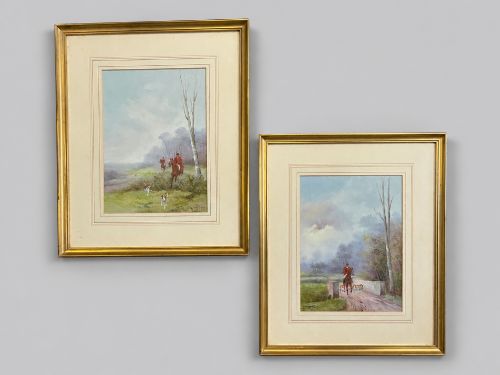
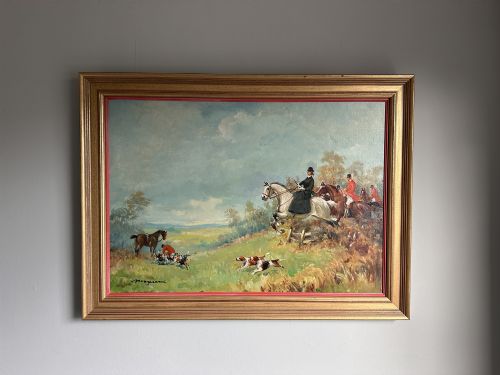
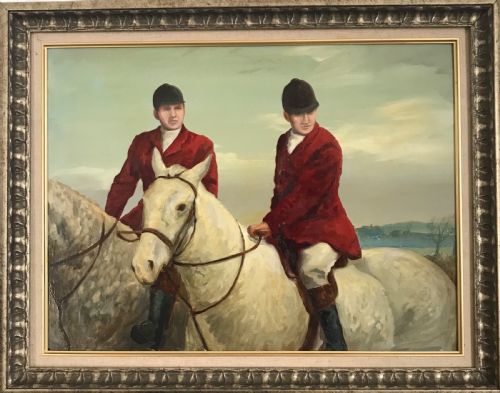
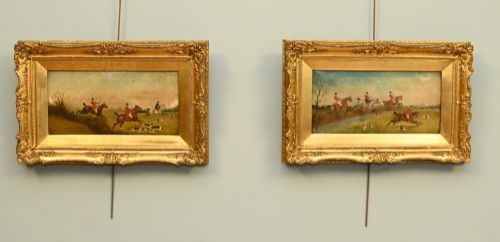
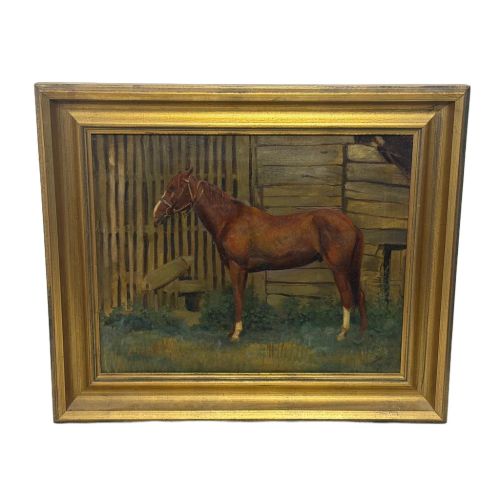
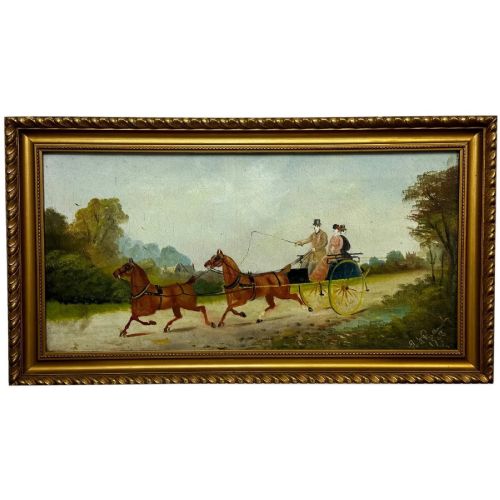
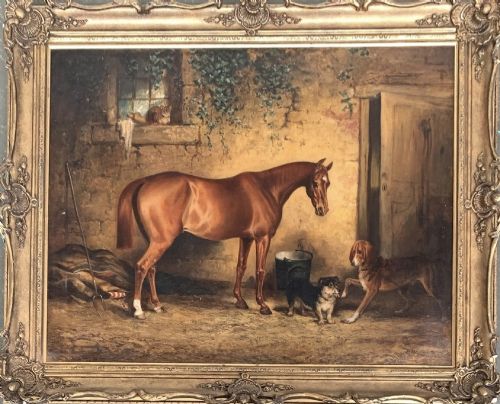
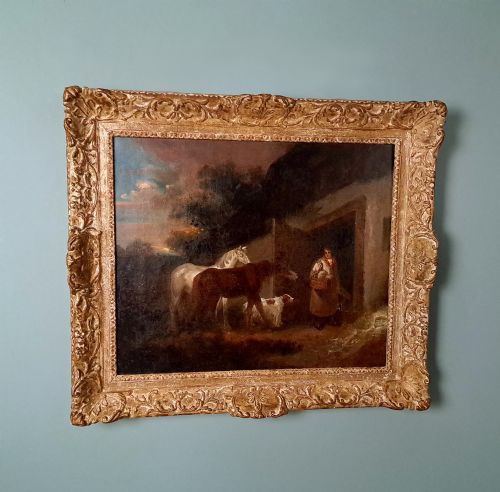
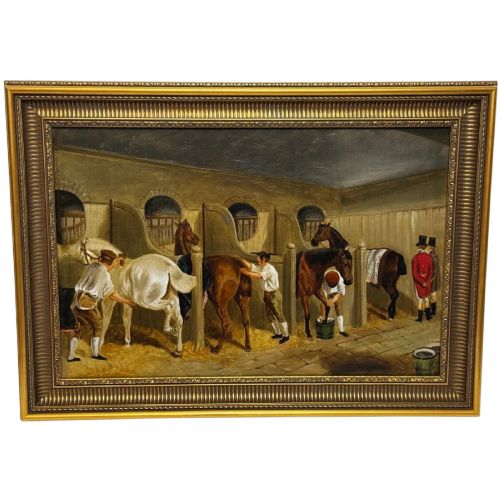
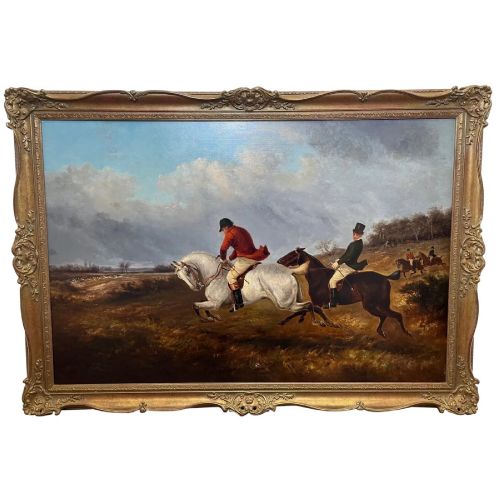
British equestrian painting focuses on horses, riders, hunting scenes, and coaching life rendered primarily in oils and watercolours on canvas or paper. These works document individual animal portraits, sprawling fox hunts across rural landscapes, and dynamic racing moments from the Georgian period through to the mid-twentieth century.
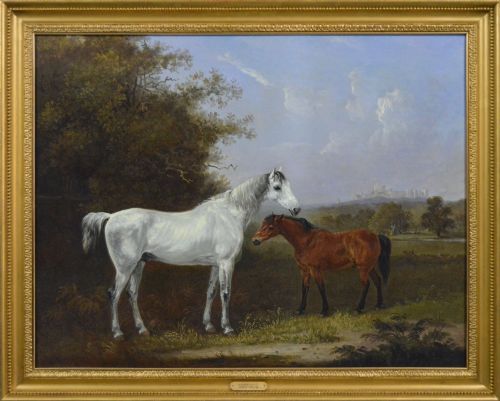
The most common examples encountered on this page originate from the Victorian era and the Edwardian period, often set within original giltwood frames. Collectors find everything from intimate studies of mares and foals in pastures to grand coaching scenes set against historical backdrops.
How they were made
Artists built these compositions using oil paint on stretched canvas or applied watercolours and gouache to paper, working up details with fine brushes to capture the sheen of a horse's coat and the textures of tack and landscape. Support materials typically include traditional wood stretchers and heavy paper stocks.
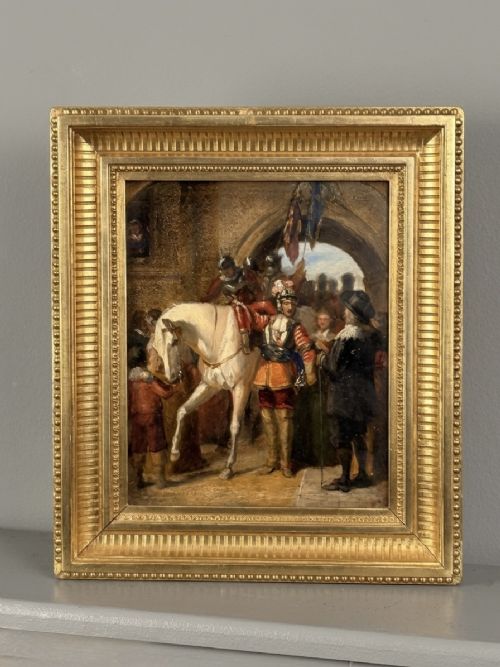
Framing played an integral role in presentation, with many works housed in heavy gilt wood frames that complement the depth of the pigments and provide a distinct period finish.
British Equestrian Painting Retail Price Guide 2026
Typical asking prices for british equestrian painting among the pieces listed under this phrase on Sellingantiques today, from the lower quarter to the upper quarter. They describe what is for sale here now, not the wider market.
Several canvases capture horses sharing the landscape with early steam locomotives, marking the amusing historical collision of horsepower and iron.
What varies in quality
Quality rests in the anatomical precision of the horse, the fluidity of movement, and the handling of light across muscle and landscape. Superior works demonstrate a deep understanding of equine anatomy and posture, whereas lesser examples rely on stiff, formulaic rendering.
The sophistication of the background landscape and the integration of horse, rider, and environment distinguish accomplished studio output from more utilitarian regional production.
Henry Barraud·Edmund Bristow·Thomas Smythe·Albert Clark·John Ferneley Senior·George Wright·John Rattenbury Skeaping·Philip Henry Rideout
The British Equestrian Painting Glossary
- Canvas
- A heavy woven fabric stretched across a wooden frame to serve as a painting surface. Most nineteenth-century oil paintings utilise this substrate.
- Watercolour
- A paint consisting of pigment suspended in a water-based solution, applied to paper. It offers transparency and delicate tonal variation.
- Sporting art
- A genre of painting dedicated to depictions of hunting, racing, shooting, and equine portraits. This category forms the backbone of British equestrian works.
British Equestrian Painting: Frequently Asked Questions
What periods do these paintings cover?
The available works span from the early nineteenth century through the Edwardian era and into the mid-twentieth century. This timeline covers shifting artistic styles from traditional sporting art to mid-century modern interpretations.
Victorian and Edwardian pieces form the largest group, reflecting the height of British equestrian culture and coaching traditions.
How do I identify a horse portrait?
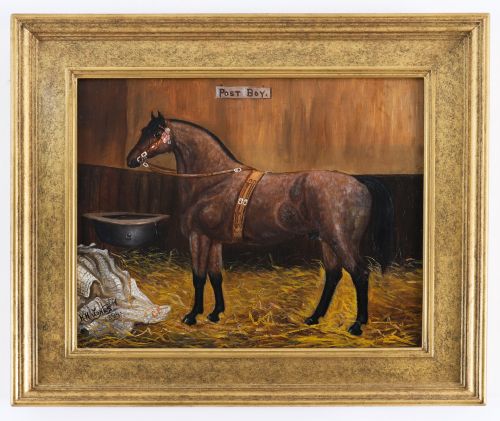
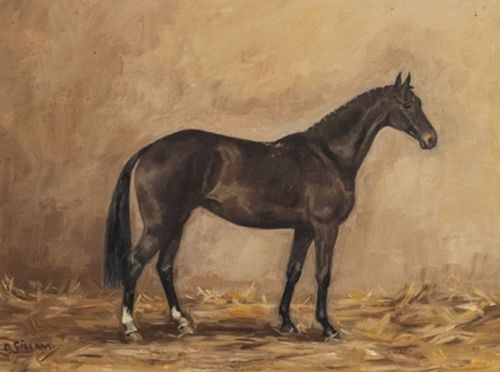
Horse portraits generally focus on a single named or typed animal, often shown standing in a stableyard or a pastoral landscape. The composition prioritises the conformation and physical traits of the specific horse.
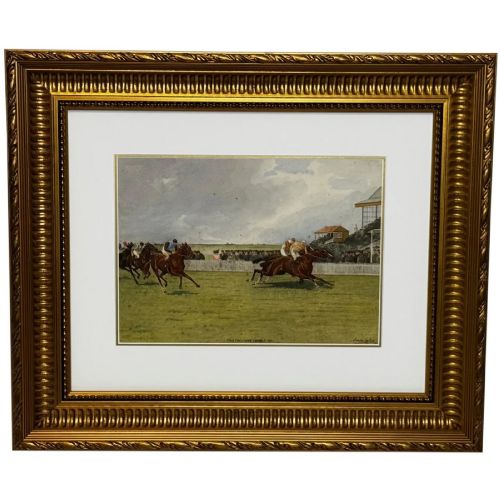
These differ from broader sporting scenes, which typically include riders, hounds, and narrative action across open countryside.
Where should I hang these paintings?
These works suit traditional drawing rooms, studies, and hallways where period furnishings complement the gilt framing and subject matter. They also anchor contemporary spaces when contrasted with minimalist walls.
Direct sunlight and humid environments should be avoided to protect both the canvas or paper support and the traditional wooden frames.
What is the difference between oils and watercolours here?
Oil paintings utilise heavy pigments on canvas, offering rich textures, deep shadows, and luminous coats on the horses. Watercolours on paper provide a lighter, more fluid representation with translucent washes.
Oils were typically chosen for finished gallery pieces and grand portraits, while watercolours often captured rapid field studies or detailed topographical coaching routes.