

British Countryside Wall Art
British countryside wall art captures pastures, riversides, and rural life through generations of painted observation.
British Countryside Wall Art
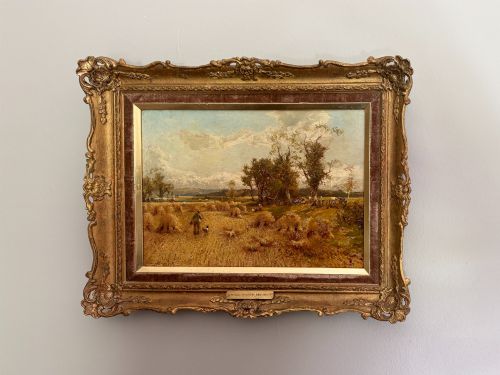
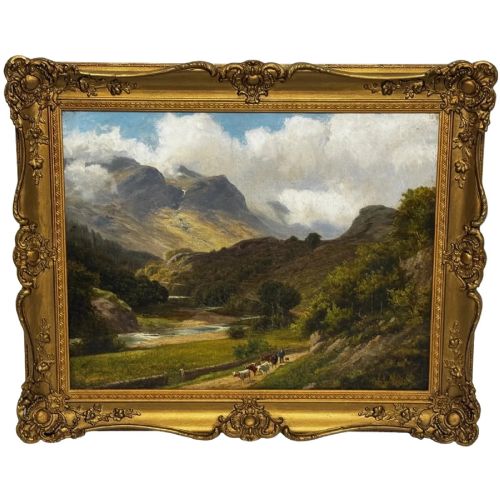
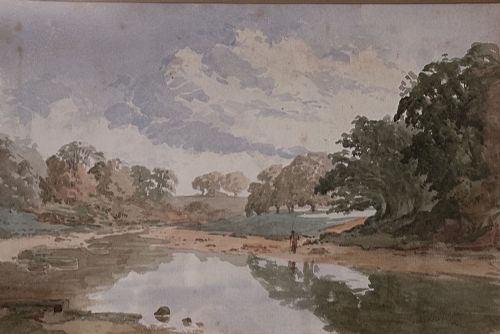
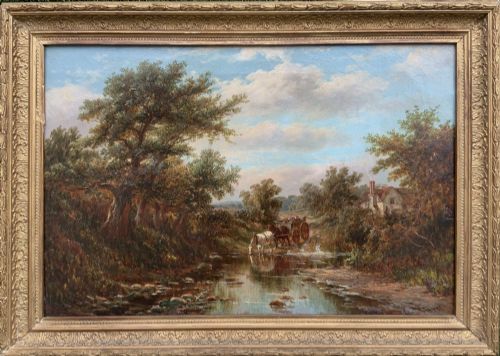
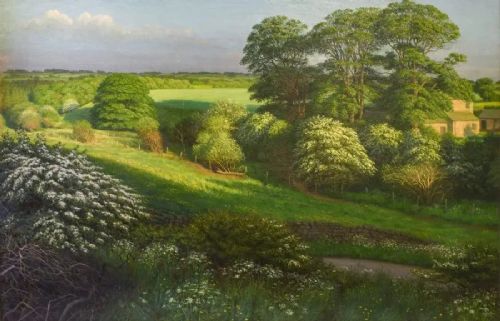
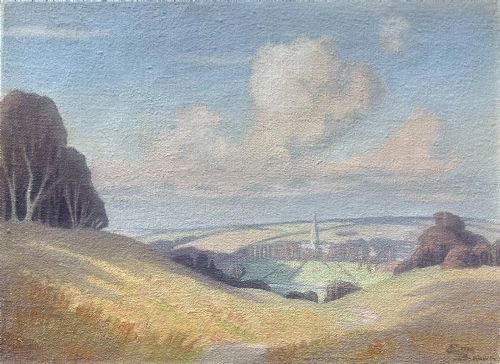
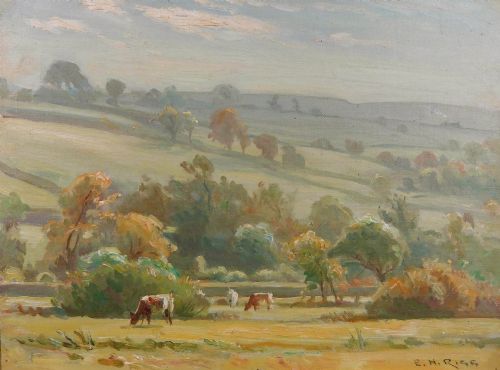
British countryside wall art comprises original paintings, watercolours, and signed prints depicting rural landscapes, villages, and pastoral scenes across the British Isles. Buyers examining this genre encounter works stretching from nineteenth-century academic oils to mid-twentieth-century watercolours.
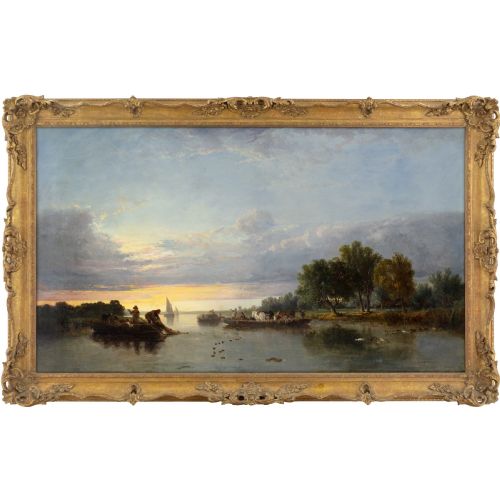
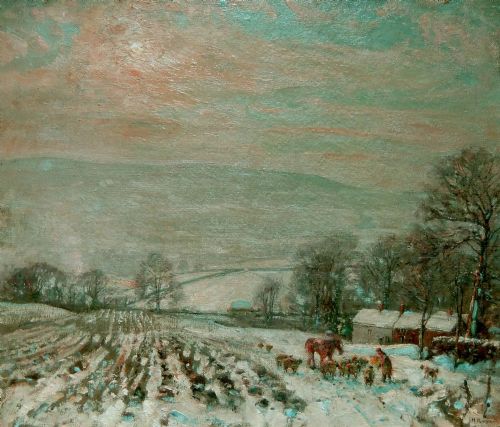
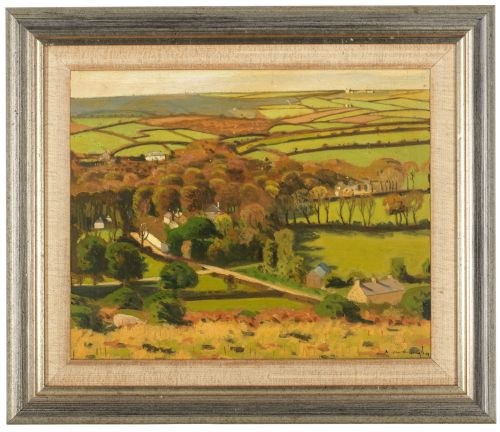
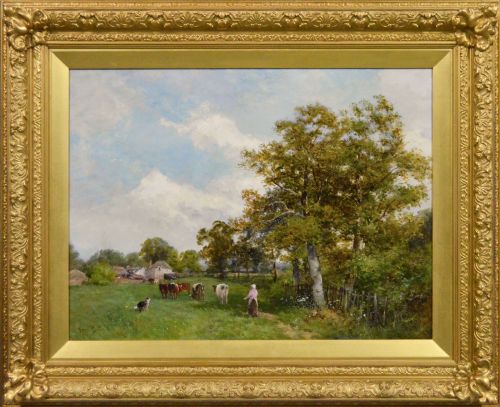
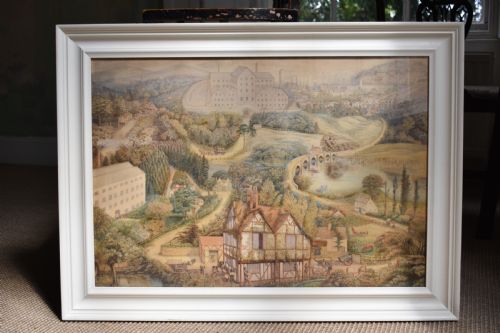
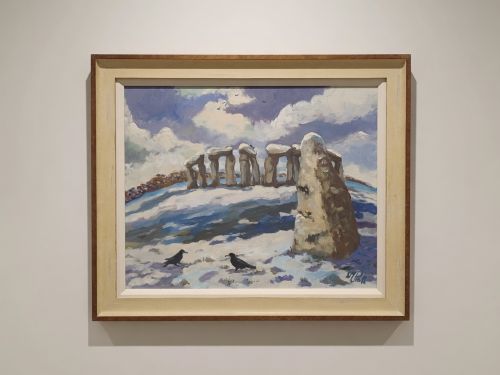
The most common pieces on this page are oil paintings on canvas or panel and works on paper representing valleys, coastal hills, and agricultural riversides. These range from Victorian pastoral views to Modern British interpretations of regional topography.
Materials and Techniques
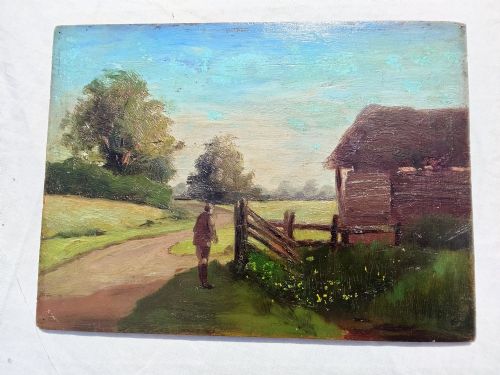
Painters utilised oil paint on stretched canvas, wooden board, or wood panel, applying pigment to capture the shifting light of rural valleys and coastal settings. Watercolour on paper forms another substantial group, often heightened with gum arabic or bodycolour to render riverbanks and atmospheric skies.
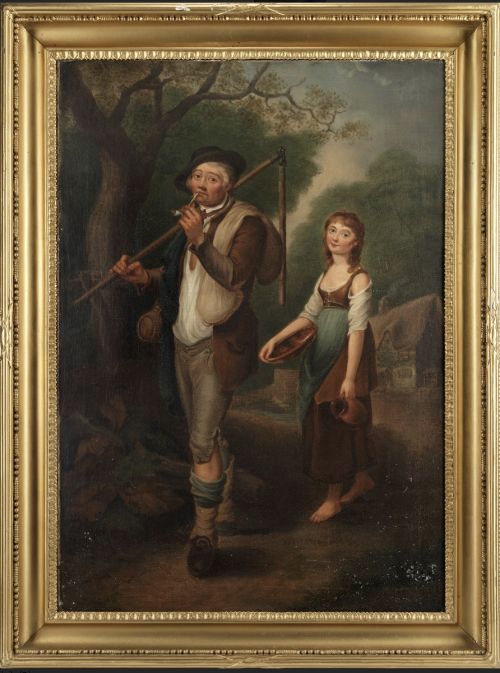
Framing typically involves period giltwood mouldings or simple wood surrounds that complement the palette of the canvas or paper within. Support structures range from traditional linen-lined stretchers to card and panel backing boards.
Materials represented include canvas, wood panels, paper, and gilt frames, showing a wide range of traditional support structures.
Distinctions in Quality
Quality rests upon the artist's command of light, brushwork, and spatial depth within the rural composition. Finer examples display confident handling of atmospheric conditions, animal anatomy, and structural geography, moving beyond formulaic topographical recording.
The preservation of the pigment layer, stability of the canvas or wooden support, and the presence of original framing elements also divide standard decorative works from notable pieces by established regional painters.
Richard Sebastian Bond·William H Myers·Herbert Royle·Robert Morson Hughes·Thomas Barker of Bath·David Bates·Lucy Pratt·Raymond Booth·Eric Brown·Ernest Higgins Rigg·Peter Newcombe·John Bond·Vernon DeBeauvoir Ward·Florence Adelina Hess·Hubert Wellington·Owen Bowen·Alfred George Morgan·Edgar Woollatt·Joseph Edward Hennah·Charles Walter Simpson·Helen Layfield Bradley·Samuel Timmins·Henry Charles Fox·William Henry Mander·John Sanderson Wells
The British Countryside Wall Art Glossary
- Oil on canvas
- Pigment suspended in drying oil applied to a woven fabric stretched across a wooden frame. This method allows for rich impasto texture and deep tonal layering.
- Watercolour
- Water-soluble pigment suspended in a water-based solution applied to paper. It yields translucent washes and delicate detail suited to pastoral scenes.
- Impasto
- Paint applied thickly to a canvas or panel, leaving visible brush or palette knife marks. This technique adds tactile dimension to foliage, earth, and water.
- English School
- A classification for works produced by artists trained or working within England, encompassing diverse regional styles from the nineteenth and twentieth centuries.
- Gilt
- A thin layer of gold leaf or gold paint applied to wooden picture frames. It provides a decorative border designed to reflect light onto the painting surface.
British Countryside Wall Art: Frequently Asked Questions
How do I date a landscape painting?
Dating relies on stylistic evidence, artist signatures, framing materials, and inscriptions on the reverse of the canvas or panel. Costume, agricultural equipment, and architectural details depicted in the rural scene also offer clues to the period.
Comparison with known dated works by the same artist or regional school helps narrow the decade of creation.
Are these paintings original works?
The selection includes hand-painted oils on canvas and board, original watercolours on paper, and occasional signed limited-edition prints. Each listing specifies the exact medium used by the artist.
Copies and prints are distinguished clearly from unique painted surfaces in the item descriptions.
How should I hang rural art at home?
Rural paintings suit spaces with natural light and traditional or transitional interior schemes. Wall placement should avoid direct sunlight to protect oil pigments and watercolour papers from fading.
Secure picture hooks rated for the weight of the frame and canvas ensure stable hanging on plaster or drywall.
What subjects feature in British countryside art?
Common subjects include river valleys, livestock grazing in pastures, harvested fields, coastal cliffs, and village cottages. Artists often recorded specific regional topographies across Yorkshire, Wales, Cornwall, and the Lake District.
Human figures appear occasionally as farm labourers, shepherds, or travellers traversing rural paths.