



British Country House Painting
A british country house painting brings the domestic and rural life of past centuries directly into a modern room.
British Country House Painting
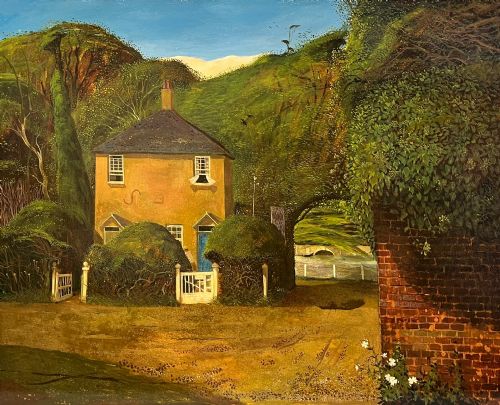
A british country house painting captures the estates, interiors, sporting pursuits, and surrounding landscapes associated with traditional property. These works range from grand architectural prospects to intimate domestic scenes, animal portraits, and pastoral views created across the nineteenth and early twentieth centuries.
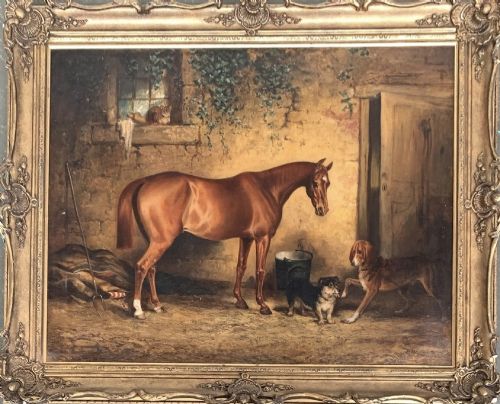
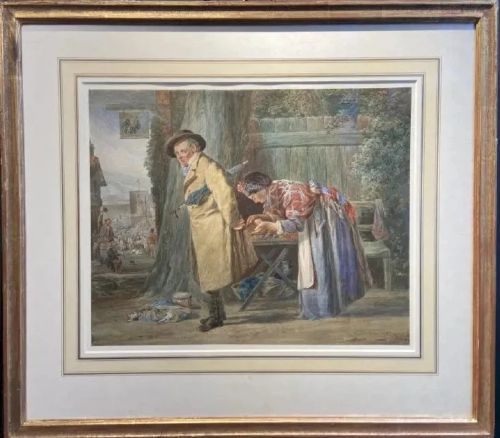
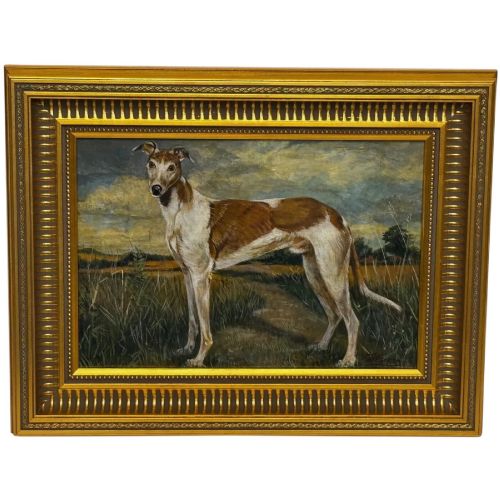
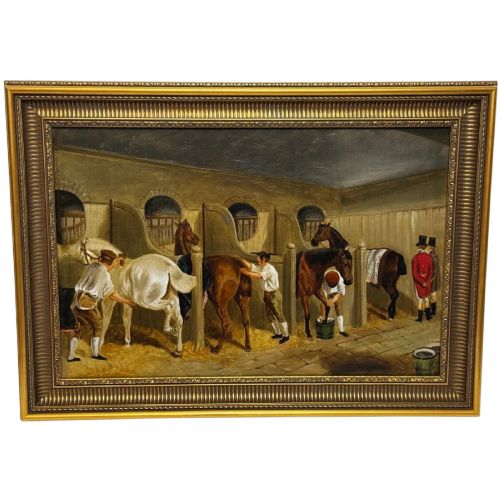
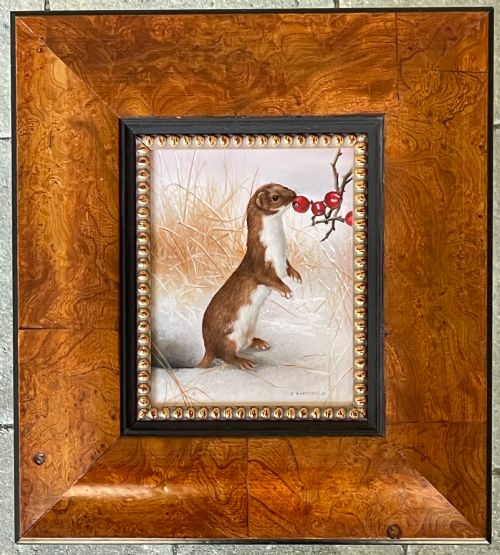
Buyers exploring this genre most frequently encounter Victorian and Edwardian canvases and watercolours depicting horses, dogs, farmyards, and garden settings. Many pieces focus on specific local fauna, livestock, or architectural studies executed by named regional artists and anonymous hands alike.
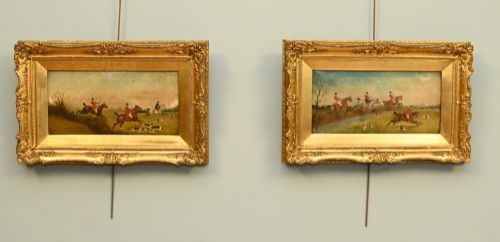
The subjects extend from formal equestrian studies and hunting scenes to quiet river landscapes and genre portraits set against historic stone walls. Each piece preserves a distinct record of rural existence, domestic routines, and estate management from eras past.
Materials and Technique
Artists relied primarily on oil paint applied to canvas or wood panels, alongside watercolours and gouache worked on paper. These traditional media allowed creators to build rich textures in animal coats, foliage, and architectural stonework.
Frames made from wood, often finished with giltwood or gold leaf, frequently accompany the paintings to complement the domestic interiors for which the works were originally commissioned.
British Country House Painting Retail Price Guide 2026
Typical asking prices for british country house painting among the pieces listed under this phrase on Sellingantiques today, from the lower quarter to the upper quarter. They describe what is for sale here now, not the wider market.
Dogs and horses frequently steal the focus from their human owners in these domestic scenes.
Assessing Quality
Quality rests upon the artist's command of anatomy, light, and proportion, particularly in complex subjects involving horses, livestock, and human figures. Superior compositions display confident brushwork and a convincing sense of space, whereas lesser examples can feel static or rigidly formulaic.
The condition of the canvas, panel, or paper surface, along with the preservation of the original pigments, plays a significant role in the visual impact of the work. Skilled handling of subtle tones in landscapes and interiors distinguishes the finer productions from ordinary decorative output.
Henry Barraud·Stephen Samuel Lewin·Joseph H Barnes·Carl Whitfield·Joseph Knight·A M Gauci·Edgar Woollatt·John Arthur Lomax·Henry John Yeend King·Philip Henry Rideout·Rowland Henry Hill·Samuel Spode·John Atkinson·Sydney Kendrick·William Hatherell·Thomas Sidney Cooper·W A Clark·George Lambert·John Frederick Herring·Molly Maurice Latham·Ernest Higgins Rigg·Marion Broom·Alfred Vickers Senior·Jack R Mould·Tom Dudley
The British Country House Painting Glossary
- Oil on Canvas
- A traditional painting medium where pigments suspended in oil are applied to a woven fabric support. This method allows for deep colour saturation and gradual blending of tones.
- Giltwood
- Wood that has been coated with a thin layer of gold leaf or gold paint. It is commonly found on traditional frames designed to enhance the artwork.
- Genre Painting
- Artwork depicting scenes from everyday life, ordinary people, and domestic interiors. These pieces often tell a narrative story about daily routines.
- Watercolour Painting
- A medium consisting of pigment mixed with a water-soluble binder, applied typically to paper. It produces transparent washes of colour and light effects.
British Country House Painting: Frequently Asked Questions
What subjects appear in these paintings?
The subjects include estate houses, domestic interiors, hunting scenes, livestock, and local rural landscapes. Many works focus on horses, dogs, and farmyard activities.
Human figures engaged in daily pursuits or leisure outside historic properties also form a substantial part of the imagery.
How were these artworks displayed originally?
These paintings were commissioned or acquired to hang in the principal reception rooms, halls, and studies of country residences. They served to document family property, prized animals, and local scenery.
Framed in substantial wood and gilt mouldings, they anchored the decorative schemes of large domestic interiors.
How do I care for an antique painting?
Protect the canvas or paper from direct sunlight and steady moisture to prevent fading and material degradation. Keep the works away from extreme temperature shifts caused by radiators.
Dust giltwood frames gently with a soft dry brush without applying chemical cleaners to the surface.
How can I tell the period of a painting?
Dating relies on the clothing styles of figures, architectural details, painting techniques, and framing materials. The signatures or inscribed dates on the canvas provide direct chronological markers.
Comparing the handling of light and subject matter to established regional schools helps narrow down the decade of production.