



![Pen and Ink Sketch - Female Nudes by William Edward Frost [1810-1877]](https://www.sellingantiques.co.uk/photosnew/dealer_kendallhouse/dealer_kendallhouse_full_1758970795762-8493507346.jpg)


British Academic Painting
British academic painting brings formal academic portraiture and figure studies into your room through disciplined canvas work.
British Academic Painting
British academic painting covers formal portraits, historical subjects, and figure studies produced under the influence of major institutions like the Royal Academy. When you search for british academic painting, you encounter works spanning from the eighteenth century through the mid twentieth century, reflecting rigorous training in anatomy, composition, and technique.
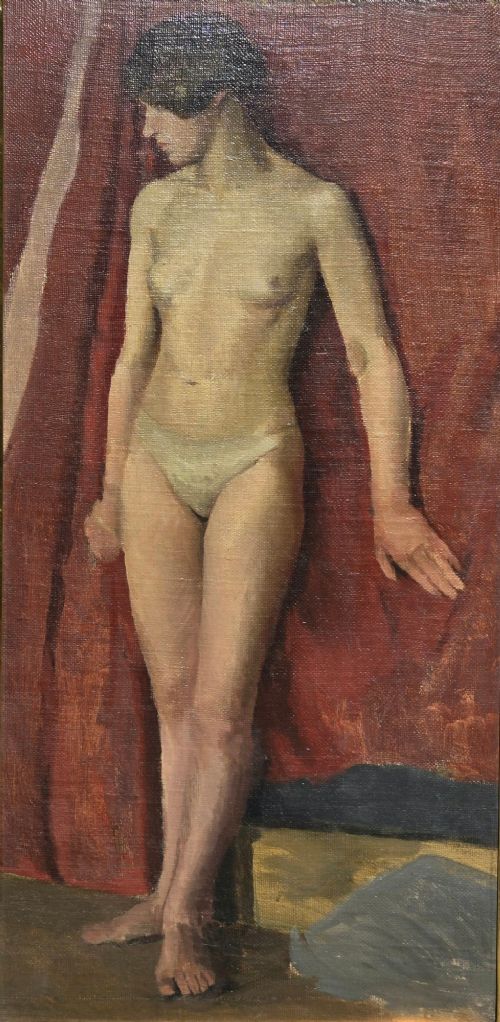
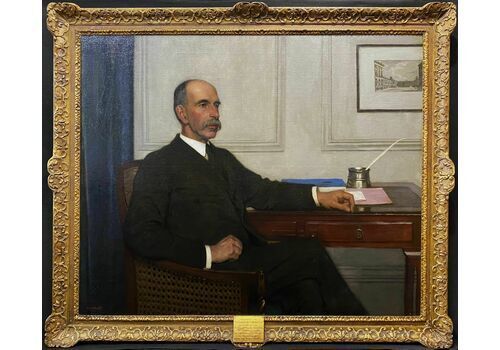
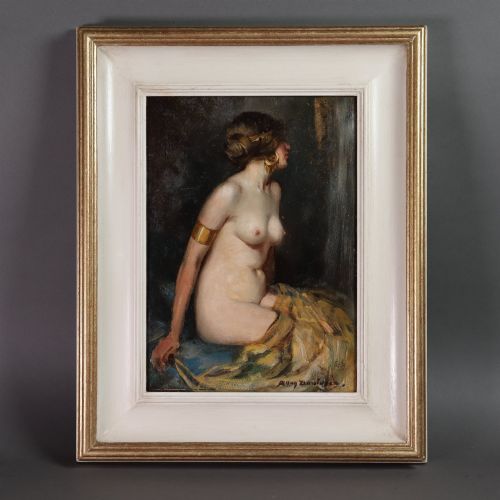
The most common formats on this page are oil paintings on canvas or panel, housed in original gilt wood frames. These pieces typically document sitters of notable stature, such as scientists, writers, and physicians, alongside studio nudes and genre scenes.
The chronological range stretches from the Regency period through Victorian romanticism and into twentieth century realism. Works range from intimate cabinet portraits to large historical canvases produced by established painters and art school practitioners.
Materials and construction
These works rely primarily on oil paint applied to prepared canvas, panel, or board surfaces. The pigment handling demonstrates traditional layering, tonal glazing, and precise draughtsmanship developed through academy study.
Many paintings retain their period housing, utilising carved and gilded wood frames or giltwood mouldings designed to complement the composition. Secondary materials like pen and ink appear in preparatory sketches and works on paper.
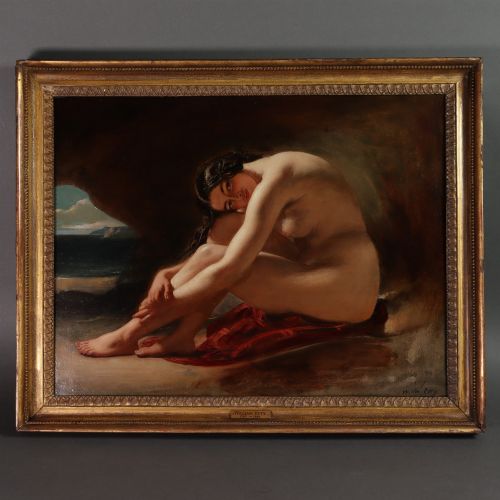
At least one sitter is recorded simply as Ariadne, though the paint suggests an afternoon spent inside a remarkably damp cave.
What distinguishes finer examples
Quality rests on the precision of the draughtsmanship and the psychological depth of the subject rendered. Masterful handling of light, shadow, and anatomical structure elevates a canvas above standard commercial portraiture.
The execution of hands, facial expression, and drapery separates accomplished academicians from competent jobbing painters. Frame integrity and the preservation of original canvas surfaces further distinguish superior examples.
Harold Knight·William Etty·Allan Douglas Davidson·Lance Calkin·Alfred Holst Tourrier·James Clark·William Edward Frost·William Robert Dickinson·George Hayter·Arthur Spooner·Henry William Pickersgill·Sir Samuel Luke Fildes·Rudolph Lehmann·Cowan Dobson·Frank Thomas Copnall·William Dring·Edward Penny·Adrian Bury·Frank Samuel Eastman
The British Academic Painting Glossary
- Academic
- Pertaining to the formal rules and standards taught by official art academies such as the Royal Academy. This training emphasised classical draughtsmanship and historical subjects.
- Genre painting
- The pictorial representation of scenes from everyday life involving ordinary people. These works often carry subtle narrative or moral themes.
- Giltwood
- Wood that has been coated with gold leaf or a gold coloured finish. Frames of this material frequently accompany nineteenth century portraits.
- Panel
- A rigid support for a painting, typically made of wood rather than stretched canvas. Panels provide a stable surface for detailed brushwork.
- Provenance
- The chronological history of the ownership of a work of art. Documented ownership helps establish authenticity and attribution.
British Academic Painting: Frequently Asked Questions
What defines a British academic painting?
It is a work created under the influence or instruction of official institutions like the Royal Academy, prioritising traditional technique and classical form.
These pieces typically showcase skilled portraiture, historical scenes, or nude studies executed in oil on canvas.
How should I care for an oil painting?
Keep the canvas away from direct sunlight and damp conditions to prevent cracking of the paint layer.
Dust the surface gently with a soft, dry brush and avoid using liquid cleaners on either the canvas or the frame.
Are these paintings usually signed?
Many academic works carry artist signatures or monogram markings, often placed near the lower edges of the canvas.
Unsigned pieces are frequently attributed through stylistic analysis, exhibition records, or historical documentation.
What is the role of the frame?
The frame provides structural support for the canvas while framing the visual space of the artwork.
Period gilt wood frames are integral to the presentation and help date the overall object.