




Brilliant Cut Diamond
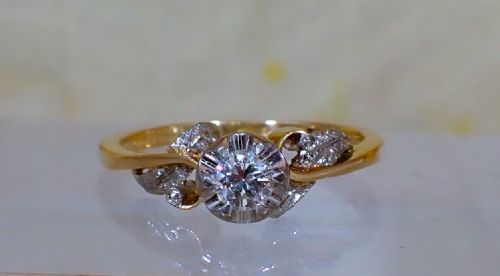
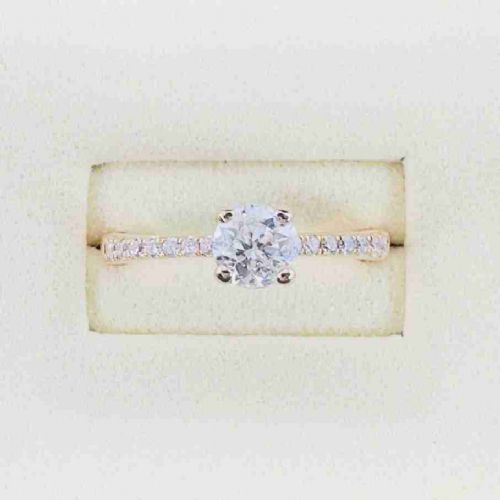
A brilliant cut diamond represents precision faceting designed to maximise light return within rings, pendants, and bracelets spanning the Victorian era to the mid-century.
Brilliant Cut Diamond
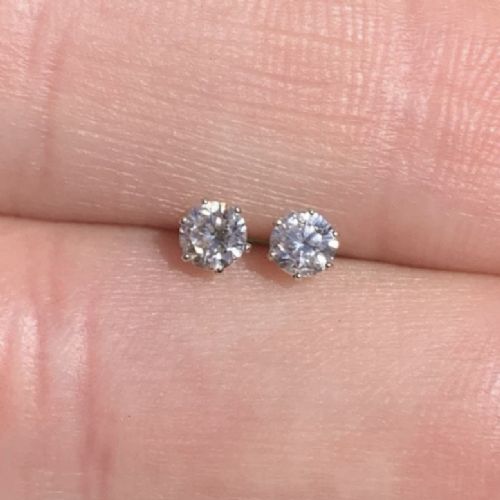
A brilliant cut diamond selection encompasses rings, pendants, earrings, bracelets, brooches, and stickpins designed with stones shaped to capture and reflect light efficiently. Buyers searching for a brilliant cut diamond encounter pieces spanning Victorian, Edwardian, Art Deco, and mid-century periods, with mid-century and 1950s examples appearing frequently.
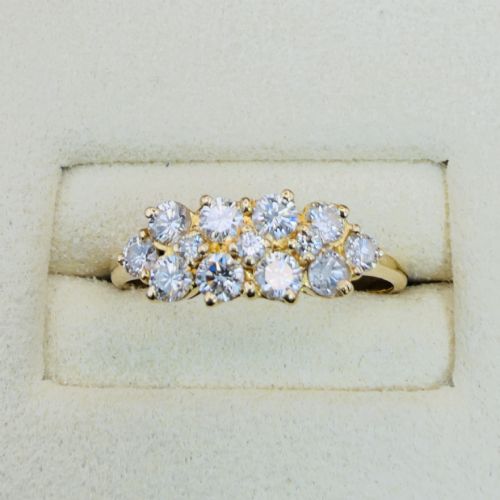
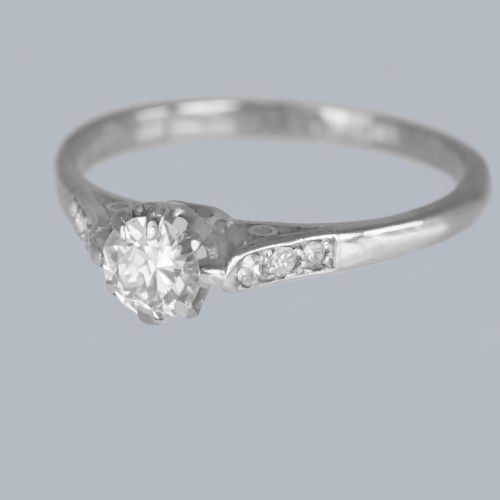
The assortment includes solitaire engagement rings, cluster rings, trilogy designs, and drop earrings alongside platinum crosses and signet rings. Metal choices range from platinum and white gold to 18ct yellow gold, 18ct rose gold, and 14ct yellow gold.
Solitaire rings and stud earrings dominate the selection, often featuring claw settings, bezel settings, or diamond-set shoulders. Cluster and daisy configurations group multiple stones to create pronounced visual impact across bracelets and dress rings.
Materials and Construction Techniques
Jewellery makers set brilliant cut diamonds into sturdy mountings of platinum or high-carat gold, including 18ct white gold and 18ct yellow gold. Platinum provided the structural strength required for secure prong and bezel settings, particularly during the Art Deco period.
Goldsmiths utilised traditional casting and hand-working methods to form solid bands, decorative galleries, and multi-stone clusters. Stones were carefully hand-faceted to precise geometric proportions to enhance brilliance, occasionally incorporating transitional cuts or older brilliant facets alongside modern configurations.
Some mid-century designs even dared to mix brilliant cut diamonds with vibrant blue and green enamel.
Distinguishing Factors in Quality
Quality variation rests in the precision of the stone cutting, symmetry, and overall clarity, which dictate how light travels through the diamond. Superior examples exhibit clean faceting and balanced proportions that maximise optical performance without obscuring natural character.
The integrity of the metalwork, the security of the settings, and the harmony between the central stone and its supporting shoulders define the standard of the mount. Pieces retaining crisp metal definition and robust claw or bezel construction demonstrate superior craftsmanship across all production periods.
Niels Erik From
The Brilliant Cut Diamond Glossary
- Brilliant Cut
- A diamond faceting style featuring triangular and kite-shaped facets engineered to maximise light return. This geometry forms the standard for modern round diamonds.
- Solitaire
- A single diamond mounted independently within a ring, pendant, or earring setting. This format focuses visual attention entirely on the central stone.
- Cluster
- An arrangement of multiple smaller diamonds set closely together around a central stone or in a floral motif. This design creates a larger apparent surface area of sparkle.
- Trilogy
- A three-stone setting symbolising past, present, and future, typically featuring graduating diamonds. It appears frequently in mid-century and antique engagement rings.
- Transition Cut
- A diamond faceting style bridging old cut stones and modern brilliant cuts, prevalent during the early twentieth century. It displays a smaller table and slightly larger culet.
Brilliant Cut Diamond: Frequently Asked Questions
What periods do these pieces date from?
The inventory includes items from the Victorian, Edwardian, and Art Deco eras, alongside a significant volume of mid-century and 1950s designs.
Later twentieth-century examples also appear regularly, offering diverse stylistic influences from different decades of manufacture.
How do solitaire and cluster rings differ?
Solitaire rings feature a single, isolated diamond mounted on a plain or shoulder-set band to emphasise the individual stone.
Cluster rings group several diamonds together into a concentrated formation, such as a daisy pattern, to maximise overall presence.
Which metals were commonly used?
Makers utilised platinum alongside various purities of gold, including 18ct white gold, 18ct yellow gold, 18ct rose gold, and 14ct yellow gold.
Platinum gained favour during the Art Deco period for its strength, while white and yellow gold remained popular throughout the mid-century.
Are bracelets and pendants available?
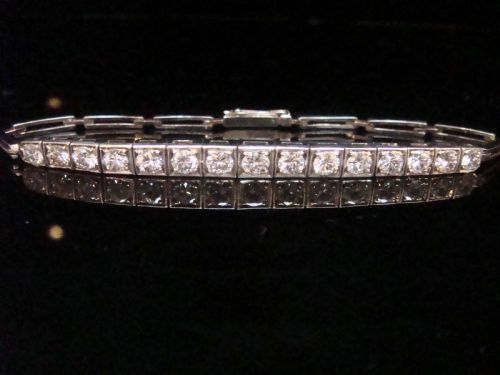
The selection extends beyond rings to encompass drop earrings, stud earrings, stickpins, brooches, pendant necklaces, and articulated bracelets.
These pieces frequently incorporate multiple brilliant cut diamonds set in platinum or 18ct white gold.