





Breakfront Display Unit
A breakfront display unit provides grand architectural presence and generous storage, uniting multiple sections of shelving in one distinguished piece.
Breakfront Display Unit
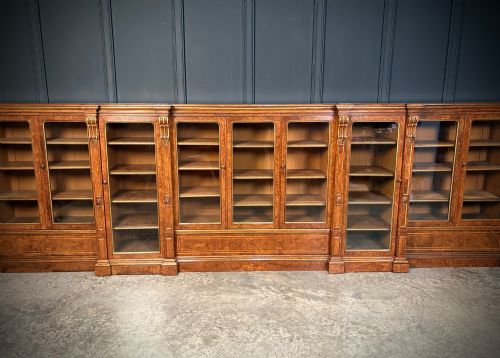
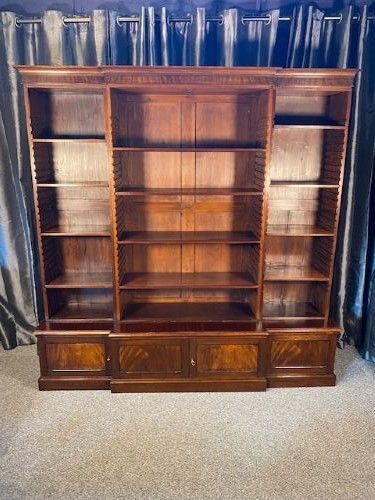
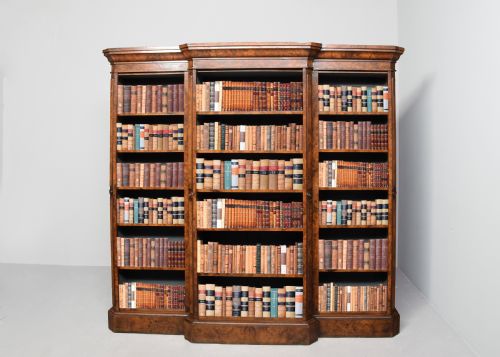
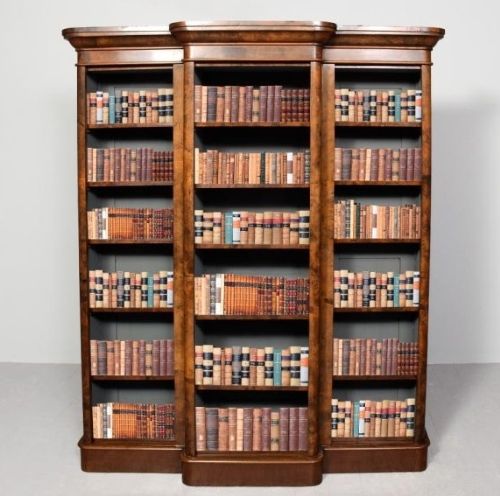
A breakfront display unit typically manifests as a substantial bookcase or display cabinet featuring a central section that projects forward from the flanking wings. This configuration creates a pronounced architectural rhythm across the front elevation of the furniture.
The pieces appearing on this page span the Victorian and Edwardian eras, alongside revivals and later interpretations from the nineteenth and early twentieth centuries. Mahogany, burr walnut, and rosewood form the primary timbers of construction.
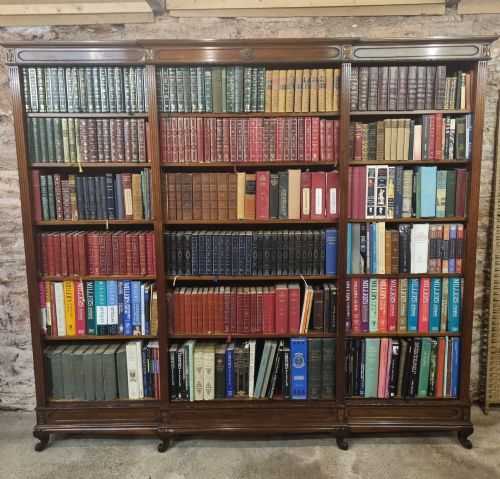
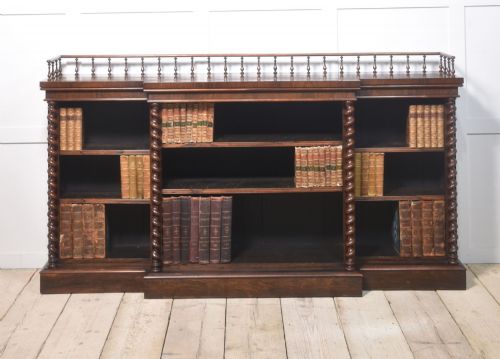
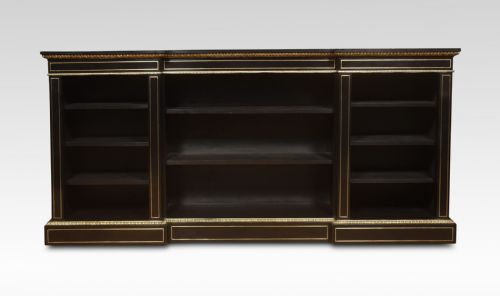
Open bookcases predominate within this selection, though glazed display cabinets and low library variants also occur. Most examples utilise three distinct sections to achieve the characteristic breakfront profile.
Materials and construction
Cabinet makers utilised dense hardwoods such as mahogany and rosewood for the structural carcasses, frequently applying flame mahogany veneer or burr walnut to the prominent exterior surfaces. These figured veneers introduce striking grain patterns across the broad expanses of the central and side sections.
Glazing and brass mounts appear on specific library and display variants, while adjustable shelves allow flexible arrangement of volumes. The joinery relies upon traditional framing techniques to support the substantial weight of large tiers.
Breakfront Display Unit Retail Price Guide 2026
Typical asking prices for breakfront display unit among the pieces listed under this phrase on Sellingantiques today, from the lower quarter to the upper quarter. They describe what is for sale here now, not the wider market.
Listings feature periods spanning from the nineteenth century through the Edwardian era, constructed in mahogany, burr walnut, rosewood, and painted wood.
Assessing quality in breakfront furniture
The calibre of a breakfront display unit rests upon the choice of timber and the dexterity of the veneer work on the projecting central section. Finely figured burr walnut or rich mahogany elevate the visual impact significantly.
Proportion and execution of the breakfront profile dictate the architectural success of the piece, distinguishing restrained cabinet work from heavier, less balanced examples.
Robert Strahan·Samuel Pepys
The Breakfront Display Unit Glossary
- Breakfront
- A cabinet or bookcase whose central section projects forward from the flanking wings. This architectural device adds depth and visual interest to large pieces.
- Burr Walnut
- Timber taken from a tree growth where the grain has swirled into intricate patterns. It produces highly decorative veneer surfaces on Victorian furniture.
- Flame Mahogany
- Timber veneer displaying a characteristic flame-like figure. Cabinet makers used this to adorn prominent doors and drawer fronts.
- Adjustable Shelves
- Shelving that can be repositioned at various heights within a bookcase. This practical feature appears frequently in nineteenth-century library furniture.
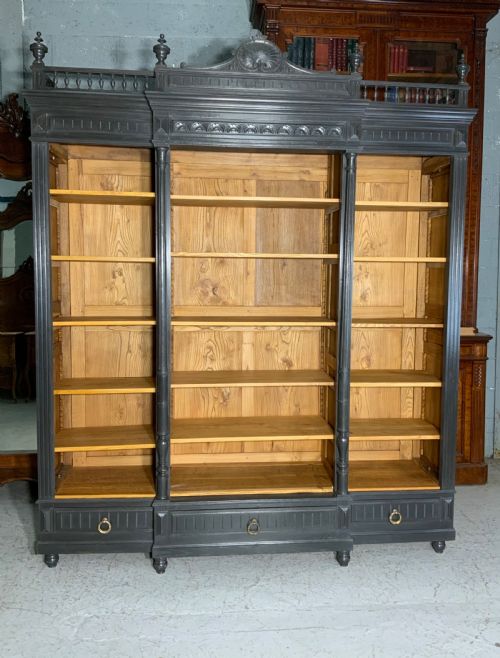
- Ebonised
- Wood finished to resemble ebony through staining or painting. This treatment creates a dark, uniform surface often seen on late-nineteenth-century pieces.
Breakfront Display Unit: Frequently Asked Questions
What is a breakfront display unit?
A breakfront display unit is a large cabinet or bookcase where the central portion projects further forward than the flanking sections. This design creates a distinctive three-part facade that breaks up a long, flat wall.
Such pieces were traditionally designed for grand libraries and drawing rooms to house extensive book collections and display decorative objects.
How do I style a breakfront bookcase?
Position the unit against a substantial wall where its architectural proportions can be appreciated without crowding the room. Balance books and display items across the shelves to maintain visual weight.
Ensure adequate clearance in front of the projecting central section so the piece retains its intended presence in the interior scheme.
Are the shelves adjustable?
Many period examples feature adjustable shelving supported by wooden ratchets, brass tracks, or traditional shelf pins. This allows you to accommodate volumes of varying heights.
Check the individual descriptions to confirm whether the specific shelving mechanism allows for movement.
What timbers were used?
Cabinet makers predominantly used mahogany, walnut, and rosewood for these substantial pieces. Finer examples frequently showcase decorative veneers such as burr walnut or flame mahogany.
Secondary woods were used for internal construction and drawer linings, maintaining structural stability behind the decorative facades.