




Brass Wire Mesh Guard
A brass wire mesh guard keeps sparks in their place while bringing warmth and structure to a hearth.
Brass Wire Mesh Guard
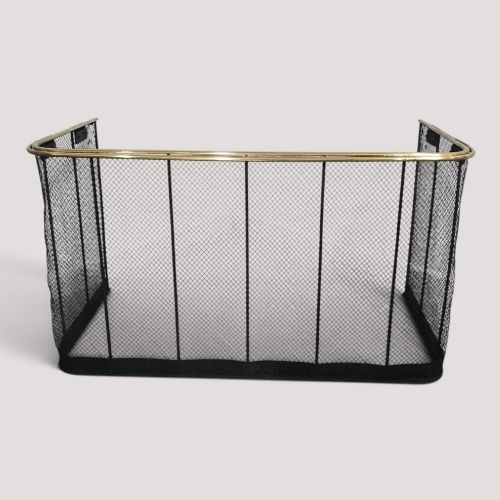
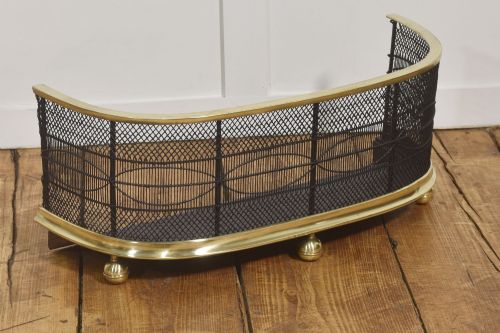
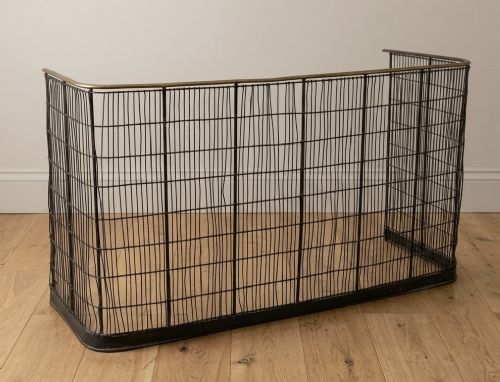
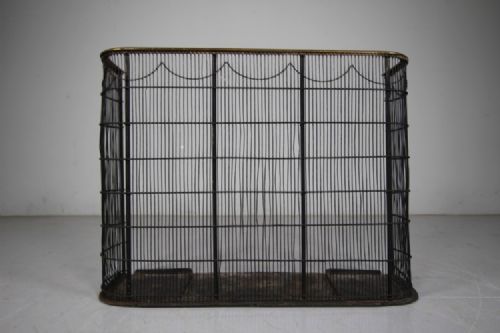
A brass wire mesh guard is essentially a hearth accessory designed to protect a room from stray embers, appearing in forms such as fire screens, fire guards, and nursery fenders. These items span periods from the Regency era through the Victorian epoch and into the early twentieth century, showing a strong presence of nineteenth-century craftsmanship.
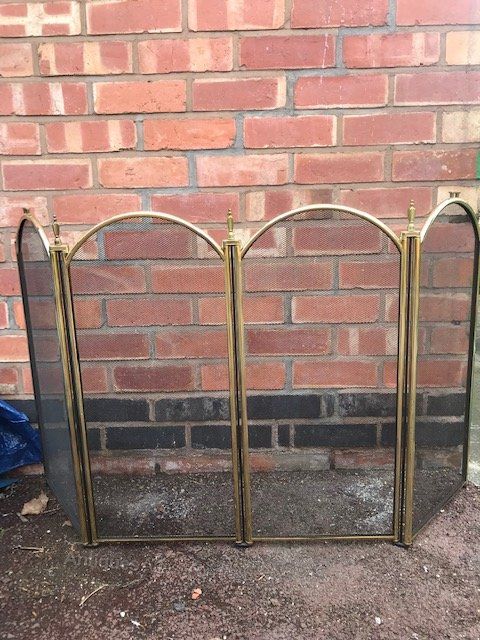
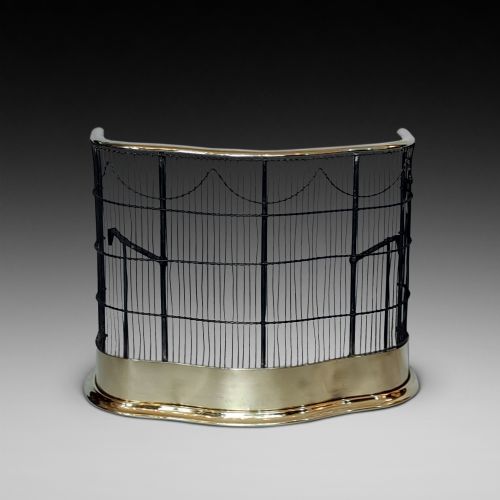
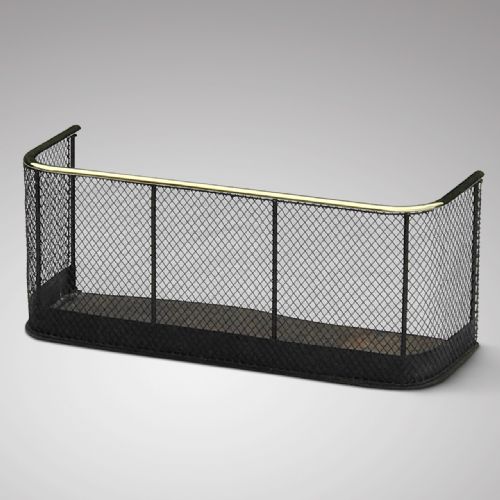
The versions most frequently met on this page include folding spark guards, bowed nursery fenders with clothes rails, and standing fire screens. They combine protective metal mesh with polished brass frames and top rails, serving both a functional safety role and a decorative domestic purpose.
How they were made
The construction relies on combining robust structural metals like wrought iron, steel wire, and iron mesh with finished brass frames, rims, and top rails. Makers woven wire mesh tightly to form the protective body, securing it within rigid metal frameworks that often received a black finish alongside polished brass elements.
Details such as embossed brass panels, serpentine curves, and four folding sections show the varied metalworking techniques employed by period makers. These pieces were built for daily household utility, balancing heavy iron or steel support with lighter brass mouldings.
What varies in quality
Quality rests in the heaviness of the framework and the tightness of the woven wire mesh, distinguishing substantial country house examples from lighter domestic items. The weight of the brass top rail and the precision of the bowed or serpentine shaping signal the care put into the metalwork.
Finishes also separate standard guards from finer pieces, particularly where embossed brass decoration or crisp black and polished brass contrasts remain intact. The structural integrity of folding joints and the seamless integration of clothes rails on nursery fenders indicate higher production standards.
The Brass Wire Mesh Guard Glossary
- Nursery fender
- A low, protective barrier placed around a fireplace to keep children at a safe distance from the fire. These often include a top rail and extensive wire mesh panels.
- Spark guard
- A fine wire mesh screen designed specifically to catch flying embers and sparks escaping from an open hearth. They appear as freestanding fire screens or folding sections.
- Serpentine
- A gentle undulating curve shape seen along the base or frame of certain guards, following an S-bend contour. This stylistic choice softens the rigid lines of the hearth.
- Fire screen
- A decorative upright panel placed before a fireplace when the fire is not lit. In this context, they incorporate wire mesh and brass frames rather than solid wood or fabric.
- Wrought iron
- Tough, malleable iron worked by hammering and bending, frequently used for the structural framework beneath brass trims. It provides the heavy foundation needed for nursery fenders.
Brass Wire Mesh Guard: Frequently Asked Questions
What is a nursery fender?
A nursery fender is an enclosed metal barrier that surrounds the hearth area entirely to prevent children and pets from getting too close to the fire.
These pieces typically feature a tall wire mesh body topped with a sturdy brass rail, and some historic examples include an integrated clothes rail for drying garments.
How do I clean a brass and wire mesh guard?
Cleaning requires gentle dusting of the wire mesh using a soft brush to remove soot and debris without damaging the woven structure.
The brass frame and top rail can be polished carefully with a suitable metal cleaner, taking care to avoid splashing cleaning agents onto the iron mesh.
Where were these guards used?
These guards were standard fixtures in principal rooms, nurseries, and country houses where open coal or wood fires burned daily.
They provided essential safety in family spaces while allowing maximum heat to radiate into the room through the mesh.
How do I date an antique fire guard?
Dating relies on observing the framing style, metal finishing techniques, and structural forms associated with specific eras like the Regency or Victorian periods.
Details such as embossed brass motifs and serpentine wirework help place a piece within its nineteenth or early twentieth-century context.