

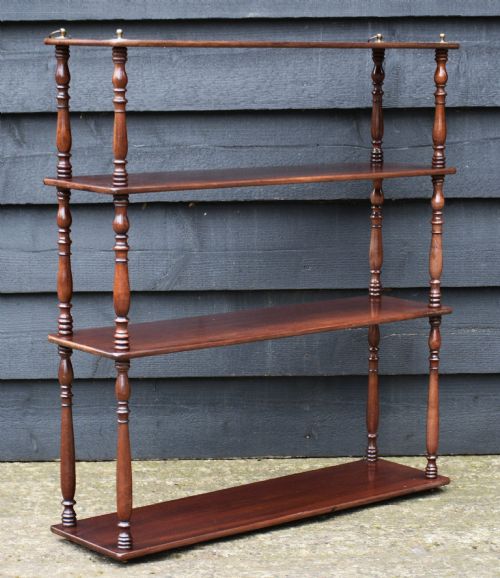



Brass Wall Shelf
A brass wall shelf brings functional display and warm metallic lustre to a room, spanning Victorian wood designs to French Art Deco hat racks.
Brass Wall Shelf
When searching for a brass wall shelf, buyers encounter hanging display tiers, luggage racks, and coat combinations from the nineteenth and early twentieth centuries. These objects combine metalwork with timber structures like mahogany, oak, and yew wood.
The most common versions on this page are wall-hanging shelves and luggage racks featuring brass galleries or wire mesh. Pieces range from compact two-tier brackets to long French portmanteaus incorporating hooks and mirrors.
How they were made
Maker construction relies on joining solid hardwoods such as mahogany and oak with cast or tubular brass elements. Ormolu, wire mesh, and mirrored glass frequently appear alongside painted wood surfaces.
Metal components utilise casting and joining techniques to secure galleries, brackets, and hooks to wooden backplates. Shelf structures often incorporate protective brass rails known as galleries to retain items securely.
Brass Wall Shelf Retail Price Guide 2026
Typical asking prices for brass wall shelf among the pieces listed under this phrase on Sellingantiques today, from the lower quarter to the upper quarter. They describe what is for sale here now, not the wider market.
Current listings feature materials including brass, mahogany, glass, oak, ormolu, wood, enamel, and wire mesh across the nineteenth and early twentieth centuries.
What varies in quality
Quality differences emerge in the weight of the metal components and the choice of cabinet timber. Heavy cast brass brackets and thick mahogany or yew boards demonstrate superior manufacture compared to lighter alternatives.
The sophistication of the joinery and the retention of original glass plates or enamel details distinguish finer examples. Maker attribution and refined surface finishing further elevate specific pieces.
Henri Dasson
The Brass Wall Shelf Glossary
- Ormolu
- Gilded bronze applied to ornamental metalwork and mounts. It provides a bright golden finish on nineteenth-century shelf brackets.
- Gallery
- A raised protective rail running along the edge of a shelf. It prevents items from sliding off wall-mounted surfaces.
- Portmanteau
- A combined wall-mounted rack featuring hooks for coats and hats alongside shelf or mirror elements. These pieces originate frequently from French domestic settings.
- Bracket
- A supporting architectural member projecting from a wall. In these listings, it refers to both shelf supports and clock brackets.
- Pullman luggage rack
- An overhead luggage carrier modelled after railway carriage fittings. They feature sturdy brass bars and wire mesh construction.
Brass Wall Shelf: Frequently Asked Questions
How do I hang a heavy brass shelf?
Secure the mounting brackets directly into wall studs or use appropriate heavy-duty cavity fixings suited to the plaster type. Heavy wooden tiers require robust support to bear the combined weight of the timber and metal.
Ensure the fixing screws match the original or existing screw holes where possible to preserve the structural integrity of the backplate.
Are these shelves suitable for heavy books?
Most hanging shelves suit lighter decorative items, ceramics, or display pieces rather than dense libraries. Shorter two-tier designs offer better stability for heavier loads than extended lengths.
Check the depth of the boards and the sturdiness of the wall fixings before placing substantial objects on display.
How should I clean antique brass?
Dust the metal gently with a soft dry cloth to remove surface particles. Avoid abrasive polishes that strip away the aged patina accumulated over decades.
Preserving the natural oxidation maintains the historical character valued by collectors of nineteenth-century metalwork.
Can I use a luggage rack in a bathroom?
Portmanteaus and hat racks function well in bathrooms for holding towels and toiletries, provided the timber is protected from excessive moisture. Brass resists corrosion effectively in humid environments.
Monitor the wooden backplates for signs of warping if placed directly near steam sources.