

Brass Wall Sconce Light
A brass wall sconce light brings warm candle-derived illumination and sculptural metalwork to an interior wall.
Brass Wall Sconce Light
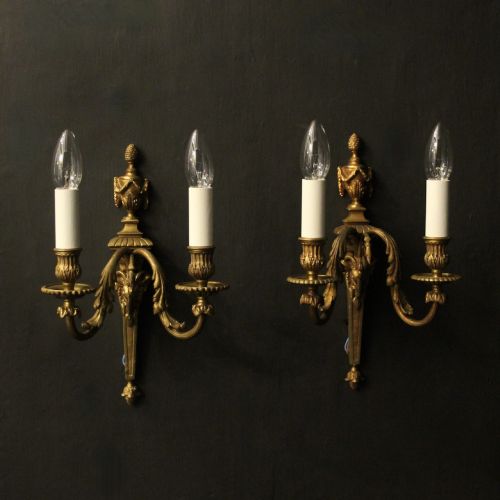
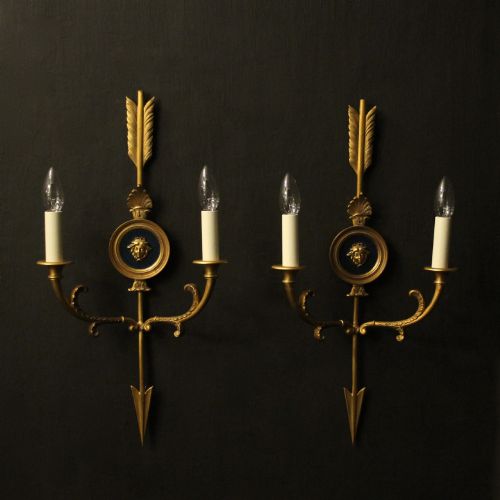
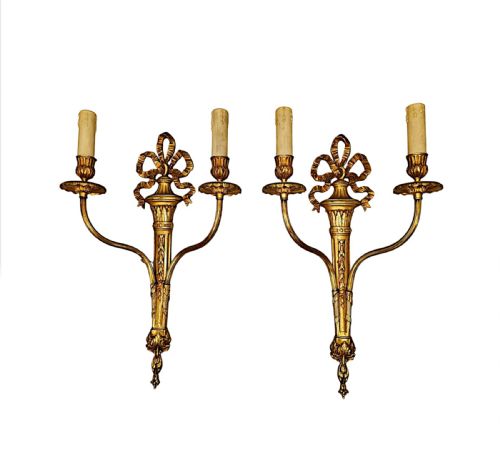
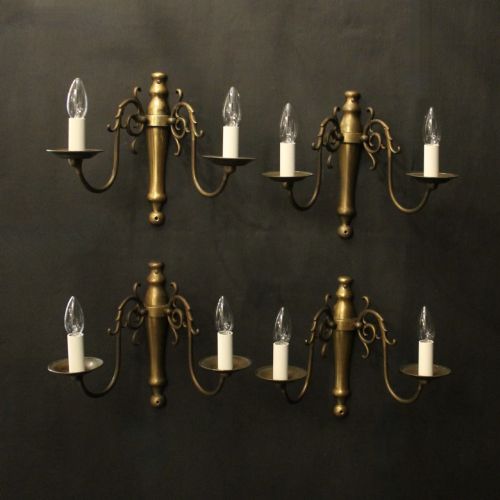
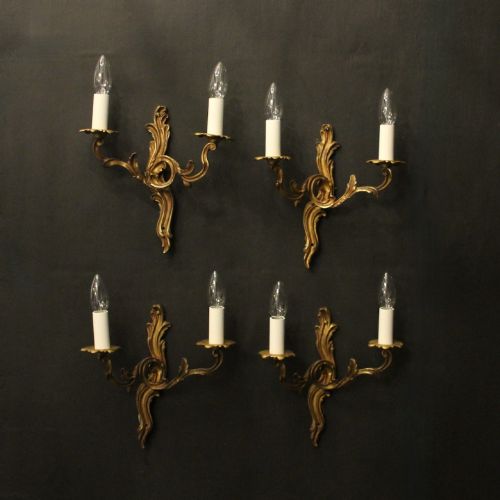
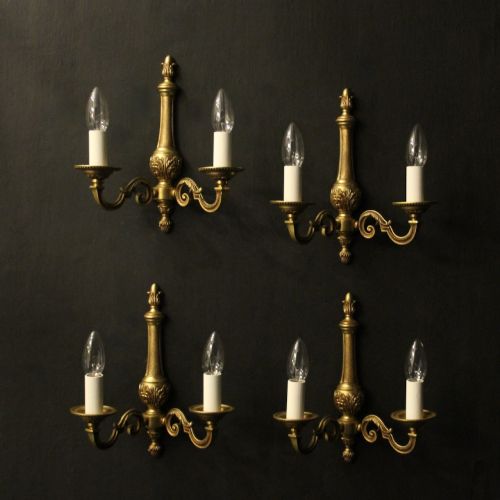
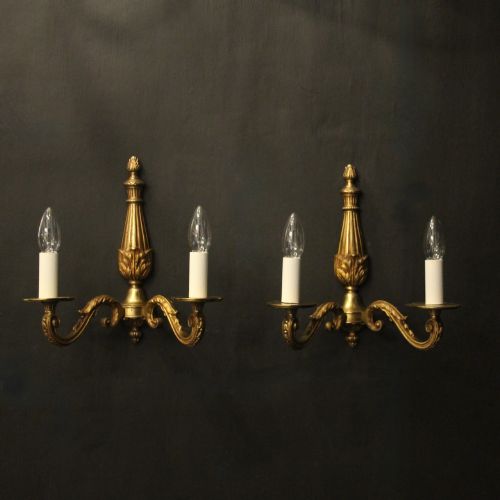
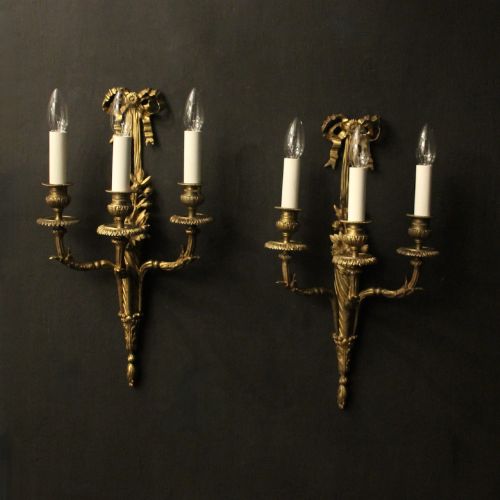
A brass wall sconce light is a fixture mounted directly onto a vertical surface to cast gentle illumination across a room. When exploring this selection, buyers frequently encounter French pieces originating from the nineteenth and early twentieth centuries.
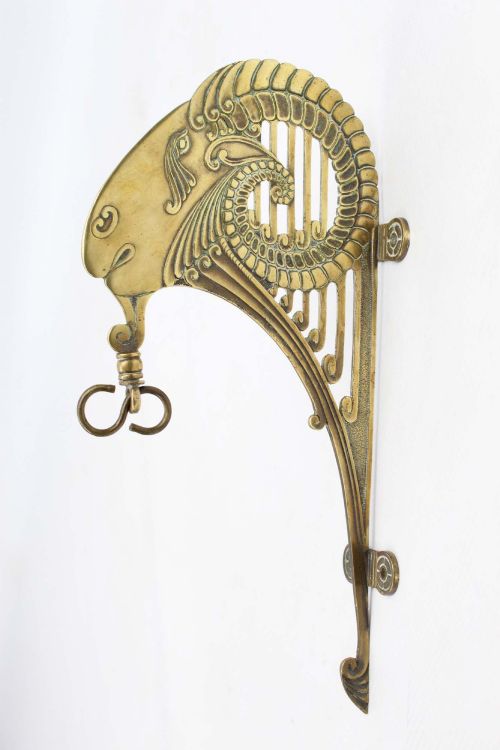
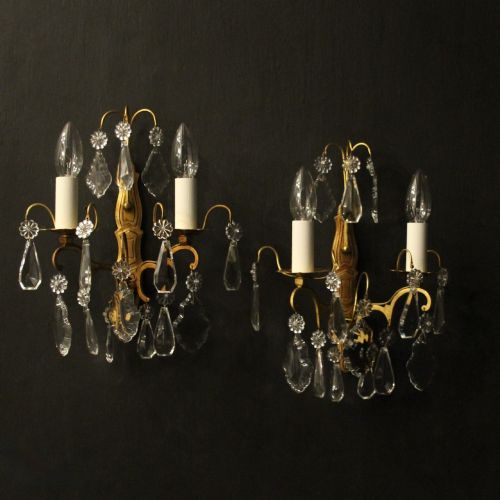
Stylistic influences span from ornate rococo and neo-classical revivals to restrained arts and crafts designs. Many examples incorporate glass drops, crystal accents, or porcelain elements to diffuse the glow.
How they were made
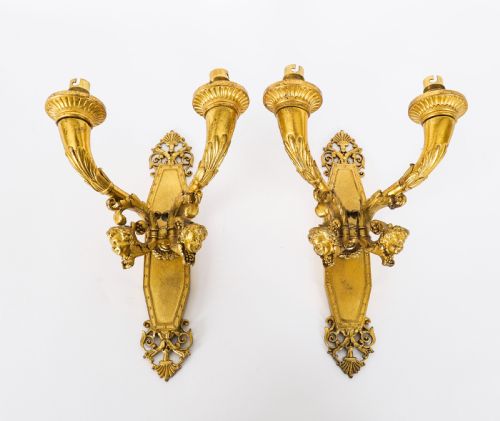
Maker's workshops relied on cast brass, ormolu, and gilded bronze to form the structural bodies and decorative arms of these fixtures. Skilled artisans chased the metal surfaces by hand to impart texture, depth, and sharp detail before applying gold leaf or gilt finishes.
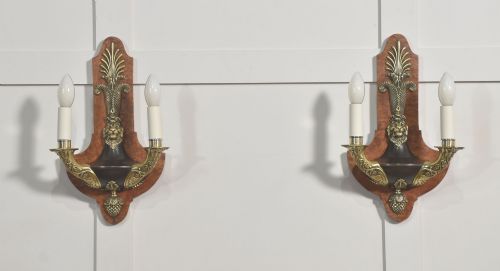
Assemblies frequently integrate secondary materials including cut crystal, hand-painted tole peinte, and burr walnut backs. Wiring additions in later decades transformed initial candle-holding brackets into electrified wall lamps without altering the original cast metal frames.
Snake-shaped cobra sconces bring an unexpected reptilian twist to nineteenth-century wall illumination.
What varies in quality
The distinction between standard production and exceptional execution rests upon the crispness of the metal casting and the depth of the chasing. Superior examples display finely articulated foliage, cherubs, or scrollwork where every individual leaf and feather is sharply defined rather than softened.
Substantial gauge metal provides structural rigidity, preventing the twin arms or candle nozzles from sagging under their own weight. Furthermore, the quality of the gilding or fire-gilt ormolu determines how gracefully the metal ages and reflects ambient light over generations.
W.A.S. Benson·Bruce Talbert·Villeroy and Boch
The Brass Wall Sconce Light Glossary
- Ormolu
- Gilded bronze produced by applying a mercury and gold amalgam to a bronze base and heating it until the mercury vaporised. This historic technique leaves a rich, deep golden surface that resists tarnishing.
- Girandole
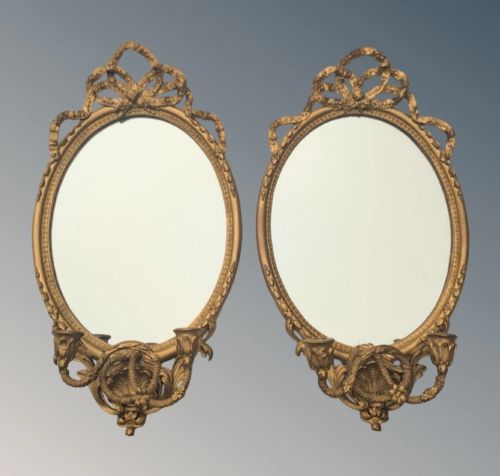
- A branched wall sconce featuring a reflective mirror backplate designed to amplify the flickering light of candles. The glass back adds visual depth to the installation.
- Tole peinte
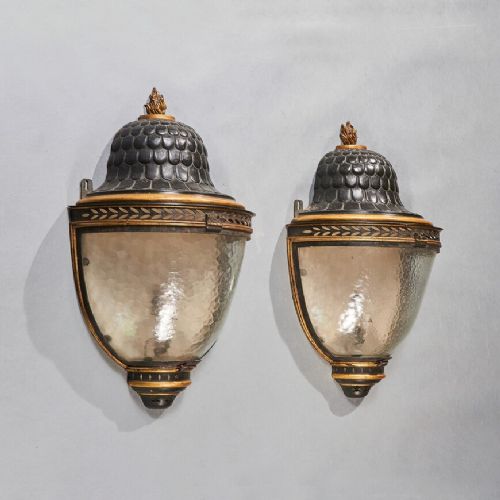
- Painted sheet metal used to form decorative lantern bodies and shades. It introduces vibrant colour accents into the metalwork.
- Louis XVI
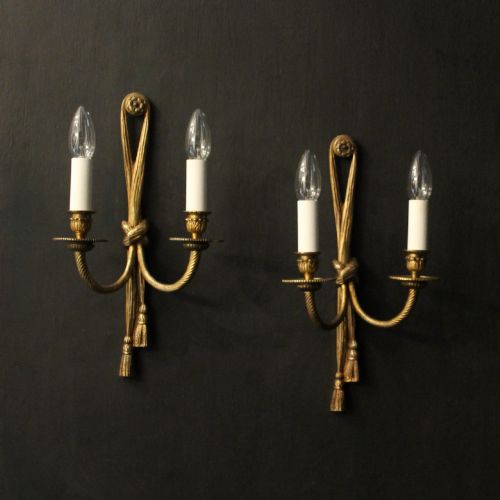
- A neoclassical style characterised by symmetry, straight lines, and classical motifs such as urns, ribbons, and acanthus leaves. Pieces from this design vocabulary exhibit geometric discipline.
- Rococo Revival
- A nineteenth-century style mimicking the asymmetry and naturalistic curves of the eighteenth-century French movement. These designs celebrate shellwork, scrolls, and floral abundance.
Brass Wall Sconce Light: Frequently Asked Questions
How were brass wall lights used originally?
These fixtures were positioned in hallways, drawing rooms, and bedchambers to supplement natural daylight and evening candle illumination. Their reflective backplates or gilt surfaces served to bounce the limited candle glow further into the space.
In grander interiors, matched sets lined the perimeter to create a balanced rhythm of light across wood-panelled or wallpapered walls.
Are antique wall sconces wired for electricity?
Many examples have been adapted for modern electrical circuits, though some retain their original candle-holding configuration or require rewiring to meet current standards. Professional installation ensures that internal components safely accommodate contemporary bulbs.
Buyers should inspect the backplates and internal channels to understand how the wiring has been integrated through the historic metal arms.
How do I distinguish French styles from English ones?
French sconces from the nineteenth and early twentieth centuries frequently lean towards ornate rococo curves, gilded bronze, and neoclassical motifs like ribbons and urns. English variants often display simpler bronze castings or adhere to Arts and Crafts principles using wrought iron and copper.
Examining the cast details and overall proportions helps reveal the regional design traditions of the workshop.
How should I clean antique brass and gilt surfaces?
Dusting gently with a dry microfibre cloth preserves the delicate gilt or ormolu finishes without stripping away centuries of patina. Avoid abrasive metal polishes, particularly on gilded or lacquered bronze, as harsh chemicals damage the historical surface.
Professional restoration is recommended if deep cleaning or structural stabilisation is required for fragile crystal drops.