

Brass Wall Pegs
Brass wall pegs are hardworking fixtures designed to organise hallways and boot rooms, combining durable metal hooks with rich timber backboards.
Brass Wall Pegs
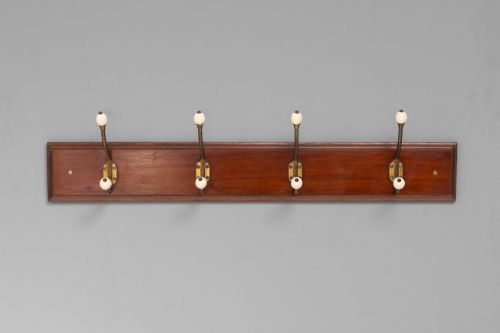
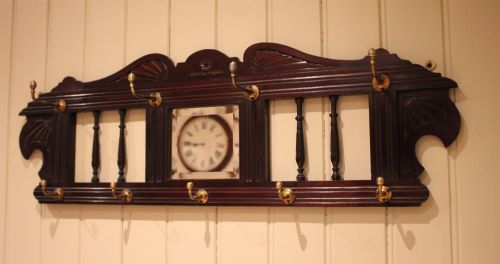
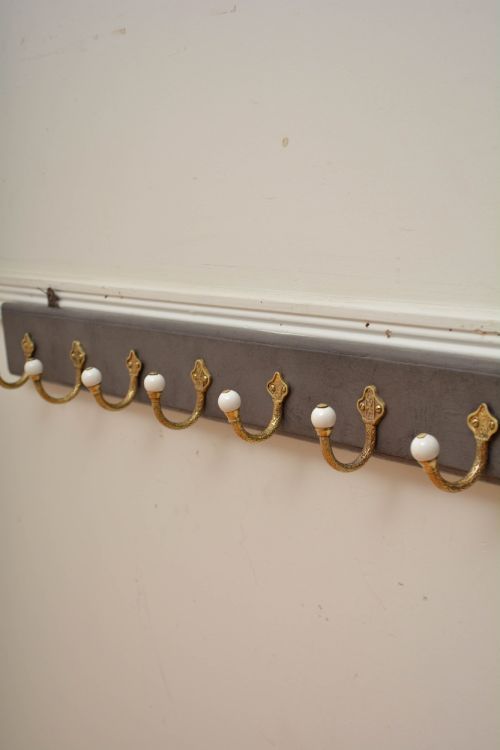
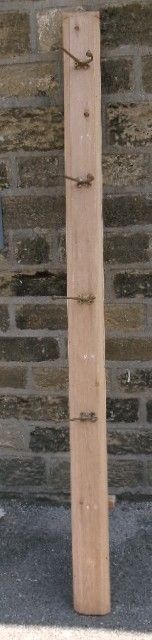
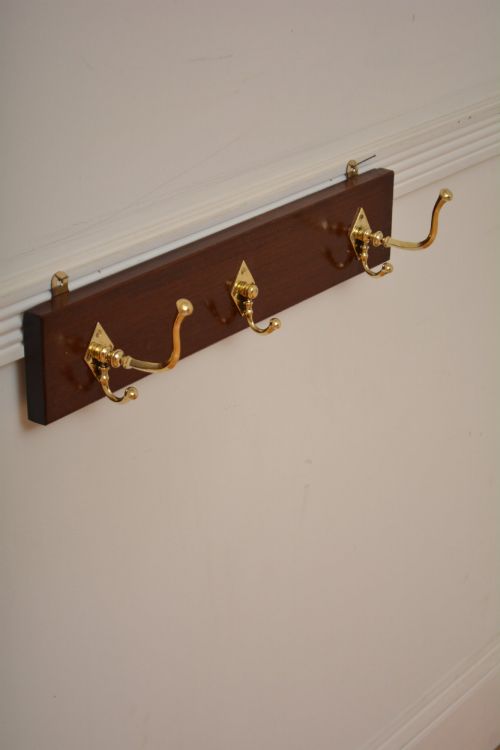
Brass wall pegs appear on this page primarily mounted to timber backboards as coat racks, hat stands, and individual wall hooks dating from the Victorian period through to the Art Deco era.
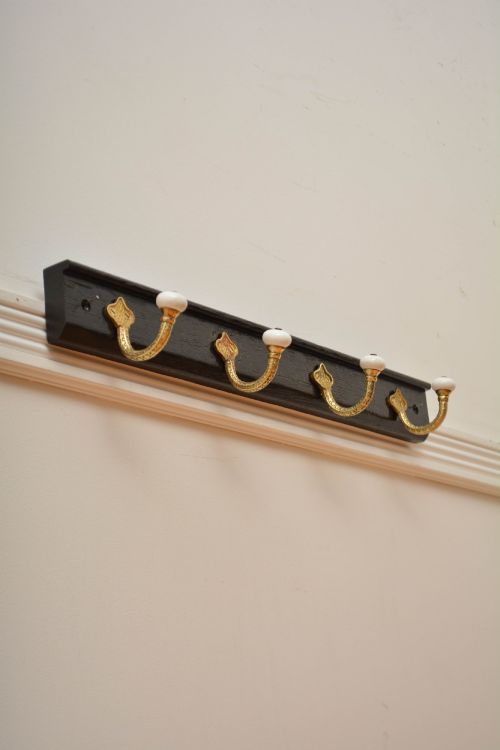
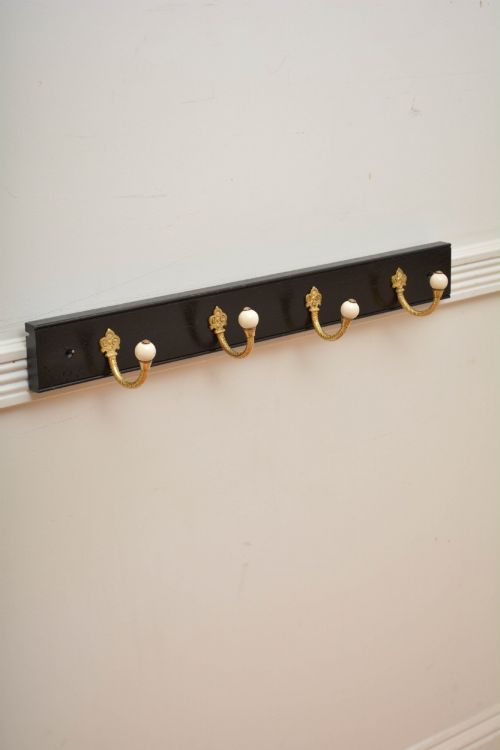
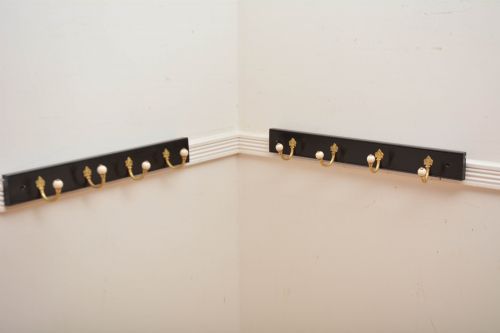
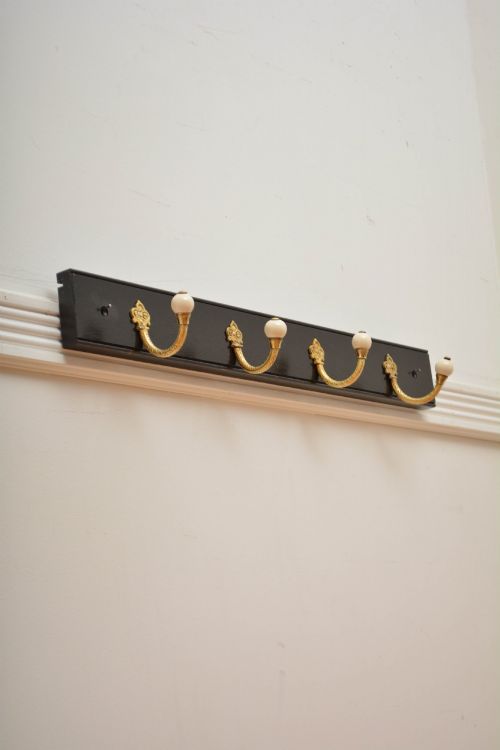
The most common configurations are Victorian or late nineteenth-century coat rails, which frequently combine cast brass hooks with contrasting ceramic or porcelain knobs.
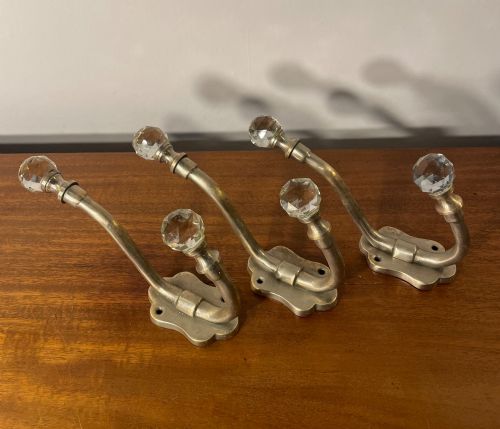
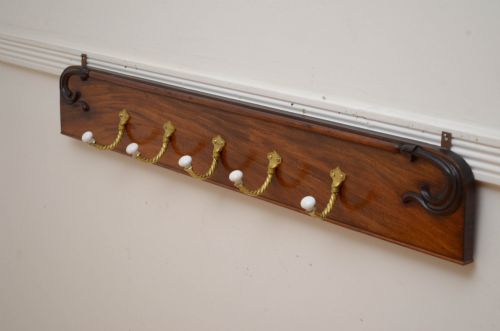
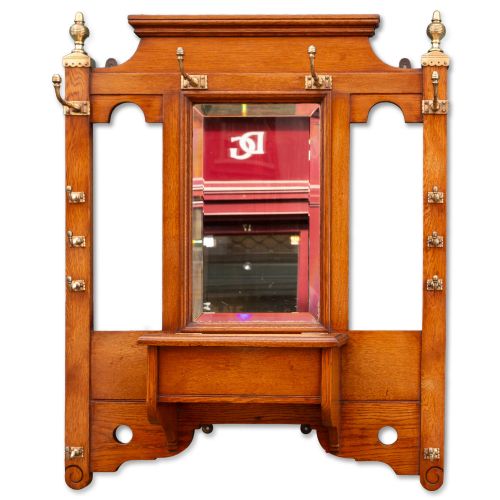
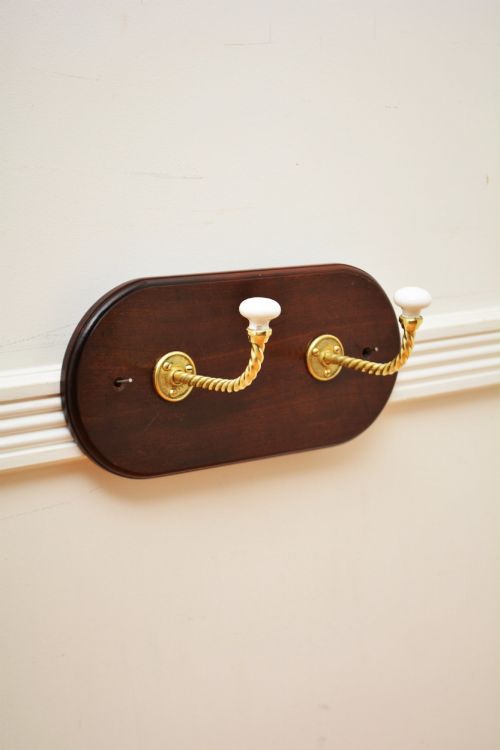
Buyers also encounter more specialised pieces such as French bronze wall-mounted hooks, mahogany rails with twisted rope details, and occasional brass mirrors or barometers.
Materials and construction
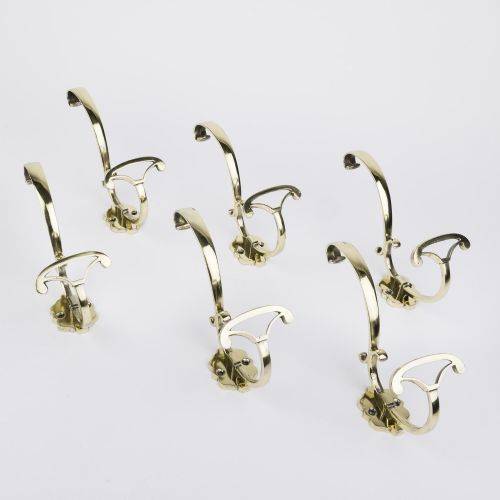
Makers cast the metal components in brass or bronze, sometimes chasing the surface details or applying gilt finishes, while pairing them with ceramic or porcelain knobs.
Backboards rely on solid hardwoods such as mahogany, golden oak, and pine, frequently paired with ebonised wood to create a dark, striking contrast against the bright metal.
The listings span from the Victorian period and the Aesthetic Movement through to Art Deco, utilising brass, bronze, mahogany, oak, and ceramic.
Gradations in quality
Quality reveals itself in the weight and crispness of the cast mounting plates and the depth of the chased decoration on the metal hooks.
Finer examples utilise dense hardwoods and securely integrated ceramic knobs, whereas simpler versions rely on plain pine backboards and standard commercial brass hooks.
The Brass Wall Pegs Glossary
- Cast brass
- Molten alloy poured into moulds to create shaped hooks and decorative mounting plates. This technique allows for intricate relief patterns that stamped metal cannot achieve.
- Ebonised wood
- Timber treated with a dark stain or finish to imitate ebony. It was widely utilised in the nineteenth century to provide a dramatic contrast against bright brass work.
- Aesthetic Movement
- A late nineteenth-century design style focusing on visual beauty rather than narrative meaning. Pieces from this movement often feature refined combinations of brass and dark wood.
- Backboard
- The horizontal timber plank or shield that supports one or more wall hooks. It distributes the weight evenly across the wall fixings.
Brass Wall Pegs: Frequently Asked Questions
How do I secure a coat rack to the wall?
Most wall-mounted racks rely on pre-drilled screw holes located through the timber backboard or directly via the cast brass mounting plates. Ensure you locate suitable wall anchors or fix directly into wall studs to support heavy winter coats.
Check the spacing of the fixing points before installation to ensure the rack sits level and secure against plaster or masonry surfaces.
Can these hooks hold heavy winter coats?
Solid cast brass and bronze hooks mounted on sturdy hardwood backboards easily support daily items like heavy overcoats, satchels, and wet jackets. Pieces fixed to solid oak or mahogany offer particular robustness.
Lighter arrangements on pine backboards or smaller individual hooks suit hats, scarves, and lighter garments rather than multiple heavy winter coats.
How do I clean tarnished brass hooks?
Gentle dusting with a soft cloth preserves the natural aged patina that develops on nineteenth-century brass over decades of use. Avoid harsh chemical polishes unless you prefer a bright, reflective shine.
If cleaning is necessary, use a mild soapy solution and dry thoroughly to protect adjacent wooden backboards from moisture damage.
What is the difference between Victorian and Art Deco hooks?
Victorian brass wall pegs typically feature ornate casting, chased patterns, and porcelain knobs mounted on rich mahogany, walnut, or ebonised oak backboards. They prioritise traditional, decorative forms.
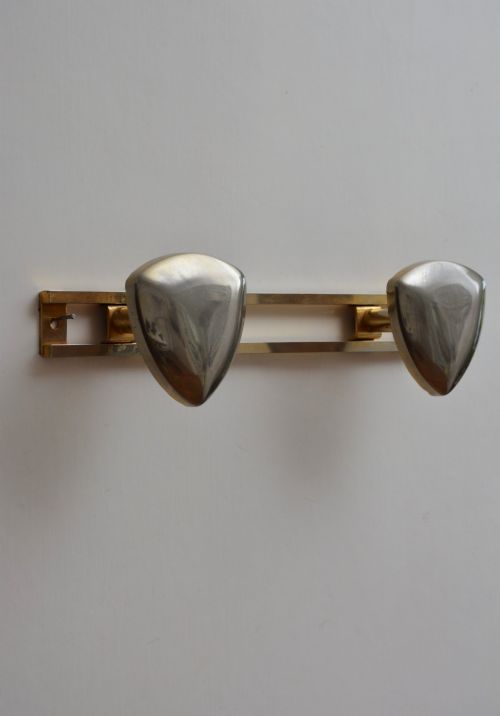
Art Deco examples from the twentieth century lean towards geometric shield shapes with gold and silver metal finishes, reflecting the modern industrial design shifts of the period.