



Brass Vitrine Case
When you search for a brass vitrine case, you are looking at glazed display cabinets and tables designed to show off treasured objects.
Brass Vitrine Case
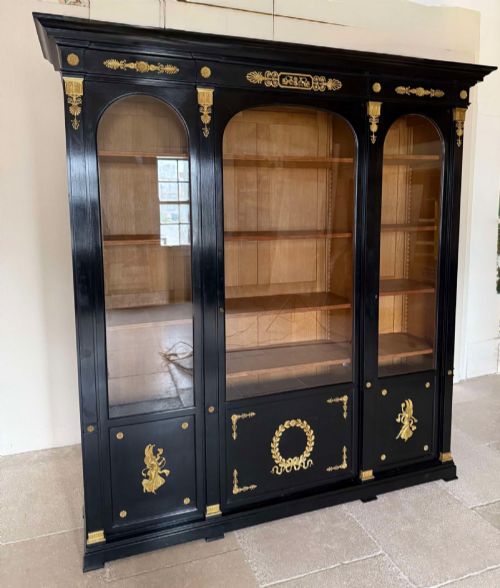
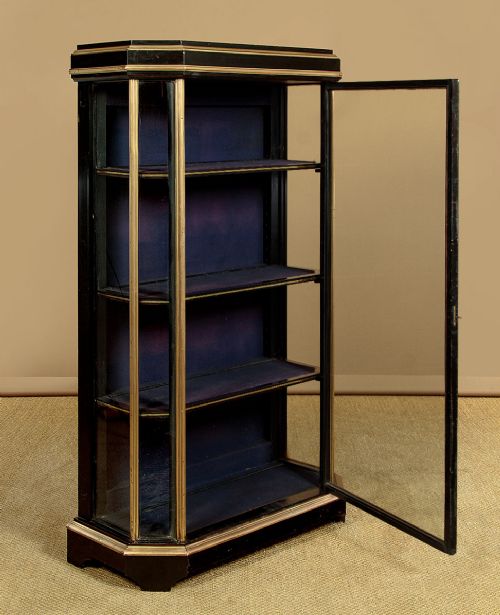
A brass vitrine case encompasses glazed display cabinets, bijouterie tables, bookcases and pier cabinets intended for interior exhibition. The pieces found here span the nineteenth century into the nineteen-twenties, with a strong representation of French continental design.
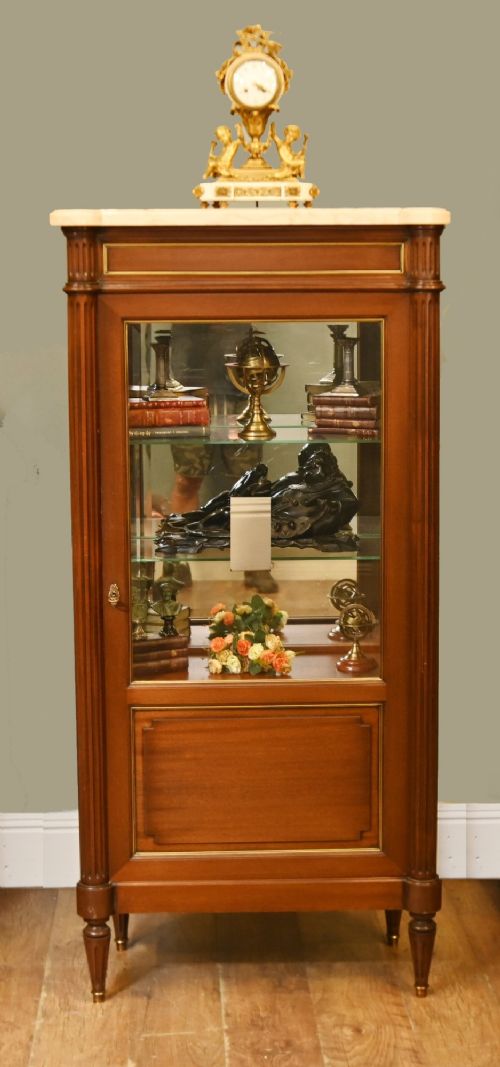
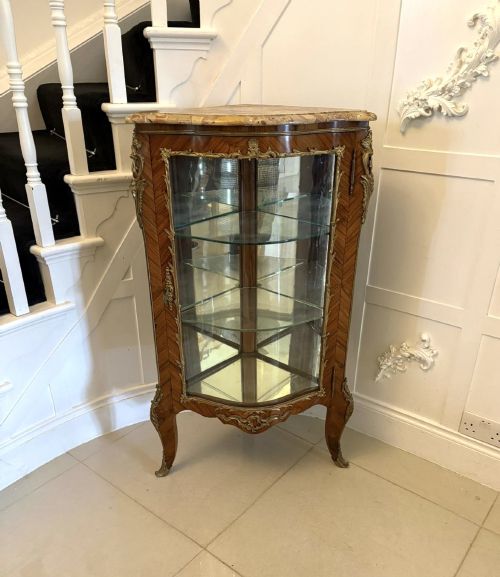
Buyers frequently encounter mahogany, kingwood and ebonised wood structures framed by glass and metal mounts. Forms range from tall serpentine corner display cabinets with marble tops to low freestanding tables designed specifically for jewellery.
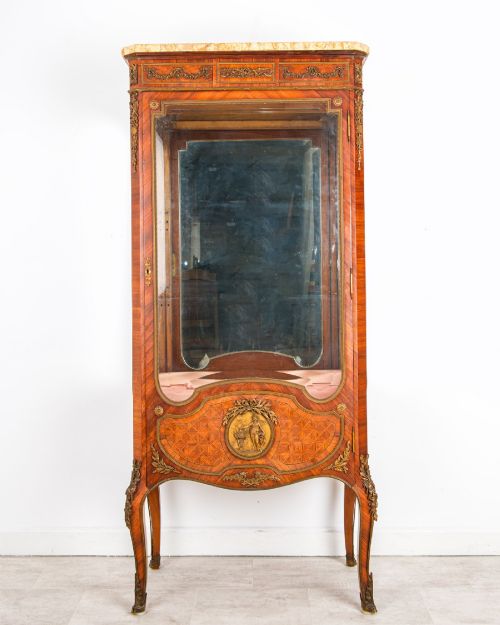
French revival styles dominate the selection, referencing Louis XV, Louis XVI, Directoire and Napoleon III aesthetics. Alongside these domestic salon pieces, commercial shop display counters from makers such as F. Sage and Co. and Siegel appear.
Materials and construction
The framework relies on dense cabinet timbers like mahogany and kingwood, frequently applied as veneers over a supportive core. Ebonised wood and rosewood also provide dark, contrasting backdrops for interior display.
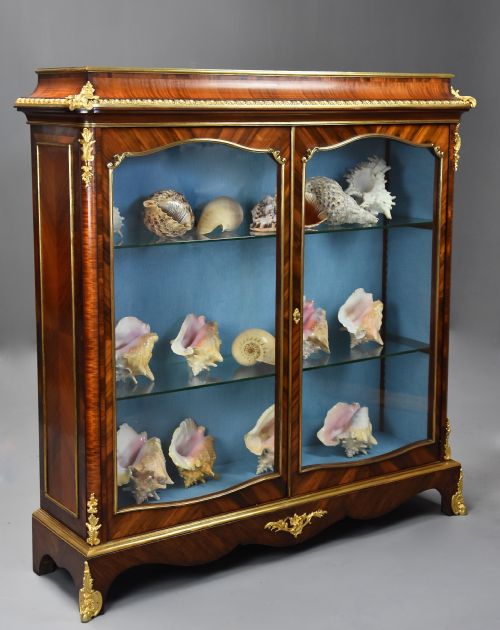
Metalwork defines the visual identity of these items, utilising cast ormolu and brass mounts to edge glass panels and accent corners. Velvet and fabric linings frequently cover the internal surfaces and bases where objects rest.
Glazing technique is central to the construction, utilising large curved or flat glass panels held securely within metal frames. Boulle inlay incorporating tortoiseshell and brass adds intricate surface pattern to specific nineteenth-century examples.
Brass Vitrine Case Retail Price Guide 2026
Typical asking prices for brass vitrine case among the pieces listed under this phrase on Sellingantiques today, from the lower quarter to the upper quarter. They describe what is for sale here now, not the wider market.
Some display tables feature secret interior compartments alongside their glass tops, designed to hide private letters while the jewellery rested above.
Distinctions in craftsmanship
Quality separates through the crispness of the cast brass and ormolu mounts, where finely chased detailing distinguishes superior bronzework from simpler stamped metal. The weight and selection of cabinet timbers, such as figured kingwood veneers, similarly mark out better examples.
Joinery execution dictates structural longevity, visible in the precise fitting of curved glass panels and the fluid movement of doors and table lids. Interior appointments, including fitted velvet or fabric upholstery and delicate marquetry work, reflect the original ambition of the piece.
F. Sage and Co.·Siegel
The Brass Vitrine Case Glossary
- Vitrine
- A glass-fronted cabinet designed for displaying fine objects or porcelain. These cases often feature extensive glazing to maximise interior light.
- Bijouterie table
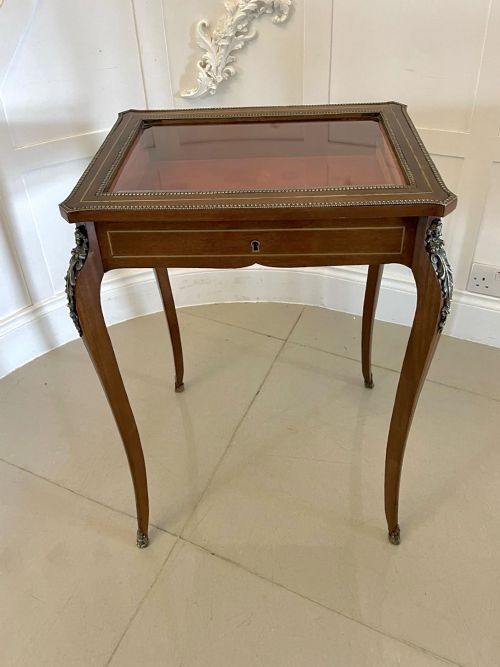
- A glass-topped display table created to hold small valuable items and jewellery. They typically stand on slender legs with hinged lids.
- Ormolu
- Gilded bronze applied as decorative mounts on furniture. The technique involves a mercury-gilding process common in nineteenth-century French workshops.
- Boulle
- A form of marquetry using brass and tortoiseshell inlaid into wood. The method takes its name from André-Charles Boulle.
- Vernis Martin
- A type of simulated Japanese varnish used on European furniture. It produces translucent decorative painted finishes.
Brass Vitrine Case: Frequently Asked Questions
What is a brass vitrine case used for?
These pieces were originally built to hold porcelain, glassware, books and small collectables in domestic drawing rooms and salons. The glazed panels and internal shelves kept delicate items protected from dust while remaining fully visible.
Commercial variants supplied by firms like F. Sage and Co. served the same protective display function within retail shop environments.
How do I identify French styles?
French nineteenth-century pieces often draw on historical reigns, showing the curved lines of Louis XV rococo revival or the straighter geometric proportions associated with Louis XVI and Directoire design. Ormolu mounts and marble tops frequently accompany these continental forms.
Boulle work and ebonised finishes point specifically toward the Napoleon III period of opulent revivalism.
Where should I place a display table?
Bijouterie tables require a central position in a room or a spot against a wall where light can pass through the glass top. They suit placement in sitting rooms where flat surfaces allow a downward view into the lined interior.
Keeping them away from direct sunlight protects both the wooden veneers and any fabric or velvet linings inside.
How do I care for the woodwork?
Maintain the timber surfaces with minimal intervention using traditional wax polish applied sparingly with a soft cloth. Avoid placing items near direct heat sources to prevent the wood veneers and delicate brass inlays from lifting.
Care for the metal mounts by dusting gently without chemical polishes that might damage the underlying gilding or patination.