

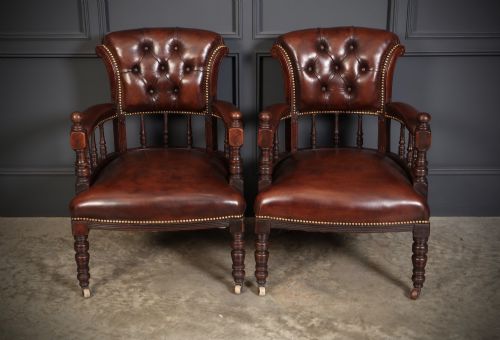
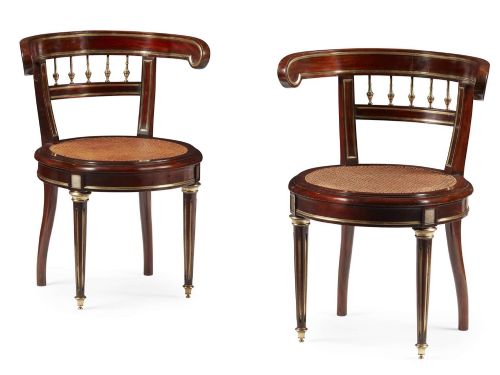
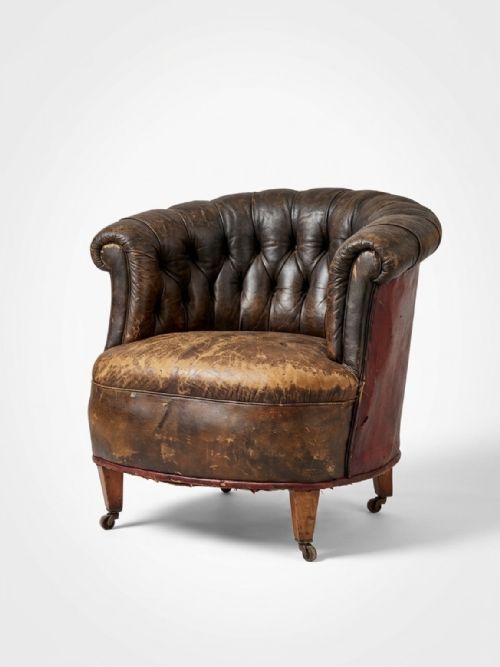
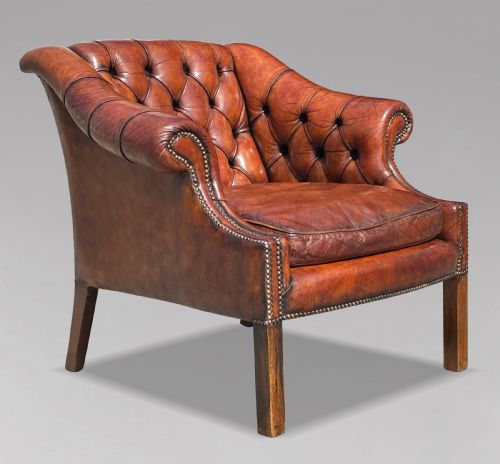





Brass Tub Chair
A brass tub chair offers curved, enclosing comfort finished with metal detail, drawing on Regency, Victorian, and Edwardian cabinetmaking traditions.
Brass Tub Chair
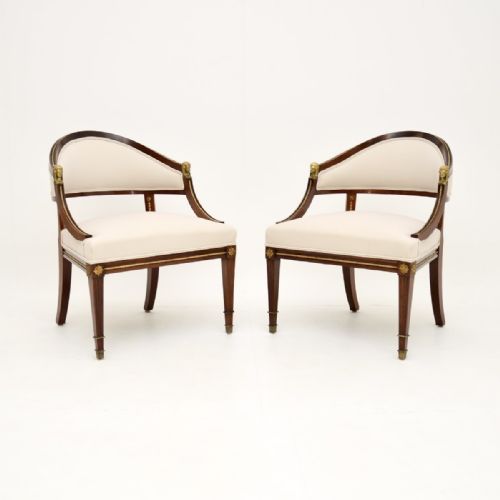
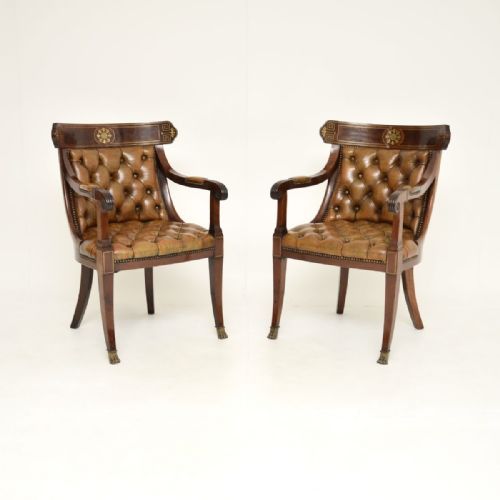
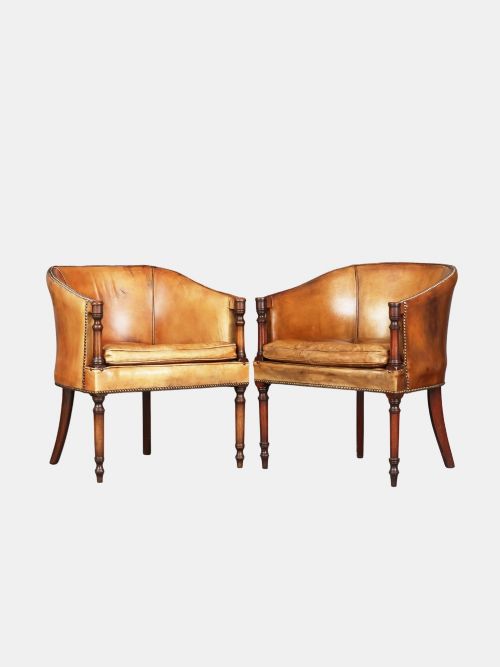
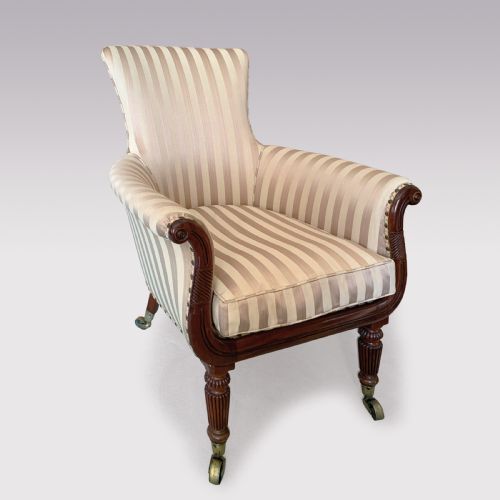
A brass tub chair combines a rounded, semi-circular enclosing back with timber framing and brass inlay, mounts, or castors. These seats function as library chairs, desk armchairs, and comfortable club seating designed for study and reception spaces.
The selections span the nineteenth century, Regency, Victorian, and Edwardian periods, alongside Swedish Neoclassical, French Empire, and Louis XVI styles. Examples range from mahogany framed horseshoe desk chairs to leather tub library chairs.
Buyers encounter mahogany, oak, rosewood, and hardwood structures paired with leather, fabric, and velvet upholstery. Brass appears as structural inlay, decorative mounts, or hardware supporting the form.
How they were made
Cabinetmakers constructed the curved frameworks using solid timbers like mahogany, oak, and rosewood, often steaming or laminating wood to achieve the continuous horseshoe or tub shape. Brass inlay and metal fittings were hand-fitted directly into channels and surfaces cut into the hardwood.
Upholstery involved horsehair and traditional stuffing secured within leather, velvet, or fabric coverings. Desk armchairs and library chairs utilised sturdy joinery to support daily use at writing tables.
Brass Tub Chair Retail Price Guide 2026
Typical asking prices for brass tub chair among the pieces listed under this phrase on Sellingantiques today, from the lower quarter to the upper quarter. They describe what is for sale here now, not the wider market.
Listings feature brass tub chairs across Victorian, Regency, and Edwardian periods, constructed in mahogany, oak, and rosewood with leather and fabric upholstery.
What varies in quality
The refinement of the timber carving and the precision of the brass inlay distinguish standard workshop production from exceptional cabinet work. Regency and Victorian examples show differing levels of crispness in brass detailing and mahogany selection.
The integrity of the original framing, the depth of the tub curve, and the quality of the leather or fabric upholstery determine the standing of each piece.
Harrods London·Gillows·Miles and Edwards·Hampton and Sons·Howard and Sons
The Brass Tub Chair Glossary
- Tub chair
- An armchair with a low, continuous back and arms forming a single curved enclosure. This form provides supportive sides for reading and writing.
- Regency
- A British design period spanning the early nineteenth century characterised by classical restraint and archaeological influence. Pieces from this era frequently incorporate brass inlay and mahogany.
- Bergere
- An enclosed upholstered armchair with wooden frames exposed around the sides and back. These French-inspired seats often feature cane or upholstered panels.
- Horseshoe desk chair
- A revolving or stationary armchair shaped in a sweeping curve to accommodate a writer at a desk. They often feature leather upholstery and sturdy hardwood frames.
- Fauteuil
- An open-armed French armchair with an exposed wooden frame and upholstered back and seat. Empire and Louis XVI styles utilise this formal framework.
Brass Tub Chair: Frequently Asked Questions
What is a brass tub chair?
A brass tub chair is an upholstered seating form featuring a rounded back enclosing the sitter, accented with brass inlay, mounts, or hardware.
These chairs appear in nineteenth-century Regency, Victorian, and Edwardian designs, functioning primarily as library, desk, or club seating.
How do I identify a Regency brass tub chair?
Regency examples display classical proportions, mahogany timbers, and precise brass stringing or inlay along the frame. They date from the early nineteenth century and reflect neoclassical influences.
Makers such as Gillows produced distinctive library and tub seating during this period, utilising lyre motifs and fine turnings.
Where were tub chairs used?
Tub chairs served in libraries, studies, and offices as comfortable seating for reading and writing at a desk. Their enclosing backs provided warmth and support in draughty rooms.
Library and captain's desk armchairs were built to withstand heavy daily use while maintaining an elegant appearance in reception spaces.
What woods are used in these chairs?
Makers utilised dense hardwoods including mahogany, oak, rosewood, and general timber framing to construct the curved tub structure. Mahogany remains the predominant choice across Regency and Victorian pieces.
These durable woods supported complex bending techniques and secure joinery required for continuous backrests.
How do I care for leather upholstery?
Leather upholstery requires regular dusting and occasional conditioning with appropriate leather balms to maintain flexibility. Avoid placing antique leather chairs in direct sunlight or near heat sources.
Preserving the patina involves gentle cleaning rather than harsh chemical treatments that strip the original surface.