


Brass Tiered Table
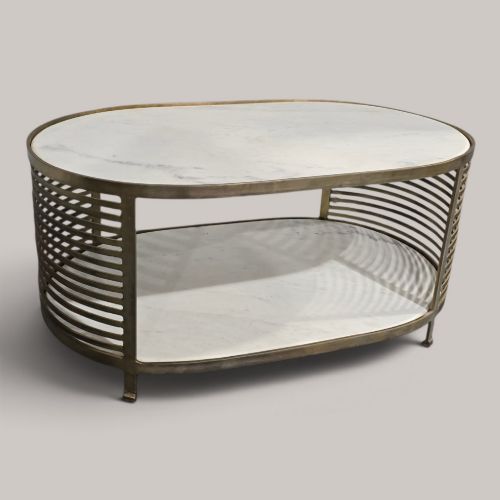
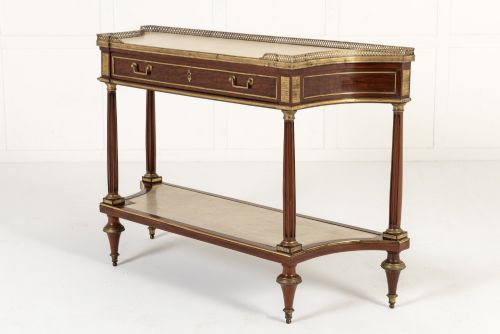
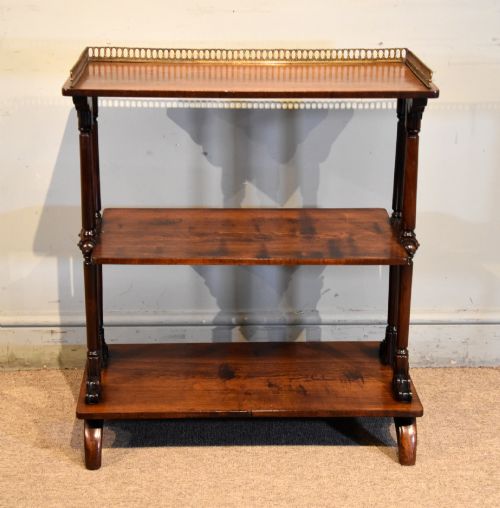
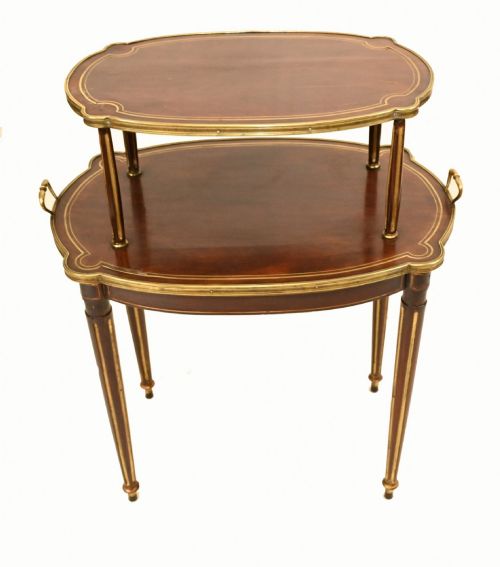
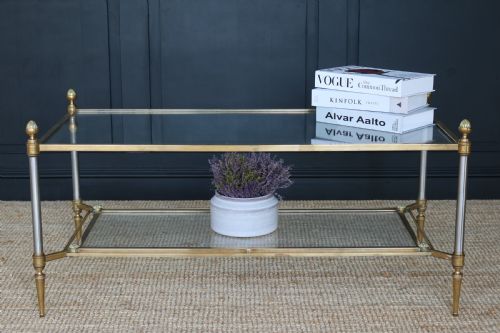
A brass tiered table brings stacked surfaces and metallic warmth to a room, offering multiple levels for display.
Brass Tiered Table
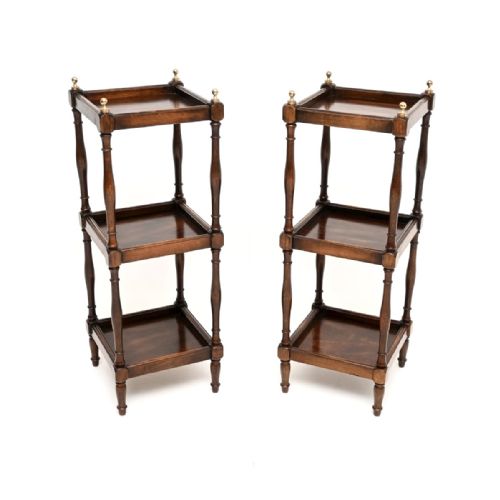
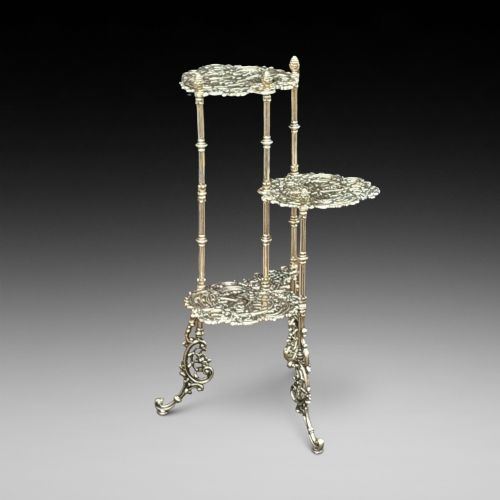
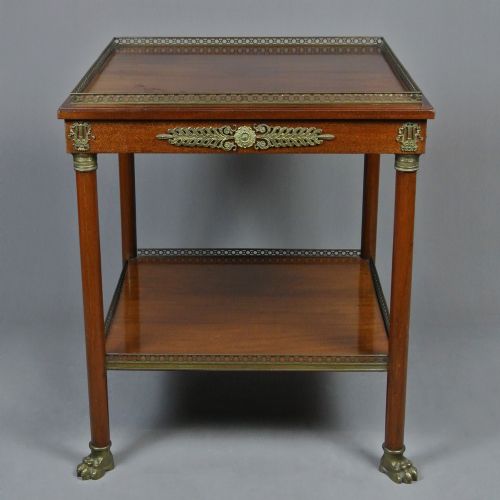
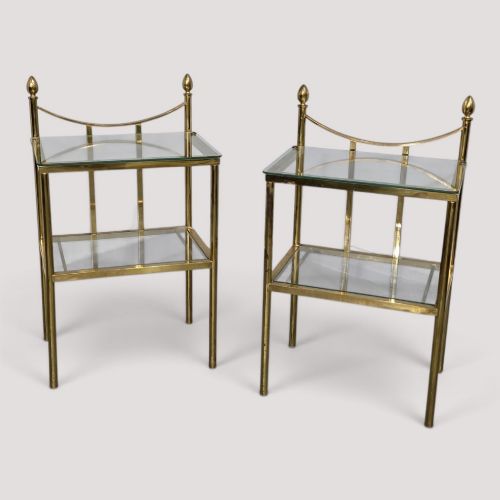
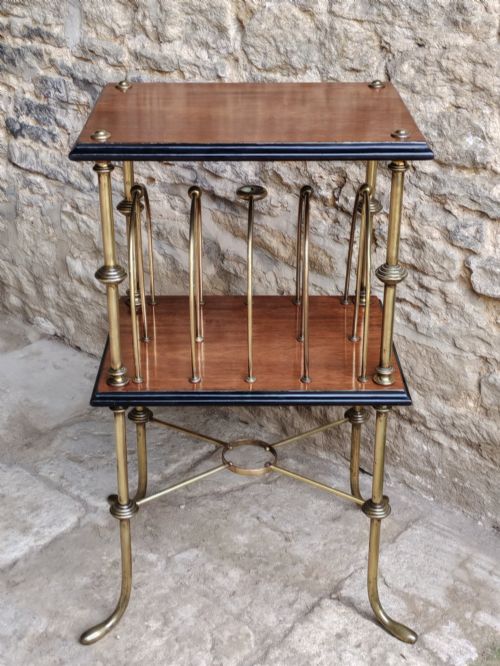
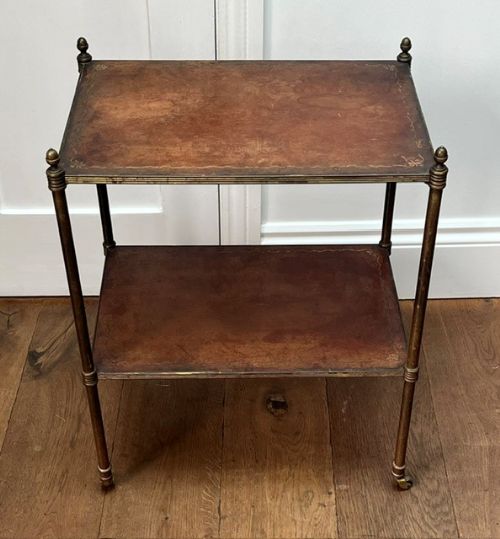
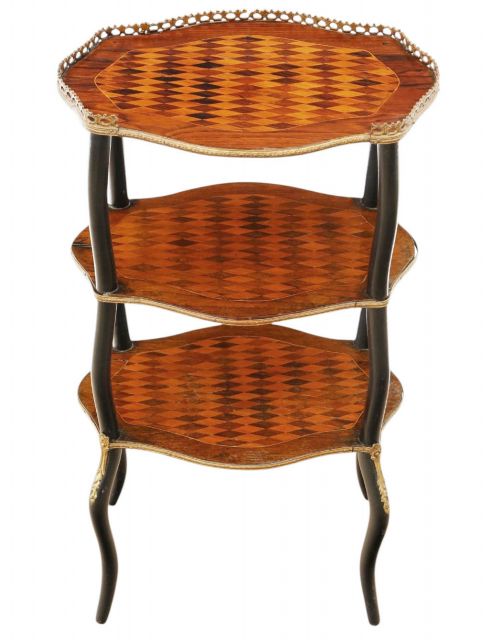
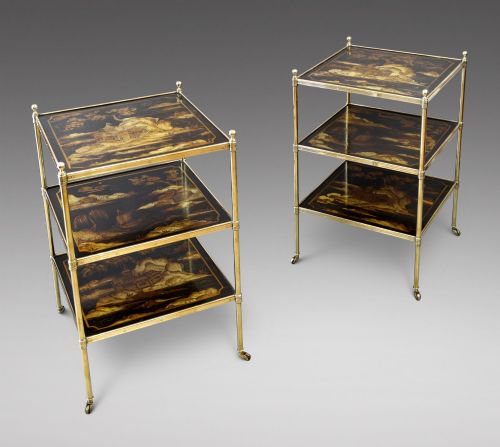
A brass tiered table is a multi-level surface designed for display and utility, frequently taking the form of an etagere, whatnot, or side table. These pieces incorporate stacked platforms held by metal supports, creating vertical interest within a room.
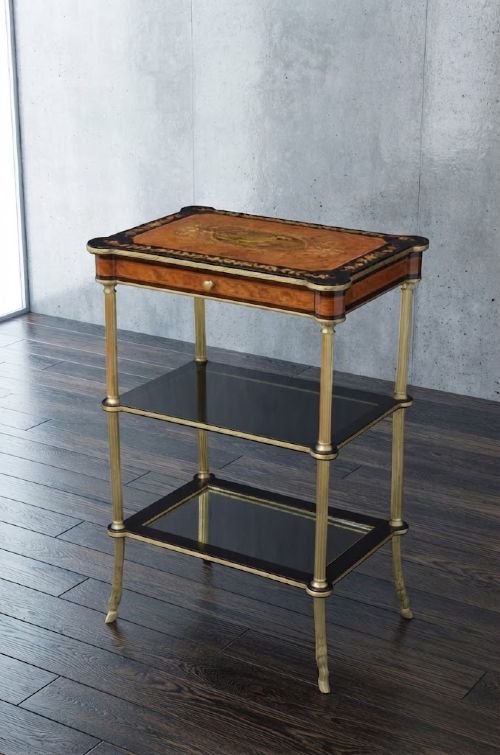
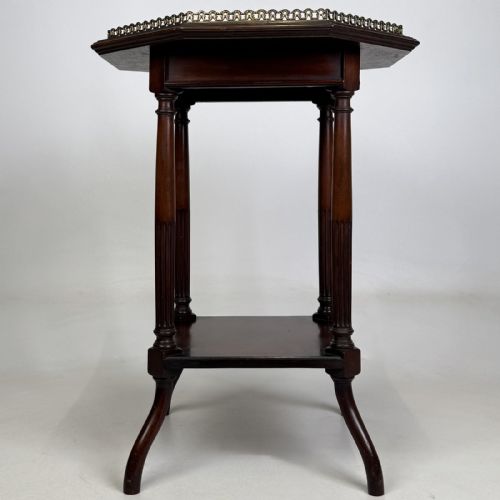
The selections available here range from nineteenth-century Regency mahogany models with brass galleries to twentieth-century brass and glass lamp tables. Buyers will frequently encounter French styles featuring ormolu mounts alongside British occasional tables.
Forms extend from compact two-tier tea tables and drinks trolleys to larger display shelves and corner units. Each variation utilises the tiered format to maximise surface area while maintaining a compact footprint on the floor.
How they were made
Construction relies heavily on structural frames of brass, bronze, or ormolu paired with secondary timbers such as mahogany, rosewood, walnut, and satinwood. Cabinetmakers utilised marquetry, parquetry, and ebonising to enrich the wooden tiers.
Makers integrated cast brass components, including rams heads and mounts, with glass, marble, leather, and mirrored surfaces. Joinery techniques from the nineteenth and early twentieth centuries ensure stability across multiple stacked levels.
Brass Tiered Table Retail Price Guide 2026
Typical asking prices for brass tiered table among the pieces listed under this phrase on Sellingantiques today, from the lower quarter to the upper quarter. They describe what is for sale here now, not the wider market.
Listings feature brass tiered tables spanning the nineteenth century through the 1960s, incorporating glass, marble, and exotic woods.
What varies in quality
Quality depends on the precision of the casting in the brass framework and the depth of figure in woods like rosewood and mahogany. Finer examples display crisp detail in ormolu mounts and integrated parquetry or marquetry.
The integrity of the tier joints and the quality of inset materials, such as tooled leather or marble, distinguish standard utility pieces from exceptional cabinetwork. Proportions remain balanced on superior models, ensuring stability across every level.
Mallett of London·Romeo Rega·Maison Jansen·Tehan·François Linke·George Bullock·W. Turner Lord and Co·Dryad Leicester
The Brass Tiered Table Glossary
- Etagere
- A piece of furniture with several open shelves or tiers for displaying small objects. Originating in France, these pieces serve as both decorative and functional stands.
- Whatnot
- An open set of shelves used for books or ornaments, popular throughout the nineteenth century. They typically feature multiple tiers supported by slender columns.
- Ormolu
- Gilded bronze applied as a mount on furniture. This decorative technique adds metallic highlights to wood surfaces.
- Marquetry
- Inlaid woodwork forming decorative patterns using various veneers. Craftsmen use contrasting timbers to create pictorial designs on table tiers.
- Gueridon
- A small circular table supported by one or more columns or figures. These stands often incorporate brass framework and decorative mounts.
Brass Tiered Table: Frequently Asked Questions
Where should I place a brass tiered table?
These tables fit well beside seating areas or in corners where vertical display space is needed without a large footprint. The multiple levels accommodate lamps, books, and decorative objects effectively.
The reflective metal and glass surfaces also brighten darker corners of a room, adding a functional decorative accent to hallways or drawing rooms.
How do I identify the period of a tiered table?
Period identification relies on examining the timber species, mounting techniques, and overall style cues such as Regency or Louis XVI influences. Nineteenth-century examples often feature solid mahogany or rosewood with hand-cast brass elements.
Later twentieth-century versions introduce materials like chrome and plate glass, reflecting mid-century design shifts while retaining the stacked format.
What is the difference between an etagere and a whatnot?
Both terms describe multi-tiered shelving furniture, though etagere often implies a French aesthetic with lighter framing and decorative mounts. Whatnot is a traditional British term for similar open-shelf units.
In practice, makers used both designations interchangeably for pieces featuring stacked surfaces supported by columns or uprights.
How do I care for brass and wood tiers?
Maintenance involves dusting wooden surfaces regularly and cleaning brass elements with appropriate non-abrasive metal polishes. Care must be taken to protect inset materials like leather or marble from moisture.
Avoiding direct sunlight preserves the rich colour of timbers such as rosewood and mahogany over time.