

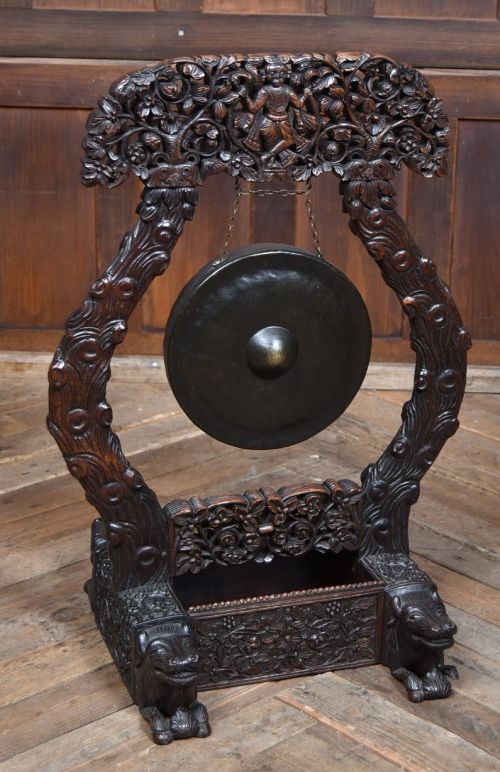
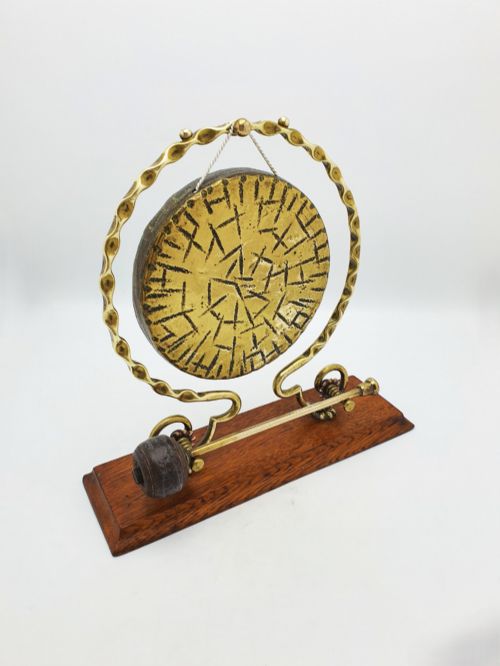


Brass Tabletop Dinner Gong
A brass tabletop dinner gong brings a resonant chime and striking period character to a room.
Brass Tabletop Dinner Gong
A brass tabletop dinner gong is a percussion instrument designed for domestic use, primarily originating from the Victorian, Edwardian, and late nineteenth-century periods. These pieces combine a metallic resonating disc or bell with a supporting frame, typically intended for summoning household members to meals.
The versions most commonly met on this page span styles such as Victorian, Edwardian, Art Nouveau, and Anglo-Indian, alongside Japonisme and Chinoiserie influences. They reflect an era when decorative yet functional metalwork held a prominent place in the home.
Form follows function closely across the listings, with items appearing variously as dinner gongs, table gongs, and tea ceremony gongs. Each piece uses a suspended striking element paired with a dedicated frame or base.
How they were made
Makers utilised cast and sheet metals, primarily brass and bronze, alongside occasional silver plating for the resonating gongs. These metallic components required careful shaping and tuning to produce a clear, sustained tone when struck.
Supporting frames were constructed from timbers including oak, walnut, and hardwood, frequently paired with cord and structural elements like bamboo, wrought iron, or cattle horn. Carved wooden stands often incorporated detailed orientalist or aesthetic movement motifs.
Brass Tabletop Dinner Gong Retail Price Guide 2026
Typical asking prices for brass tabletop dinner gong among the pieces listed under this phrase on Sellingantiques today, from the lower quarter to the upper quarter. They describe what is for sale here now, not the wider market.
What varies in quality
The distinction between standard and superior pieces rests on the complexity of the frame carving and the purity of the metal casting. Hand-carved stands in hardwood or detailed bamboo display greater artisan input than plain turned supports.
Acoustic performance also divides the range, as heavier brass and bronze gongs sustain a richer tone compared to thinner metal plates. The integration of materials, such as secure cord suspension and stable timber bases, dictates the overall integrity of the object.
The Brass Tabletop Dinner Gong Glossary
- Gong
- A percussion instrument of East Asian origin consisting of a flat or shaped metallic disc that produces a resonant sound when struck.
- Striker
- The handheld mallet or beamer used to hit the gong disc.
- Japonisme
- A late nineteenth-century Western artistic movement influenced by Japanese art and design.
- Aesthetic Movement
- A nineteenth-century design current that emphasised visual beauty over narrative or moral content in domestic objects.
Brass Tabletop Dinner Gong: Frequently Asked Questions
How were dinner gongs used?
These gongs were placed on dining room sideboards or hall tables to announce the arrival of meals. A household member or staff would strike the metal disc with a mallet to produce a clear signal.
Beyond formal dining, they functioned as decorative interior items that reflected the global tastes of Victorian and Edwardian households.
How do I clean a brass gong?
Dust the piece regularly with a soft, dry cloth to prevent the buildup of grime on the metal and wooden surfaces. Avoid harsh chemical polishes that can strip away the historical patina accumulated over decades.
If the metal requires attention, apply a gentle brass cleaner sparingly with a cotton swab, taking care to keep liquids away from wooden frames and cord suspensions.
What is an Anglo-Indian gong?
An Anglo-Indian gong is a piece produced during the British colonial period that combines traditional Eastern decorative motifs with Western furniture forms. These items often feature intricate hand-carved hardwood stands.
They showcase the cross-cultural design exchange characteristic of late nineteenth-century decorative arts.
Can I still strike the gong?
Most surviving gongs retain their structural ability to produce sound when struck gently with the appropriate mallet. Ensure the suspension cord is secure before playing the instrument.
Striking them softly preserves the historical cordage and prevents unnecessary stress on the frame.