


Brass Studded Wing Chair
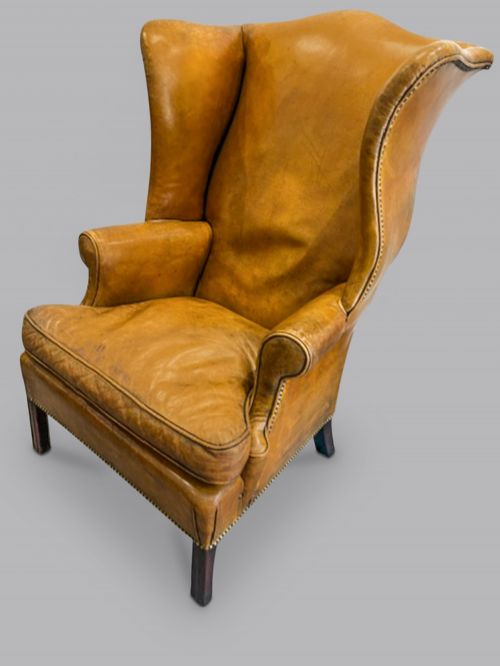
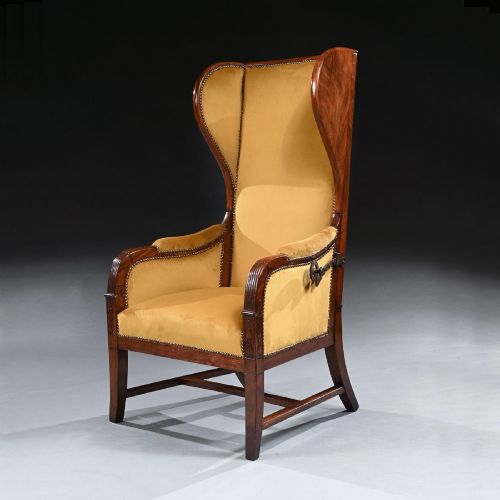
A brass studded wing chair provides deep comfort and draught-excluding wings, drawing on centuries of seating tradition.
Brass Studded Wing Chair
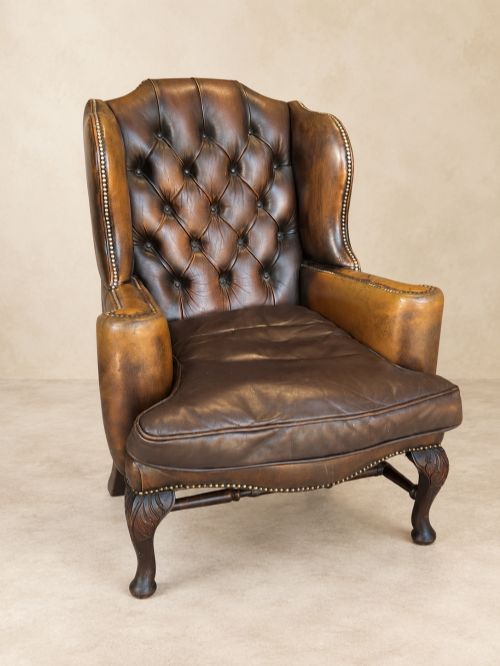
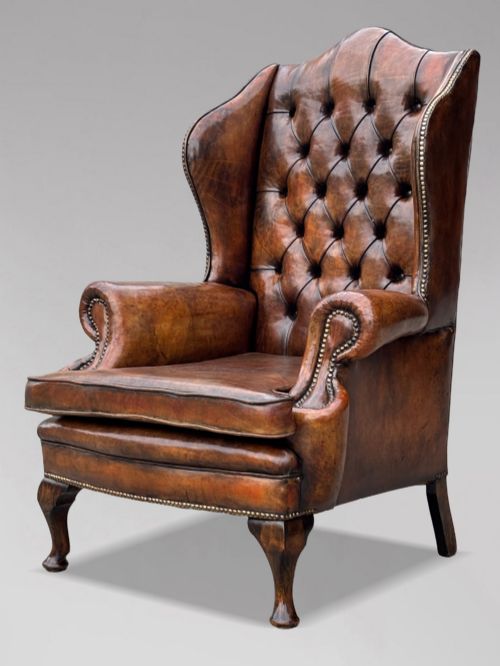
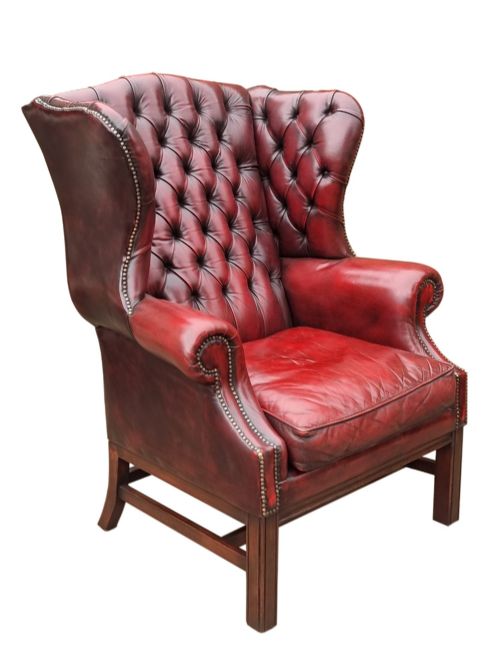
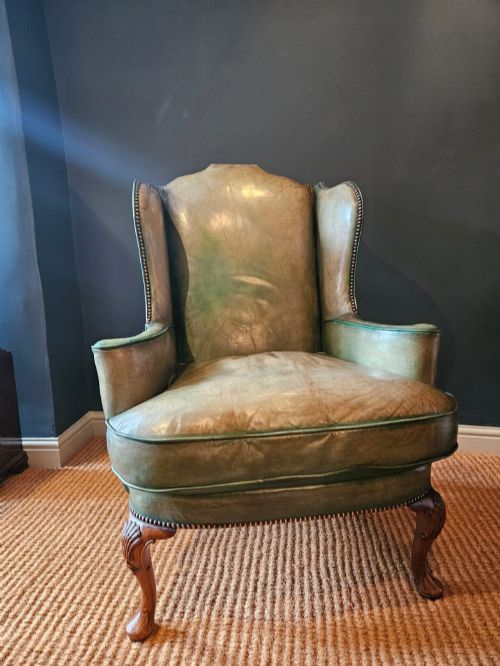
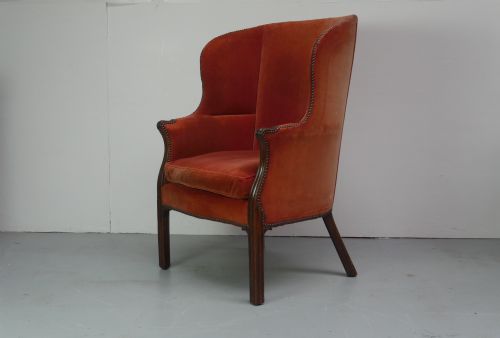
A brass studded wing chair is a high-backed armchair designed to shield the sitter from draughts, typically upholstered in leather or velvet. The form originates in earlier centuries, though the selection includes later revival pieces and twentieth-century interpretations.
Makers and styles draw heavily on eighteenth and nineteenth-century design vocabulary, including George III style, French Empire, and Carolean Revival. Walnut, mahogany, and oak frames provide the structural support beneath the upholstery.
How they were made
Construction relies on timber frames built from mahogany, walnut, oak, or general wood, which support sprung or padded interiors. Upholstery materials consist predominantly of leather, velvet, and occasionally hand-dyed or hand-coloured hides.
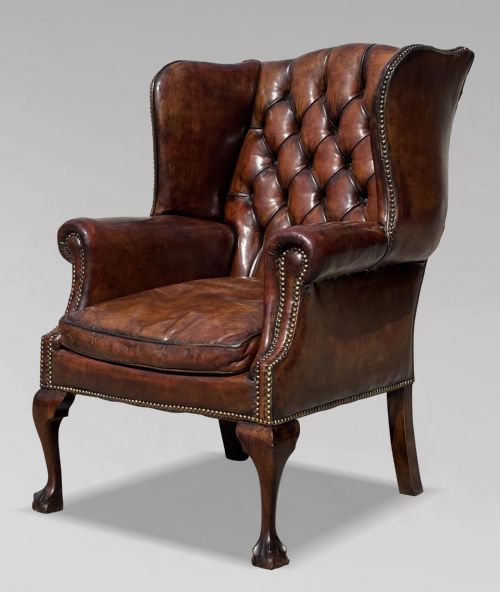
Individual brass studs are driven in by hand to secure the leather or fabric edges along the frame and wings. Buttoning is frequently employed across the backrests to pull the upholstery tight against the internal stuffing.
Listings feature woods including mahogany, walnut, and oak, paired with leather, velvet, and iron.
What varies in quality
Quality rests in the proportion of the wings, the integrity of the timber frame, and the treatment of the leather. Finer pieces demonstrate careful hand-colouring or dyeing on the hide, whereas standard examples utilise uniform commercial leather.
The execution of the woodwork distinguishes pieces, from plain cabriole legs in walnut or mahogany to more elaborate revival carving. Frame stability and the depth of the buttoning determine the overall substance of the seating.
The Brass Studded Wing Chair Glossary
- Cabriole leg
- A furniture leg that bends outward and then tapers downward, commonly found on Georgian seating. This form imitates the shape of an animal's leg.
- Wing back
- An upholstered armchair with side panels attached to the arms and framing the headrest. These projections originally blocked cold air currents in unheated rooms.
- Porters chair
- A heavily enclosed armchair designed to protect a domestic doorkeeper from drafts in a grand entrance hall. They often feature hooded tops and enclosed sides.
- Carolean revival
- A style of furniture produced in the nineteenth century that imitates the ornate, carved designs of the reign of King Charles II. It relies on rich woodwork and high relief carving.
Brass Studded Wing Chair: Frequently Asked Questions
What is a brass studded wing chair?
A high-backed seat featuring protective side panels and decorative metal tacking along the upholstery edges. The form developed to keep sitters warm near fireplaces in older houses.
Today, these chairs function as prominent fireside or study seating. They combine timber frames in walnut or mahogany with leather or fabric covers.
How do I date a wing chair?
Dating relies on examining the timber of the underframe, the style of the legs, and the method of upholstery construction. Georgian examples display specific leg turning and cabinetmaking traits distinct from Victorian or later revivals.
Earlier pieces often use oak or walnut, while later nineteenth-century versions frequently employ mahogany or mixed woods. Hardware and studding patterns also offer clues to the period of manufacture.
Are these chairs comfortable for daily use?
Most examples provide deep seating and firm back support suited for reading or resting. The high wings and padded arms create an enclosed, supportive space.
Comfort varies depending on the original interior stuffing and whether the springs have been updated. Leather upholstery adapts well to regular use over time.
Where were wing chairs placed historically?
They were positioned near hearths and fireplaces in drawing rooms and libraries to block cold air. The side wings trapped the heat from the fire around the person's head and shoulders.
In larger houses, variations like porters chairs sat in entrance halls for staff members. Their enclosed design kept attendants warm during long hours at the door.