




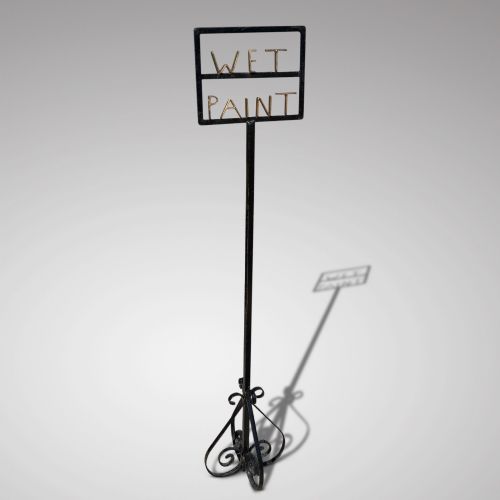


Brass Shop Display
Brass shop display pieces bring commercial heritage into domestic rooms, combining structural metal frames with glass and polished timber.
Brass Shop Display
Brass shop display items encompass counters, cabinets, stands, and jars salvaged from retail environments spanning the nineteenth century through to the 1930s. Buyers seeking brass shop display pieces encounter countertop vitrines, tiered stands, and hardware sample boards originating from commercial premises.
The selection ranges from Victorian iron-supported stands to 1920s Art Deco haberdashery cabinets and polished brass display counters. Edwardian and 1920s commercial fittings dominate the selection, often combining mahogany or oak with glazed panels and metal mounts.
How they were made
Maker workshops constructed these retail fittings using robust timbers such as mahogany, oak, and ebonised wood combined with cast iron, steel, and brass framing. Glass panels, apothecary jars, and mirrored interiors provided visibility for merchandise while velvet linings protected delicate goods.
Joinery techniques relied on sturdy commercial standards to withstand daily retail use, integrating brass framing, ormolu mounts, and wrought iron supports. Countertop units and standing display cases featured glazed doors, tiered shelving, and tailored hardware to showcase wares effectively.
Brass Shop Display Retail Price Guide 2026
Typical asking prices for brass shop display among the pieces listed under this phrase on Sellingantiques today, from the lower quarter to the upper quarter. They describe what is for sale here now, not the wider market.
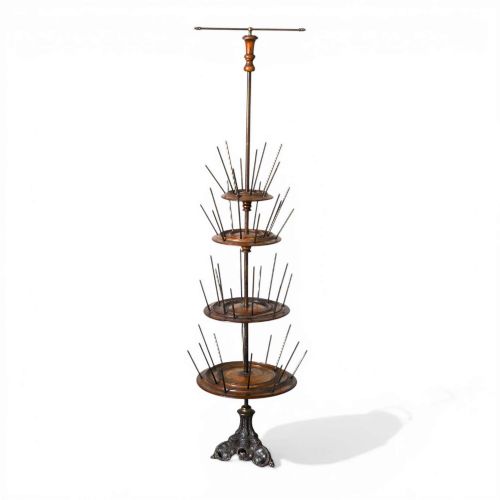
An antique cotton reel display tree once helped shop assistants keep track of sewing threads across four revolving tiers.
What varies in quality
Quality rests upon the integrity of the materials, the sophistication of the metalwork, and the scale of the commercial fitting. Pieces produced by notable shop-fitters exhibit superior cabinetry and refined brass framing compared to utilitarian utility items.
The refinement of the glasswork, the weight of the cast brass, and the retention of original interior elements like velvet linings or mirrored backs determine the distinction between standard commercial salvage and premier examples.
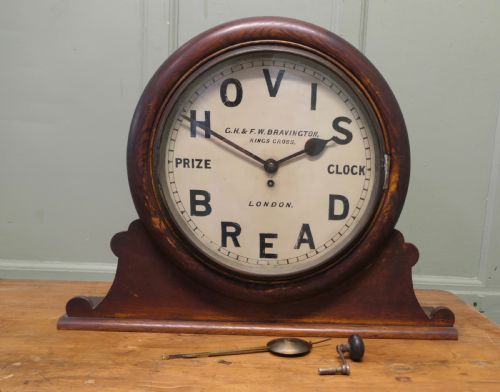
G.H.& F.W. Bravington London·Gerwin & Co Birmingham·F. Sage & Co.·Saml. Elliott & Sons·Siegel·Aitchison
The Brass Shop Display Glossary
- Vitrine
- A glass-fronted display cabinet designed for exhibiting delicate objects or curiosities. These cases often feature mirrored backs and fine timber frames.
- Haberdashery cabinet
- A multi-drawer retail unit traditionally used for storing small sewing goods, ribbons, and fasteners. They frequently incorporate glass-fronted drawers.
- Apothecary jar
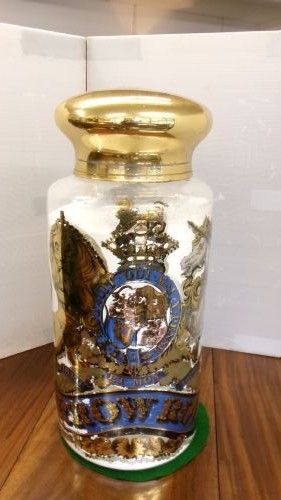
- A large glass container with a fitted cover used in pharmacies for storing ingredients or medicines. Many examples feature painted labels designating specific contents.
- Ormolu
- Finely chased and gilt-bronze or brass applied as decorative mounts on furniture and display cases. It provides a bright metallic accent to dark timber surfaces.
Brass Shop Display: Frequently Asked Questions
How were these brass shop display cabinets used?
Retailers utilised these glazed cabinets and counters on shop floors to protect and showcase goods such as jewellery, textiles, and hardware to customers.
Today, collectors repurpose them in domestic interiors to display collections of smaller items while maintaining clear visibility through the glass panels.
How do I date a brass display stand?
Dating relies on identifying stylistic markers such as Victorian cast iron supports, Edwardian mahogany framing, or 1930s Art Deco geometric lines.
Examining construction methods, hardware types, and materials helps align a piece with its manufacturing decade.
Can I use a shop display cabinet at home?
These cabinets suit domestic spaces well, offering functional storage and display surfaces for books, ceramics, or small collections in living rooms and hallways.
Countertop vitrines and shelving units fit easily onto existing sideboards and tables without dominating a room.
What is the difference between vitrines and haberdashery cabinets?
Vitrines operate primarily as glass-fronted display enclosures designed to show off decorative objects on shelves or within mirrored interiors.
Haberdashery cabinets consist of numerous shallow drawers, often with glass panels, originally intended for organised retail stock storage.