

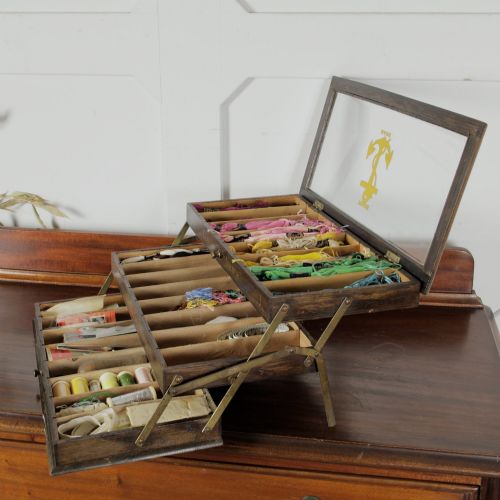


Brass Shop Display Cabinets
Brass shop display cabinets bring commercial history indoors, offering glazed shelving designed to showcase prized possessions with industrial elegance.
Brass Shop Display Cabinets
Brass shop display cabinets span the nineteenth century, the Edwardian era, the nineteen-twenties, and nineteen-thirty, encompassing large shop display counters, haberdashery cabinets, and countertop cases. These items emerge from commercial environments, designed originally to present goods such as drapery, jewellery, and weather-proof clothing to customers.
The forms vary from freestanding vitrines and credenzas to tiered display stands and countertop cabinets. Materials intersect across brass frames, glass panes, mahogany, oak, ebonised wood, velvet, and metal linings.
Examples on this page include specific commercial pieces alongside related objects such as jewellers' bijouterie tables and shop barometers. Buyers encounter styles ranging from Victorian industrial and Art Deco to Louis XV revival and Hollywood Regency.
Assessing quality and proportion
Quality rests in the precision of the metalwork, particularly the casting of brass mounts and ormolu decoration. The weight and clarity of the glass panels, alongside the joinery of the underlying mahogany or oak carcasses, define the tier of the piece.
Maker attribution elevates certain items, with documented workshops displaying superior structural execution and refined hardware detailing compared to unbranded commercial utilitarian cases.
Brass Shop Display Cabinets Retail Price Guide 2026
Typical asking prices for brass shop display cabinets among the pieces listed under this phrase on Sellingantiques today, from the lower quarter to the upper quarter. They describe what is for sale here now, not the wider market.
A weather-proof clothing manufacturer once sold barometers from a shop display counter.
F. Sage & Co.·Saml. Elliott & Sons·Siegel·Aitchison
The Brass Shop Display Cabinets Glossary
- Vitrine
- A glass display cabinet used for showcasing fine objects and porcelain. These cases protect fragile items while maintaining visibility from multiple angles.
- Bijouterie table
- A glass-topped table designed specifically for displaying small valuables and jewellery. They often feature fabric-lined interiors to cushion the items on view.
- Ormolu
- Gilded bronze ornamentation applied to furniture and display cabinets. This decorative technique imparts a rich metallic finish to structural mounts.
- Haberdashery cabinet
- A mercantile storage unit featuring numerous drawers or glazed compartments for small goods. Collectors prize these for their modular compartment layouts.
- Credenza
- A long low cabinet originating as a sideboard but adapted for display purposes. Examples often incorporate extensive glass panels and decorative mounts.
Brass Shop Display Cabinets: Frequently Asked Questions
How do I clean brass display frames?
Dust brass frames regularly with a dry microfibre cloth to prevent the accumulation of grime. Avoid harsh chemical polishes that strip historical patina from the metal.
Test any mild cleaning solution on a hidden area first. Protect surrounding glass panels from moisture drips during maintenance.
Where should I place a display counter?
Position display counters away from direct sunlight to protect interior fabrics and stored objects from fading. Ensure the floor surface is level to prevent stress on glazed doors and frames.
Allow adequate clearance around freestanding vitrines for opening doors and viewing contents. Interior lighting can enhance dark corners within deep cabinets.
What items fit inside a jewellery cabinet?
Velvet-lined drawers and shelves accommodate small collectables, watches, medals, and precious ornaments. The soft fabric surfaces prevent scratching on delicate metals and gemstones.
Larger cabinets hold ceramics, glassware, and books alongside curated display items. Avoid overloading glass shelves beyond their intended structural capacity.
How do I date an Edwardian display case?
Examine construction techniques, timber choices such as mahogany, and associated hardware styles typical of the early twentieth century. Maker plaques and structural labels provide definitive chronological markers.
Compare the aesthetic details against documented commercial catalogue designs from the same era. Revival styles often incorporate period motifs combined with early industrial manufacturing methods.