

Brass Scuttle Bucket
A brass scuttle bucket brings warmth and utility to the hearth, serving as a sturdy repository for fuel while adding metallic lustre to the room.
Brass Scuttle Bucket
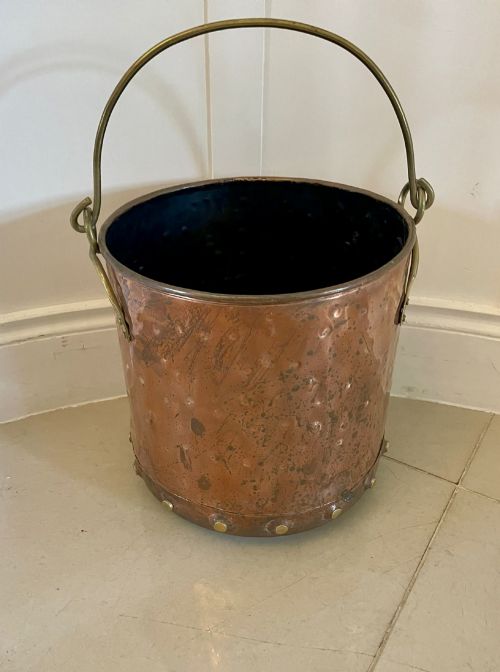
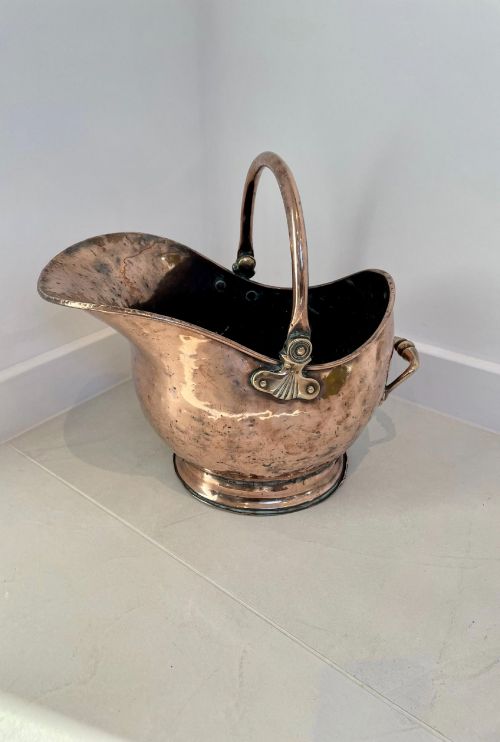
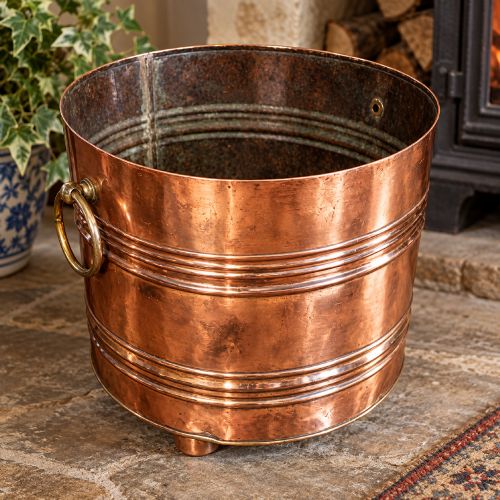
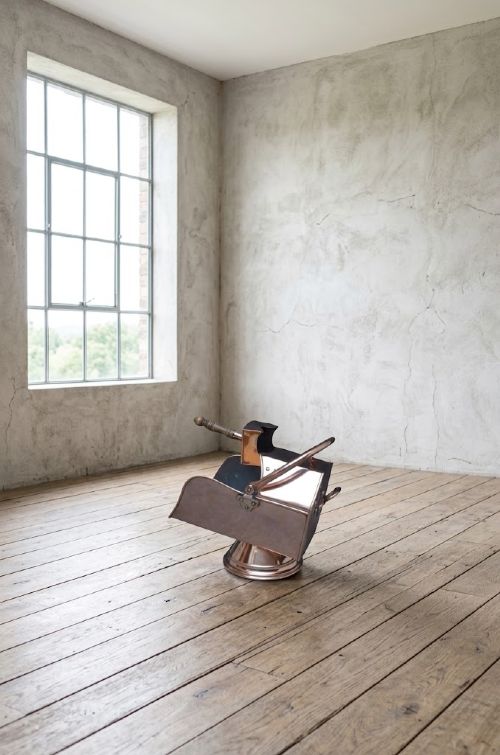
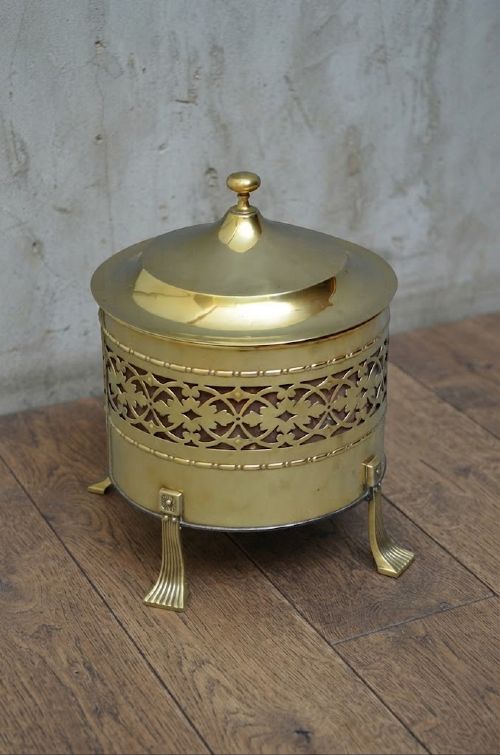
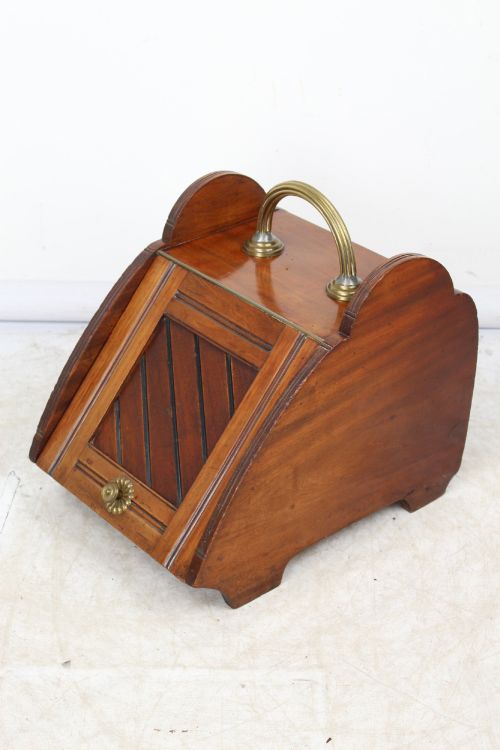
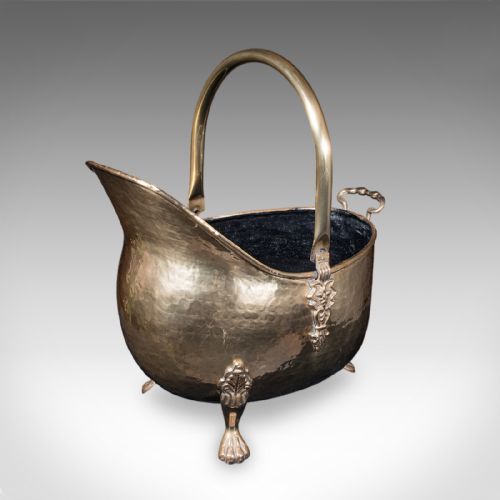
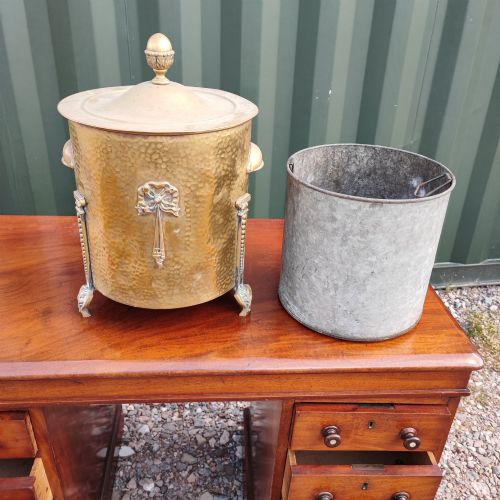
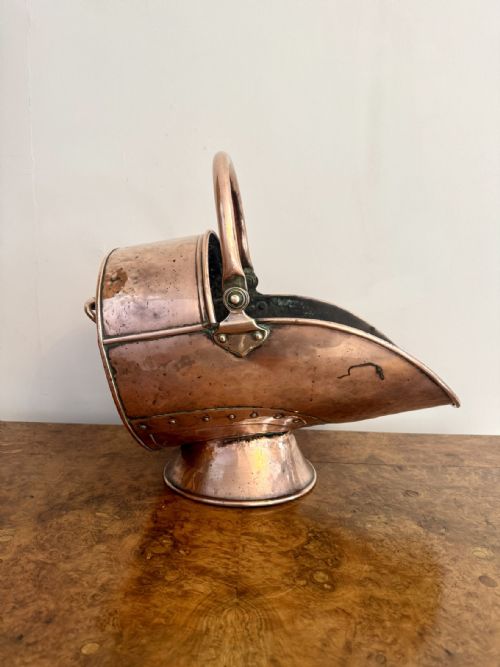
A brass scuttle bucket combines practical hearth storage with decorative metalwork, encompassing helmet shapes, cylindrical bins, and boat-shaped vessels designed for coal, logs, or peat. These fireside accessories appear frequently in Victorian, Edwardian, and George III iterations, spanning from the eighteenth century into the early twentieth century.
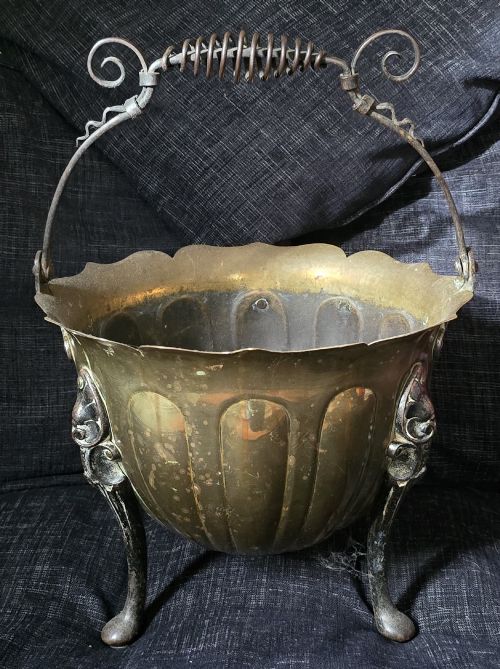
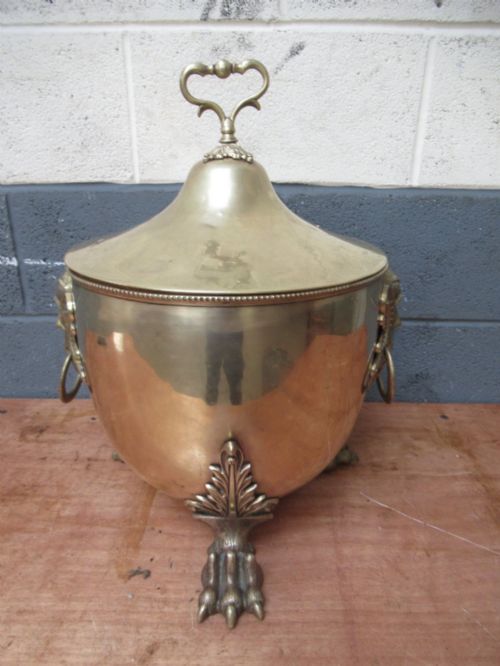
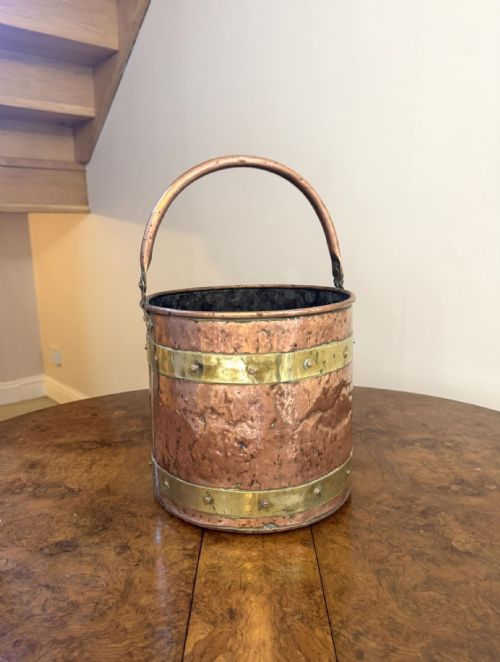
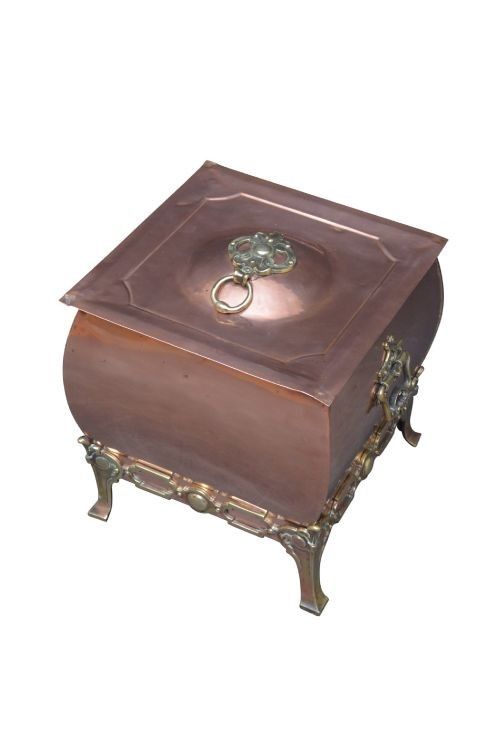
The versions most common on this page are Victorian and Edwardian examples in brass and copper, often featuring swing handles and footed bases. Many pieces double as planters or jardinières, shifting from utility items to decorative containers within domestic interiors.
Materials and construction
Makers utilised sheet brass and copper, joining plates with rivets and hammering surfaces to create texture and rigidity. Handles, rims, and feet frequently incorporate cast brass elements attached securely to the main body.
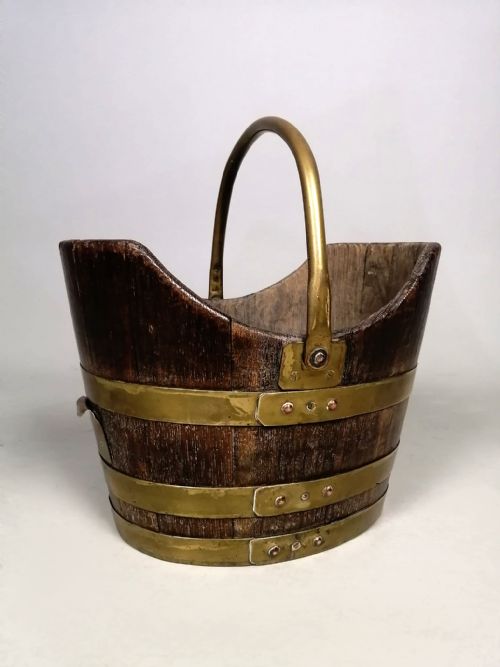
Coopered wooden examples employ staves of oak, mahogany, or ebonised wood bound with brass bands, combining carpentry traditions with metal trim. Liners in metal or ceramic frequently protect the wooden or metal bodies from moisture and fuel residue.
Listings feature brass, copper, and coopered oak forms spanning the Victorian, Edwardian, and George III periods.
Judging quality and craftsmanship
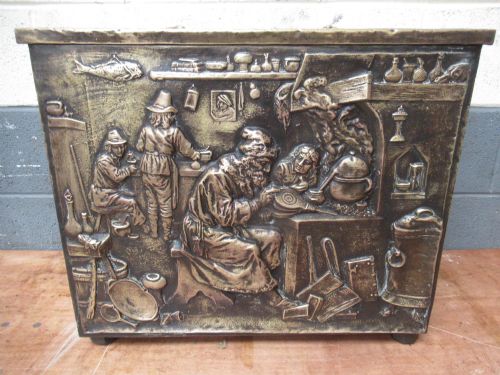
Quality rests on the weight of the metal and the integrity of the construction, where thicker gauge brass or copper resists denting and holds its shape under heavy daily use. Fine hand-finishing, such as crisp embossing, detailed fretwork, or deliberate hand-hammering, distinguishes superior pieces from plain production items.
The integration of original hardware, including matching swing handles, secure riveted seams, and intact metal liners, elevates the merit of a piece. George III and early Victorian iterations display heavier casting and more deliberate proportions than later mass-produced variants.
Henry Loveridge·Benham and Froud
The Brass Scuttle Bucket Glossary
- Scuttle bucket
- A deep vessel designed for holding coal or solid fuel beside a fireplace, typically fitted with a swing handle for carrying. These items often feature a sloped opening or helmet shape to aid in pouring fuel.
- Coopered
- A method of construction where narrow staves of wood are joined edge-to-edge and bound with metal hoops, traditionally used for barrels and buckets. Oak and mahogany are common woods treated this way.
- Jardinière
- An ornamental pot or stand for holding plants or flowers, a secondary function frequently adopted by repurposed coal buckets and bins. They often include metal liners to contain damp soil.
- Helmet shaped
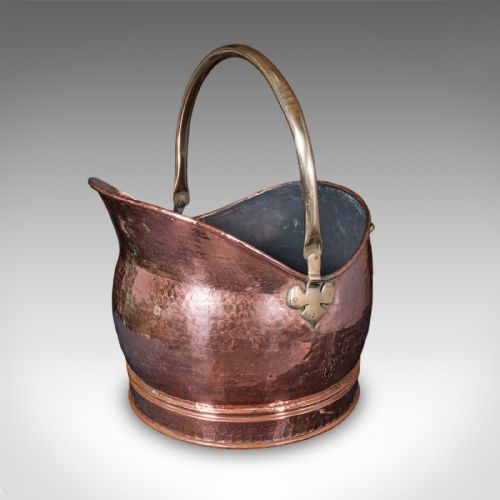
- A descriptor for coal scuttles featuring a flared, asymmetrical rim that resembles a classical helmet, designed to direct fuel smoothly toward the hearth. This profile is common in Georgian and Victorian copper examples.
- Ebonised wood
- Timber treated with a dark stain or finish to imitate ebony, utilised for handles, feet, or body panels on Victorian fireside containers. This dark surface provides a contrast to polished brass and copper.
Brass Scuttle Bucket: Frequently Asked Questions
How were brass scuttle buckets used?
These vessels sat beside the fireplace to store coal, logs, or peat for immediate burning. The swing handle allowed housemaids to carry the bucket from the coal cellar directly to the hearth.
Over time, many of these containers transitioned from purely functional utility objects to decorative household accessories. Modern owners frequently repurpose them as umbrella stands or indoor plant holders.
How do I clean brass and copper?
Standard metal polish removes tarnish and restores the reflective finish of brass and copper surfaces. Gentle application preserves embossed details and hand-hammered textures without thinning the metal.
Some collectors prefer leaving a dark, aged patina rather than achieving a bright shine. Regular dusting with a soft cloth prevents dust accumulation in recessed fretwork and rivets.
Are wooden coal buckets authentic?
Wooden coal buckets typically utilise coopered construction, using curved staves of oak or mahogany bound together with brass bands. These pieces offered a domestic alternative to all-metal scuttles in the nineteenth and early twentieth centuries.
Many wooden examples include internal metal liners to protect the timber from moisture and soot. These liners help identify pieces intended specifically for fuel or water storage.