
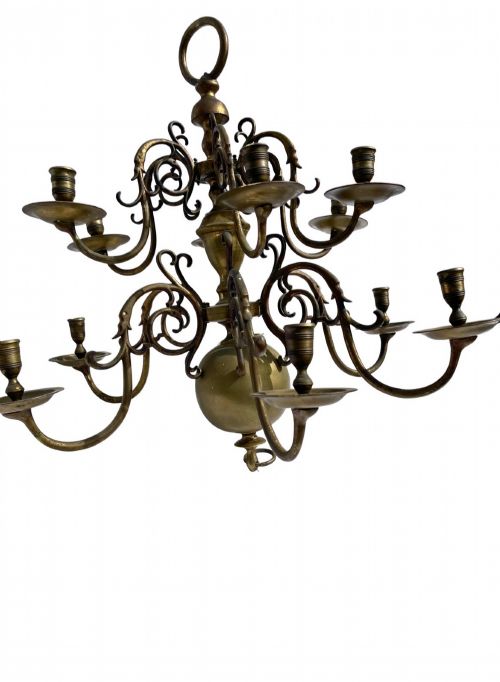
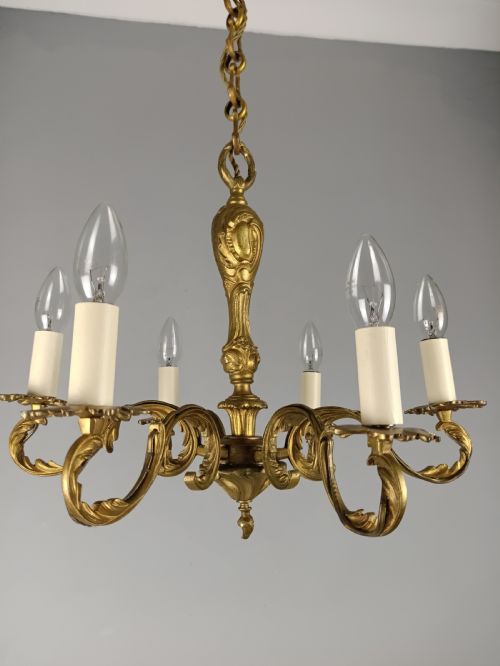


Brass Scroll Arm Chandelier
A brass scroll arm chandelier brings weight and warmth to a room through cast metal work and sweeping arms.
Brass Scroll Arm Chandelier
A brass scroll arm chandelier is a multi-armed ceiling light formed around curving metal branches designed to hold multiple candles or electric bulbs. When you search for this phrase, you meet fixtures that span the nineteenth century through the early twentieth century, including Edwardian examples and pieces dated from eighteen eighty to nineteen thirty.
The most common versions on this page originate from France and adopt styles such as French Rococo, French Provincial, and French Chateau, alongside Dutch Revival and Classical Revival forms. These lights carry six, eight, twelve, or twenty-four branches, frequently decorated with hanging crystal teardrops or coloured crystal fruits.
Makers and manufacturers of these chandeliers worked in bronze, gilded bronze, gilt brass, and silver-gilded metals, often combining glass and crystal elements with the primary brass structure. The resulting fixtures range in scale from modest six-arm domestic lights to large, heavy twenty-four-light installations.
How they were made
The foundation of these chandeliers relies on cast bronze and brass, shaped into sweeping scroll arms through traditional founding methods. Metalworkers employed gilding, silver leaf, and silver gilding techniques to finish the surfaces of the brass and bronze structures.
Casting allowed workshops to produce heavy, ornate frames and detailed scrollwork that could support numerous light branches. Artisans then hand-hung crystal teardrops and amber, mauve, or coloured glass fruits from the arms and central bodies using wire attachments.
Some chandeliers come hung with colourful glass amber and mauve fruits rather than standard crystal drops.
What varies in quality
The distinction between standard and superior pieces rests on the weight of the metal and the crispness of the casting. Heavier cast bronze and thick brass bodies hold sharper decorative details on the scroll arms than lighter pressed metal alternatives.
Quality also shows in the selection and cutting of the crystal and glass ornaments hung from the branches. Finer examples feature substantial, well-cut crystal teardrops and glass fruit elements that catch the light evenly across all arms.
The Brass Scroll Arm Chandelier Glossary
- Scroll arm
- A curved branch extending from the centre of the chandelier, shaped in a sweeping spiral or scroll motif to hold a light.
- Gilt brass
- Brass that has been treated with a thin layer of gold leaf or gilt finish to give the appearance of solid gold metal.
- Gilded bronze
- Bronze metal that has received a gold application, often found in French antique chandeliers for a rich surface finish.
- Crystal teardrop
- A drop-shaped pendant made from high-clarity glass or crystal, hung from the chandelier branches to refract light.
- Dutch Revival
- A decorative style reviving seventeenth-century Dutch lighting forms, characterised by robust brass framing and numerous branch arms.
Brass Scroll Arm Chandelier: Frequently Asked Questions
How do I clean a brass scroll arm chandelier?
Dust the metal and crystal elements regularly with a soft cloth to prevent grime buildup. Avoid harsh chemical cleaners that can strip the gilt or silver leaf finishes from the brass and bronze.
For deeper cleaning, remove delicate glass fruits and crystal teardrops individually and wash them in warm soapy water. Dry them thoroughly before rehanging them on the chandelier frame.
Can these antique chandeliers be wired for modern electricity?
Many antique chandeliers have already been adapted for modern electrical supplies during their history. A qualified electrician can inspect the internal wiring and update the lamp holders to meet current safety standards.
When rewiring, care must be taken to preserve the original brass tubes and scroll arms without damaging the historical metalwork. Low-wattage pygmy bulbs help protect fragile glass and crystal components from excessive heat.
What ceiling height do I need for a large chandelier?
Large chandeliers with twenty-four lights or heavy bronze frames require substantial ceiling clearance to hang correctly. They suit rooms with high proportions, allowing clearance beneath the lowest crystal drop for people to walk underneath.
In standard domestic settings, smaller six-arm or eight-arm versions provide adequate proportion without overwhelming the space. Position the fixture centrally over a dining table or in a primary reception room for the best visual balance.
How do I tell an Edwardian chandelier from a nineteenth-century one?
Nineteenth-century pieces often display heavier cast bronze construction and ornate French Rococo or Dutch Baroque revival styling. They frequently incorporate rich gilt finishes and hand-cut crystal drops that reflect Victorian tastes for opulence.
Edwardian chandeliers from the early twentieth century tend to feature cleaner lines while retaining the traditional scroll arm format. The brass components on Edwardian examples can appear slightly brighter, reflecting changing manufacturing methods of the period.