

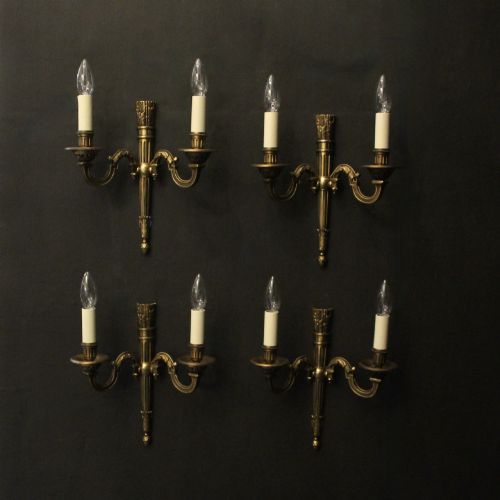
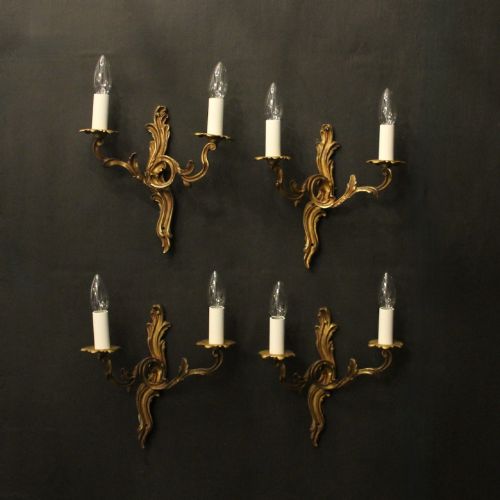
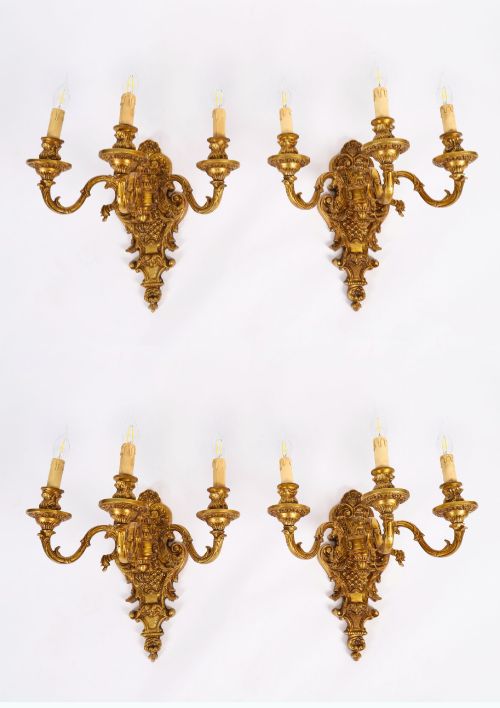
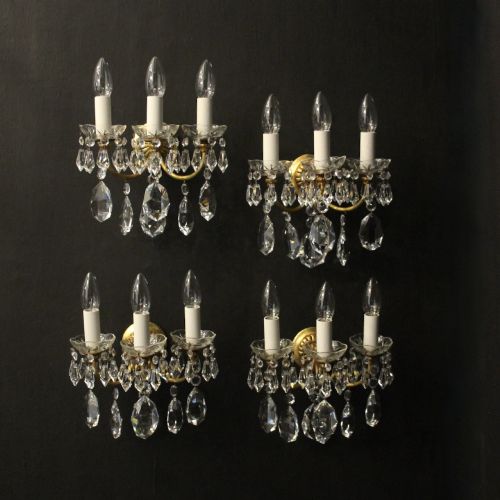
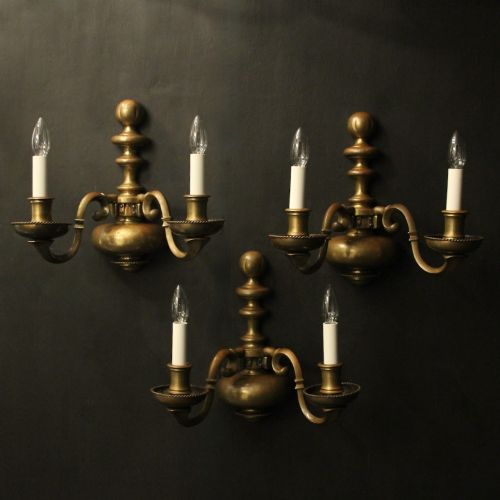
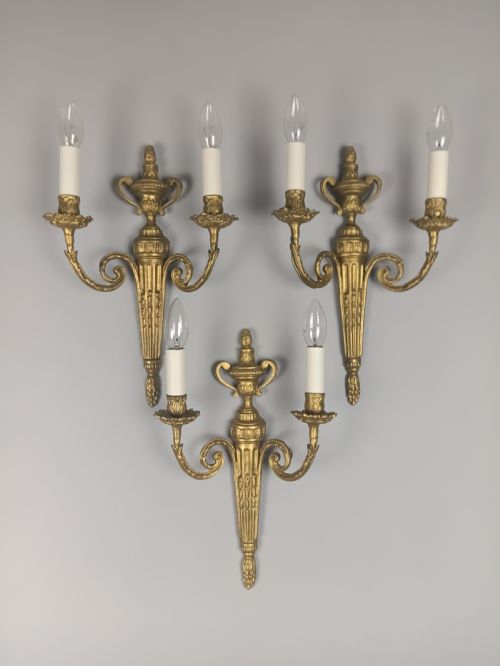
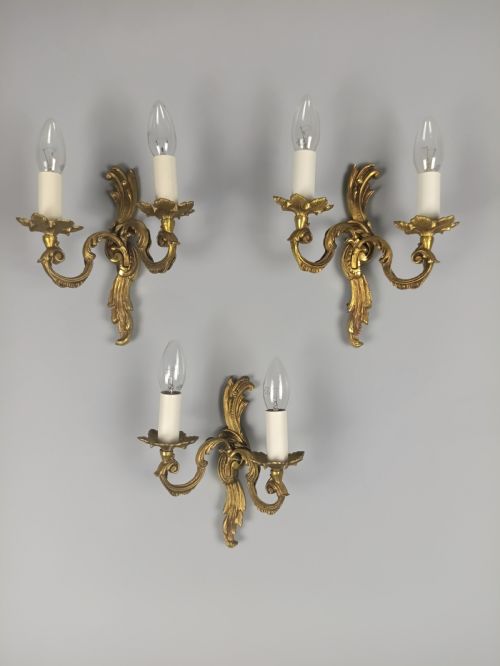
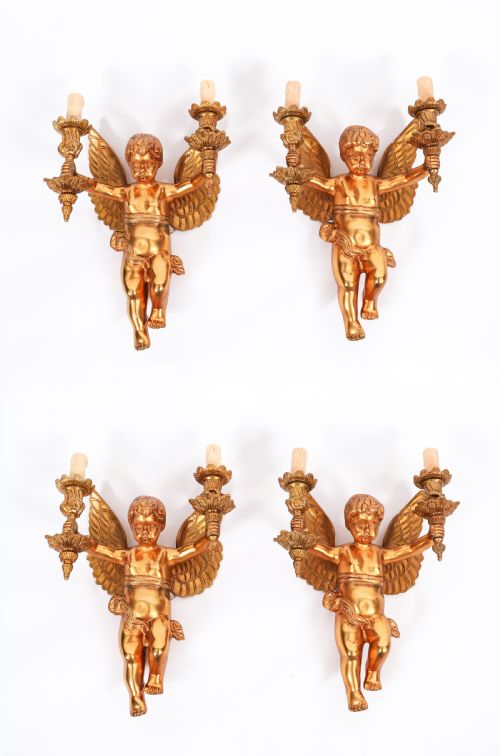
Brass Sconce Set
These brass sconce set fixtures bring period illumination to a wall, offering matched symmetry through grouped candle or electric fittings.
Brass Sconce Set
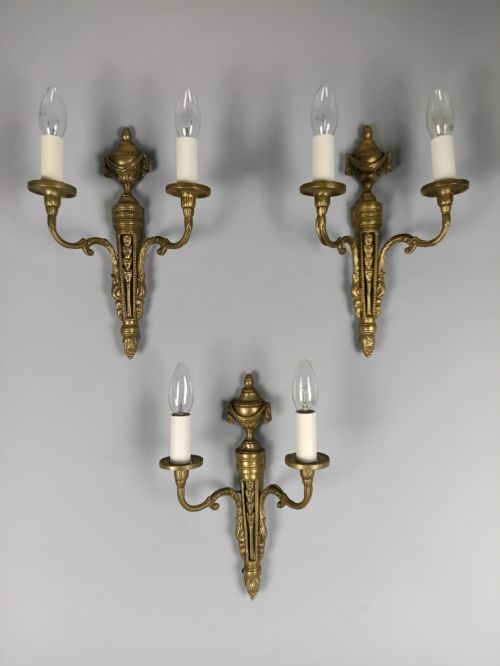
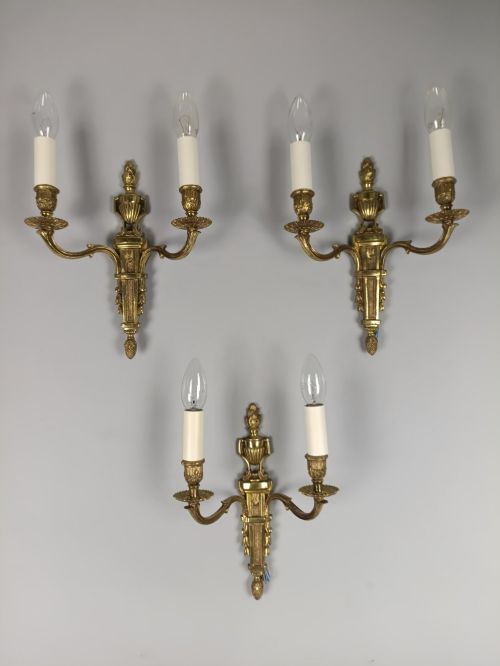
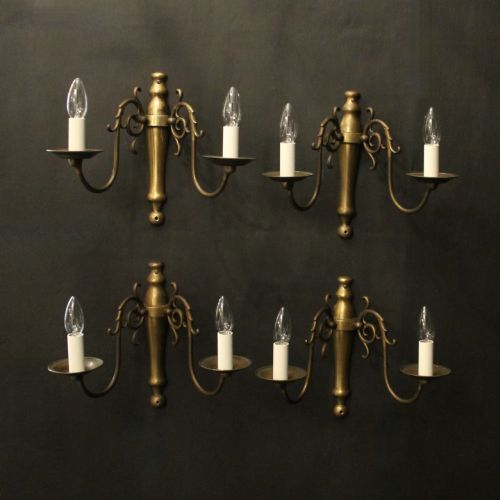
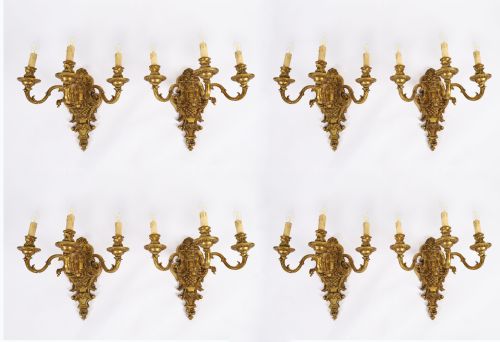
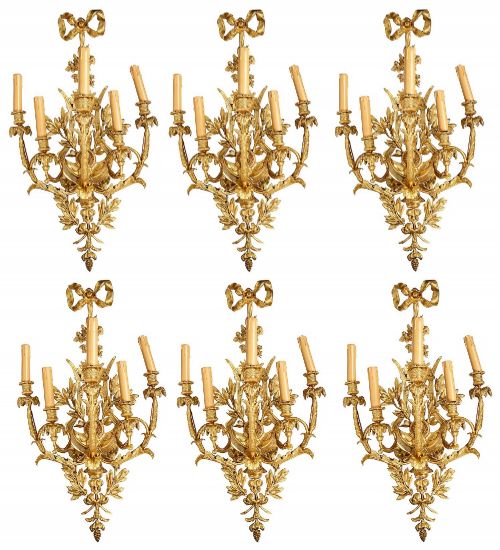
A brass sconce set comprises matched multiple wall lights designed to illuminate a room in unison. These groups typically appear as sets of three, four, six, or eight matching fixtures intended for placement along a single wall or flanking a architectural feature.
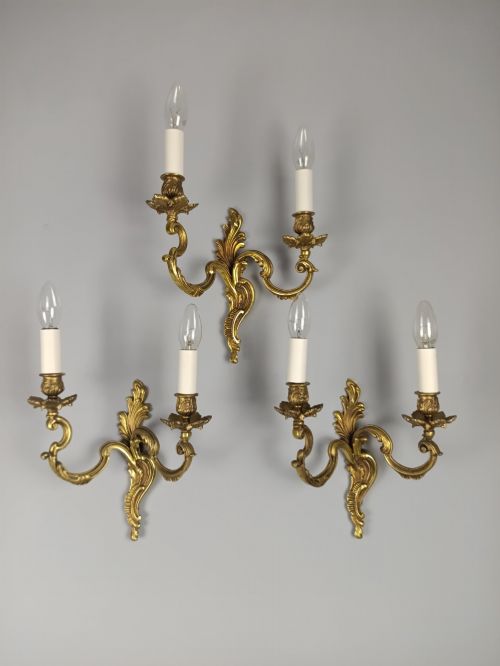
The selections available here span from the Victorian and Edwardian eras into the early twentieth century, drawing heavily on French Rococo, Neo-Classical, and traditional English design. French variants dominate the selection, frequently taking the form of twin-arm or triple-arm gilded ormolu and brass fixtures.
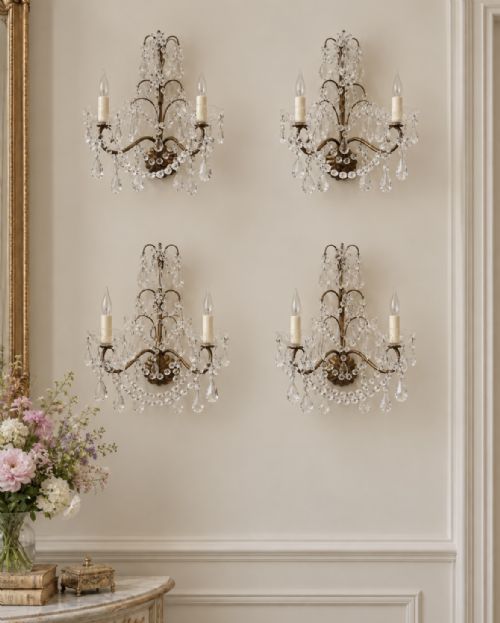
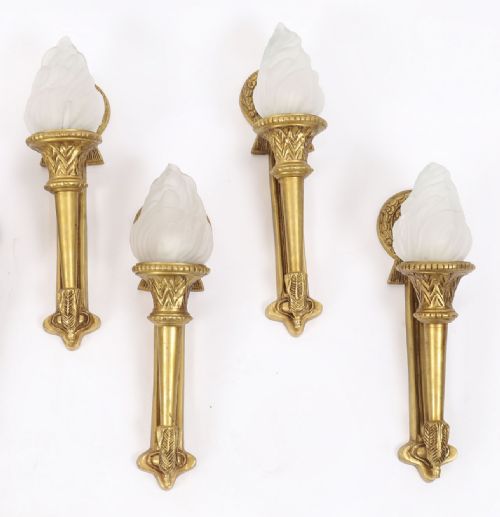
Makers utilised various configurations including flaming torch motifs, cherub figures, and crystal drops alongside standard arms. While wall lights form the core of the selection, related items such as wall mirrors and light fittings also appear within these groups.
Materials and construction
Foundry work relies on brass, bronze, and metal substrates finished with gilding, ormolu, or silver plating to achieve a lustrous metallic sheen. Many pieces incorporate cast ormolu and gilt bronze, lending structural weight and intricate surface detail to the backplates and arms.
Decorative elements frequently combine cast metal components with glass drops, crystal elements, or fabric shades. Construction methods involve joining multiple cast branches to a central backplate, often wired for electricity during subsequent updates while retaining their period frames.
Brass Sconce Set Retail Price Guide 2026
Typical asking prices for brass sconce set among the pieces listed under this phrase on Sellingantiques today, from the lower quarter to the upper quarter. They describe what is for sale here now, not the wider market.
Listings feature brass, gilded bronze, and ormolu materials across periods spanning the Victorian era, Edwardian years, and the 1920s.
Distinctions in quality
The standard of a brass sconce set depends upon the crispness of the casting and the depth of the original gilding or ormolu. Finer examples display sharply defined ornamentation on the backplates and arms, such as detailed cherubs or precise acanthus leaves, whereas simpler pieces show softer contours.
Uniformity across all pieces within a set dictates the overall integrity of the group. Sets that retain matching patination, identical arm counts, and original structural components across every individual fixture demonstrate superior preservation.
The Brass Sconce Set Glossary
- Ormolu
- Gilded bronze produced by applying a mercury and gold amalgam to a bronze object and heating it. This technique creates a durable, golden surface finish common on finer French wall lights.
- Sconce
- A wall-mounted light fixture designed to hold candles or electric bulbs. These fittings project outward from a backplate fixed directly to the wall surface.
- Applique
- A French term for a wall-mounted light fixture or sconce. The word frequently appears in descriptions of decorative metal wall lights from the nineteenth and early twentieth centuries.
- Rococo
- An ornate design style characterised by asymmetrical curves, scrollwork, and naturalistic plant motifs. This aesthetic heavily influences the arms and backplates of many French wall lights on this page.
- Neo-Classical
- A style drawing inspiration from classical antiquity, featuring symmetrical lines, urns, flaming torches, and crisp geometric patterns. It provides a formal contrast to the flowing curves of Rococo designs.
Brass Sconce Set: Frequently Asked Questions
How were these wall lights originally used?
These fixtures served to illuminate rooms by holding wax candles before the widespread adoption of electricity. Placed in pairs or larger groups, they reflected candlelight off walls and mirrors to maximise brightness.
Over time, many surviving sets underwent rewiring to accommodate electric bulbs while preserving their original metalwork and decorative frames.
How do I distinguish Edwardian sets from Victorian ones?
Victorian examples often display heavier, more robust brass construction with traditional English or ornate detailing. Edwardian sets tend to lean towards lighter proportions and cleaner period revivals.
Examining the casting style and backplate fixings helps clarify the manufacturing era.
Can I mix different sets in one room?
Matching sets maintain visual balance, particularly when placed symmetrically on opposing walls or flanking a fireplace. Mixing different styles disrupts the deliberate symmetry intended by the original maker.
Sticking to a single coordinated set ensures consistent metal tone and decorative language throughout the space.
What is the best way to live with these fixtures?
Position them at eye level or slightly above to create ambient wall illumination without direct glare. Pairing them with compatible wall mirrors enhances the spread of light across the room.
Regular dusting with a soft, dry cloth preserves the metal surface and any applied gilding or ormolu.