





Brass Scientific Equipment
Brass scientific equipment comprises precision instruments designed for measurement and observation, offering a tactile connection to the history of technical progress.
Brass Scientific Equipment
Brass scientific equipment encompasses a diverse array of instruments created for measurement, navigation, calculation, and demonstration. When exploring brass scientific equipment, you will frequently encounter items originating from the nineteenth and early twentieth centuries.
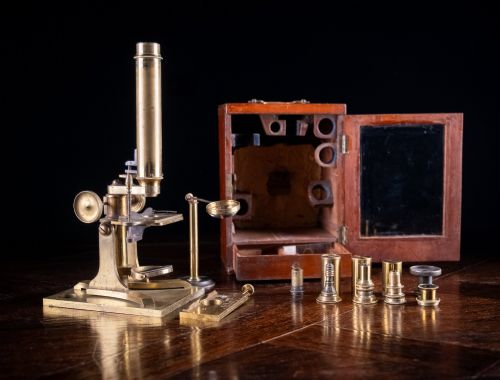
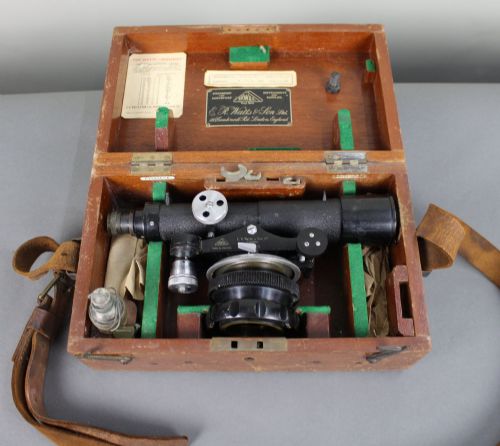
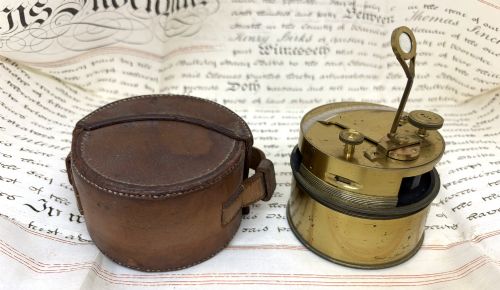
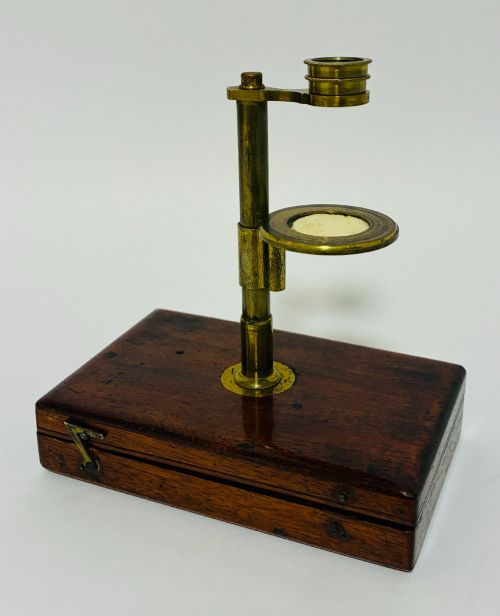
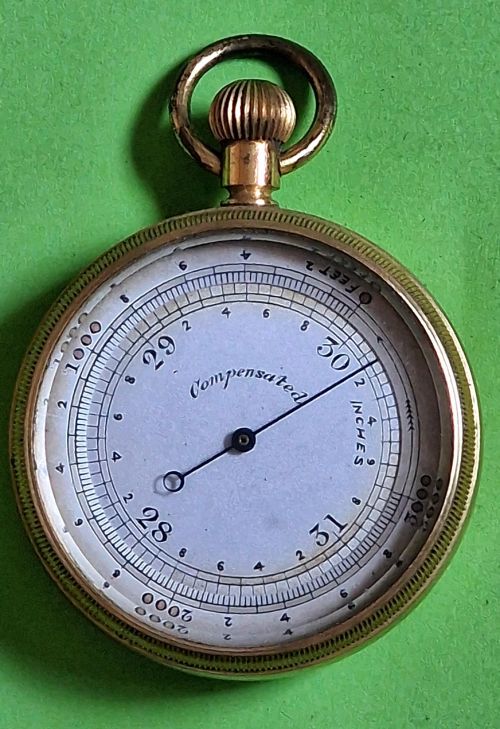
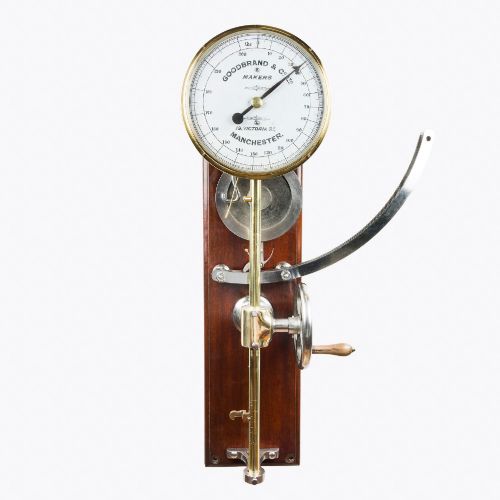
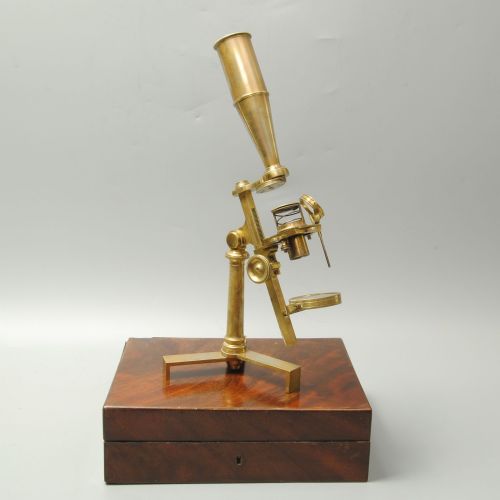
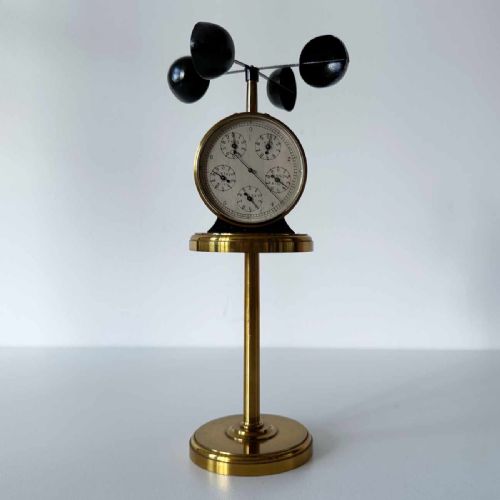
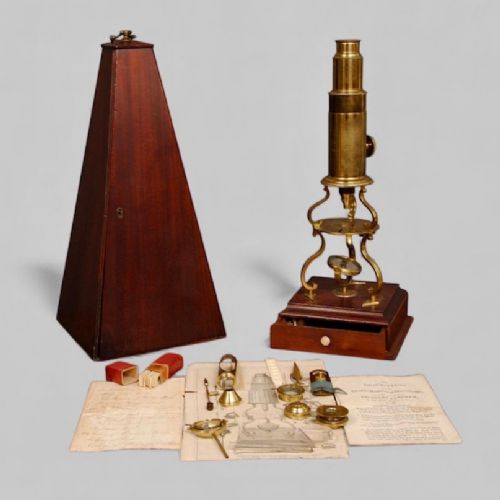
The selection ranges from surveying tools such as theodolites and levels to meteorological barometers, anemometers, and optical microscopes. Many survive housed in fitted mahogany or wood cases, occasionally complete with original trade papers or paper labels.
Makers span renowned London instrument houses alongside regional specialists, reflecting an era when British manufacturing led technical instrumentation. These apparatuses bridge utility and aesthetic appeal, serving practical functions in their day.
Materials and construction
Brass forms the primary structural and visual element of these pieces, often polished or lacquered to prevent tarnishing, whilst steel and glass provide essential functional components for lenses, dials, and internal mechanisms. Wood, particularly mahogany, is utilised for protective fitted transport cases and baseboards, sometimes complemented by leather or paper details.
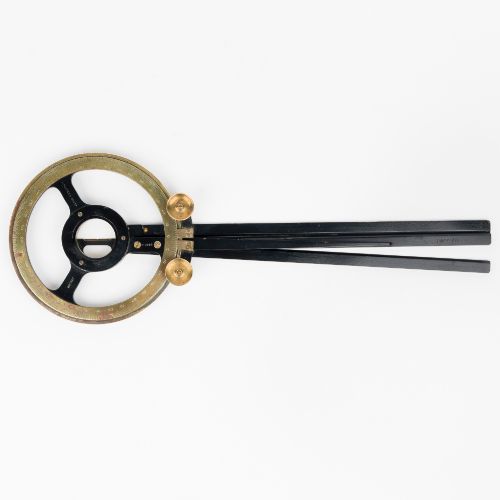
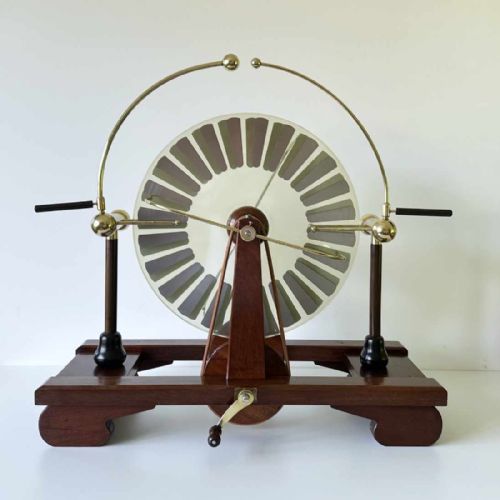
Construction relies on precision lathe work, hand-engraved scales, and carefully cast metal components assembled with threaded fittings and pivots. The integration of optical glass, mercury tubes in barometers, and delicate wire coils in electrical apparatus demonstrates high technical proficiency.
Brass Scientific Equipment Retail Price Guide 2026
Typical asking prices for brass scientific equipment among the pieces listed under this phrase on Sellingantiques today, from the lower quarter to the upper quarter. They describe what is for sale here now, not the wider market.
Some nineteenth-century instruments retain microscopic dust particles from laboratories that vanished over a century ago.
Evaluating quality in instruments
Quality in these instruments is determined by the crispness of engraved graduations, the smoothness of mechanical movements, and the retention of original optics and components. Finer examples display meticulous finishing on concealed parts and bear signatures of esteemed makers.
The survival of associated fitted cases, trade labels, and supplementary accessories elevates an instrument's integrity. Simpler utility pieces contrast with complex laboratory or field apparatus designed for high-precision governmental or maritime use.
E.R. Watts & Son Ltd·W&S Jones·L Casella & Co·Short & Mason·J Hicks·Negretti & Zambra·Alexander Adie·Heinrich Daniel Ruhmkorff
The Brass Scientific Equipment Glossary
- Anemometer
- A device used for measuring the speed of wind or gas flow. Meteorological examples often employ rotating cup assemblies connected to recording dials.
- Hydrometer
- An instrument used for measuring the specific gravity of liquids, indicating density based on the depth to which it sinks. Sikes versions were standard for measuring spirit strength.
- Barograph
- A mechanical barometer that records barometric pressure over time on a graph paper drum. It combines aneroid barometers with a clockwork rotating cylinder.
- Induction coil
- An electrical device used to produce high-voltage pulses from a low-voltage direct current. Ruhmkorff coils are notable early examples used in electrical experimentation.
Brass Scientific Equipment: Frequently Asked Questions
What is brass scientific equipment?
Brass scientific equipment comprises historical instruments utilised for surveying, navigation, meteorology, and laboratory research. These pieces combine brass metalwork with glass lenses, steel components, and wood housings.
They represent the technological advancements of the nineteenth and early twentieth centuries, prized today for their mechanical ingenuity and aesthetic presence.
How were these instruments used?
Professionals such as surveyors, meteorologists, doctors, and mariners employed these devices for precise field measurements and data collection. Many instruments were calibrated for specific governmental, commercial, or scientific applications.
Demonstration apparatuses were also utilised in educational settings to illustrate physical and electrical principles to students.
How should I display them?
These instruments suit placement on desks, bookshelves, or dedicated display cabinets where their metallic surfaces and mechanical details can be observed. Keeping them away from direct sunlight and excessive moisture preserves the lacquer and wood finishes.
Many items remain secured within their original mahogany or leather-lined cases, which offer an alternative presentation format when opened.
How do I date an instrument?
Dating relies on maker signatures, patent dates, style evolutions, and accompanying trade papers or case labels. Directory records of manufacturing firms provide active operational windows for specific workshops.
Material choices and typographic styles on engraved scales also offer reliable clues to an instrument's period of manufacture.