





Brass Rim Table
A brass rim table brings a neat edge of polished metal to mahogany, walnut or marble.
Brass Rim Table
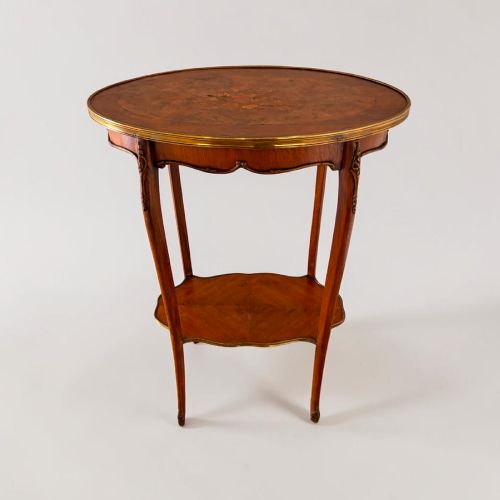
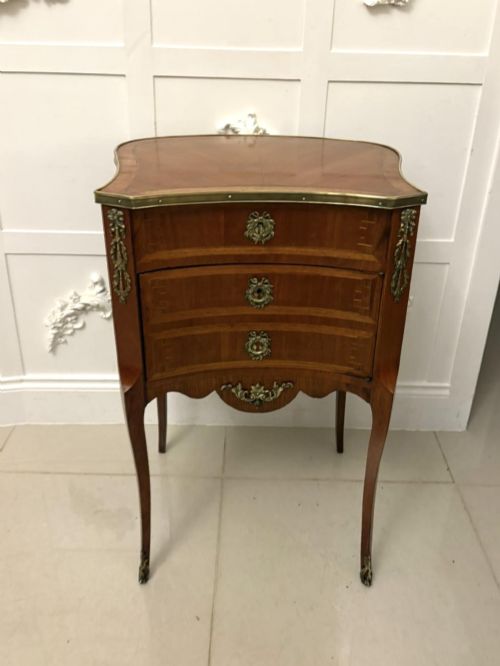
A brass rim table combines timber or stone surfaces with a protective or decorative metal gallery, spanning occasional tables, coffee tables and smaller centre pieces. These items appear across Georgian, Victorian and twentieth-century periods, often showing French influence through styles like Louis XV and Neoclassical.
The version most commonly met on this page is the occasional or coffee table featuring inlaid timbers such as mahogany and walnut, finished with a raised brass gallery along the edge. Smaller forms include gueridon tables and multi-tiered side tables designed for light display or domestic use.
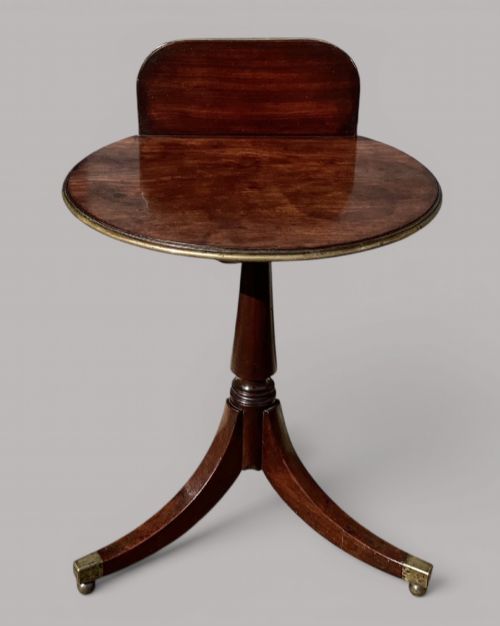
Originating largely from English and French workshops, these tables range from early nineteenth-century cricket and tripod designs to later marquetry pieces. The defining metal border unites disparate forms, whether paired with white marble tops or figured wood veneers.
Materials and construction
Makers constructed the primary frames using dense hardwoods like mahogany, walnut and kingwood, frequently applying intricate marquetry and parquetry inlay. Surfaces were sometimes finished with contrasting ebonised wood or topped with polished white marble.
The characteristic brass rims and galleries were cast or shaped to fit the exact perimeter of the table top, secured with small pins or screws. Ormolu mounts and occasional glass elements further enhanced the decorative vocabulary of French-influenced pieces.
Brass Rim Table Retail Price Guide 2026
Typical asking prices for brass rim table among the pieces listed under this phrase on Sellingantiques today, from the lower quarter to the upper quarter. They describe what is for sale here now, not the wider market.
Listings feature woods including mahogany, walnut, kingwood and ebonised timber alongside brass and marble.
Judging quality in construction and material
Quality rests in the crispness of the brass casting and the tightness of fit along the wooden edge, showing how securely the gallery was integrated into the top. Superior examples maintain alignment between the metal rim and the underlying timber without gaps.
Finer pieces display skilled timber selection, such as figured mahogany or detailed specimen wood parquetry, rather than plain veneers. The weight and finish of the brass itself distinguish standard production from exceptional workshop output.
W. Turner Lord & Co
The Brass Rim Table Glossary
- Gallery
- A raised ornamental border, usually of pierced brass or wood, running along the edge of a table top or shelf. It prevents items from sliding off while adding a decorative finish.
- Gueridon
- A small French round table, often supported by a central pillar or three legs. These tables frequently feature marble tops and brass galleries.
- Marquetry
- The art of forming decorative patterns on a wooden surface by applying veneer pieces of different woods, metals or shells. It creates intricate pictorial or geometric designs.
- Ormolu
- Gilded bronze or brass applied to furniture and decorative objects as mounts. The technique was widely utilised in French nineteenth-century design.
- Parquetry
- A geometric mosaic of wood pieces used for floors and furniture surfaces. It differs from marquetry by relying on regular angular patterns rather than figurative motifs.
Brass Rim Table: Frequently Asked Questions
What is a brass rim table?
A brass rim table is a small occasional or centre table featuring a raised metal gallery or border around the edge of the top. These pieces combine timber surfaces like mahogany and walnut with polished brass detailing.
Such tables appear across Georgian, Victorian and later periods, often reflecting French design influences like the gueridon or marquetry side table.
How were these tables used?
These tables served as light domestic furniture for holding small decorative items, books or tea service components. The raised metal rim helped secure objects when the table was moved.
In period interiors, they functioned as flexible side tables in sitting rooms or as display surfaces for porcelain and ornaments.
Are marble tops common?
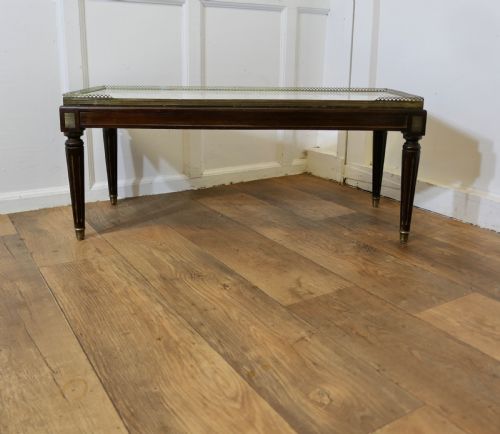
White marble tops appear frequently on French-influenced gueridon and coffee tables from the nineteenth and early twentieth centuries. The stone surface provides a durable contrast to the surrounding wood and brass.
These marble-topped variants often feature matching brass galleries fitted directly to the stone edge.
How do I date a table?
Dating relies on the combination of timber species, construction methods and stylistic markers such as cabriole legs or marquetry patterns. Georgian pieces often show simpler mahogany framing, while Victorian and later examples introduce varied veneers and cast metal elements.
The overall form and secondary woods used in the underframe provide further clues to the period of manufacture.