

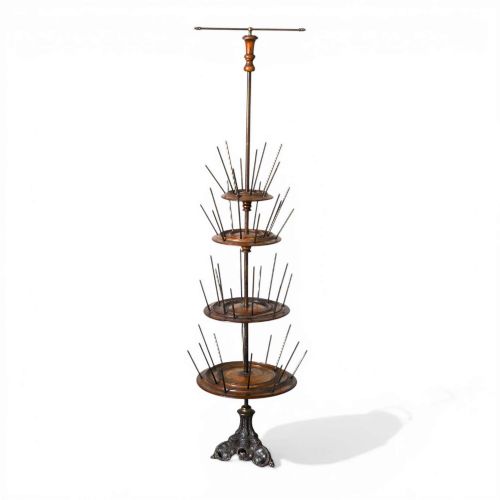


Brass Retail Stand
A brass retail stand brings authentic shop floor history into the home, offering functional display with the robust character of past eras.
Brass Retail Stand
A brass retail stand is a practical piece of shop furniture designed to showcase merchandise, taking forms such as countertop hat stands, tiered cotton reel trees, and window display units. When browsing this selection, buyers encounter functional shop fittings originating from the Victorian, Edwardian, and Art Deco periods, alongside early twentieth century designs.
The objects listed combine brass frameworks with materials like cast iron, wrought iron, glass, and mahogany, reflecting their original commercial purpose. The most common versions on this page are countertop items and freestanding display stands made to serve retail environments during the nineteenth and twentieth centuries.
How they were made
Makers constructed these stands using durable metals such as brass, cast iron, steel, and bronze, often pairing them with wooden bases or shelves in pine, oak, and mahogany. This combination provided the heavy structural support needed for busy shops.
Surface finishes and structural joints rely on traditional metalworking and cabinetmaking techniques, combining turned brass shafts, iron bases, and occasionally glazed glass cabinets or shelving to create transparent display spaces.
Brass Retail Stand Retail Price Guide 2026
Typical asking prices for brass retail stand among the pieces listed under this phrase on Sellingantiques today, from the lower quarter to the upper quarter. They describe what is for sale here now, not the wider market.
Listings feature items spanning the Victorian era through the 1920s, constructed from brass, glass, cast iron, steel, mahogany, wrought iron, pine, and oak.
What varies in quality
The distinction between standard commercial fittings and finer examples lies in the refinement of the metal casting, the weight of the brass, and the integration of secondary materials like select mahogany or detailed ironwork. Superior items show greater attention to proportion and decorative detailing on the stands and bases.
Originality of components and the preservation of the metal surface dictate the character of each piece. Retaining the authentic patination acquired through decades of commercial use elevates an object above heavily restored or later altered examples.
Harrods·Siegel
The Brass Retail Stand Glossary
- Haberdashery
- Shop furniture and display fittings originally used in the trade of selling small articles of dry goods and sewing materials. These pieces are prized today for their specialised compartmentalization.
- Countertop
- Designed to sit directly upon a shop counter for close customer inspection of goods. These smaller stands include hat holders and shelf units.
- Cotton reel tree
- A tiered revolving stand utilised in drapery and sewing shops to organise and display spools of thread. The tiered structure allowed customers to view multiple colours at once.
- Patina
- The surface sheen and coloration developed by brass, iron, and wood through age and handling. This natural layer evidences the true age and working history of the object.
Brass Retail Stand: Frequently Asked Questions
What were brass retail stands used for?
These stands served commercial purposes in nineteenth and twentieth-century shops, displaying merchandise such as hats, textiles, sewing threads, and jewellery to customers.
Retailers relied on sturdy metal and wood fixtures to organise stock efficiently on countertops and in shop windows.
How do I style a retail stand at home?
Countertop stands and small shelving units fit well in living spaces or dressing rooms for organising accessories like hats, small collections, or glassware.
Their industrial and mercantile origins add distinct character and vertical interest to modern interiors.
How can I tell the period of a display stand?
Dating relies on stylistic markers, such as the geometric lines of Art Deco pieces or the heavier ornamentation of Victorian and Edwardian examples.
The choice of secondary materials, including cast iron frames and mahogany bases, also helps identify the manufacturing era.
Are these stands suitable for daily use?
Built originally for heavy commercial environments, these pieces utilise durable brass, iron, and hardwood construction that easily handles everyday domestic demands.
Their robust frames ensure they remain functional display items in modern settings.