




Brass Rail Bedstead
These brass rail bedstead pieces bring solid Victorian and Edwardian craftsmanship and striking metalwork into a bedroom.
Brass Rail Bedstead
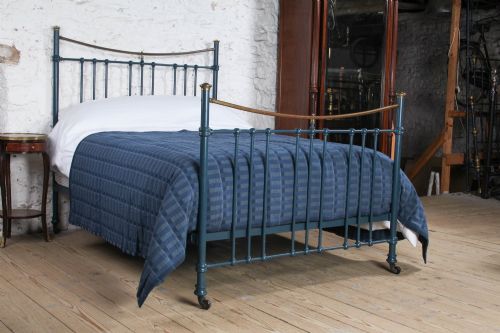
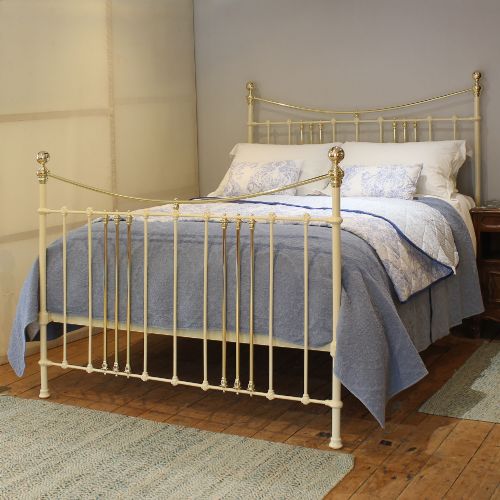
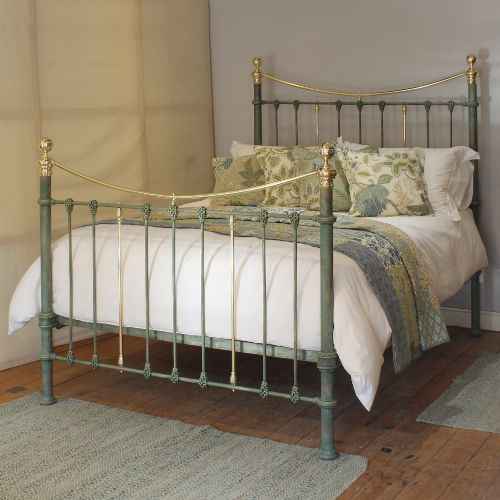
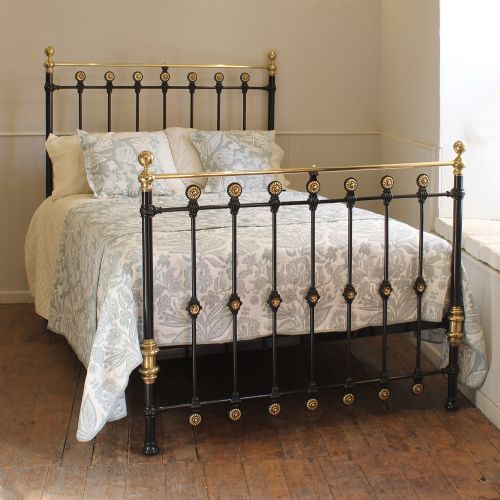
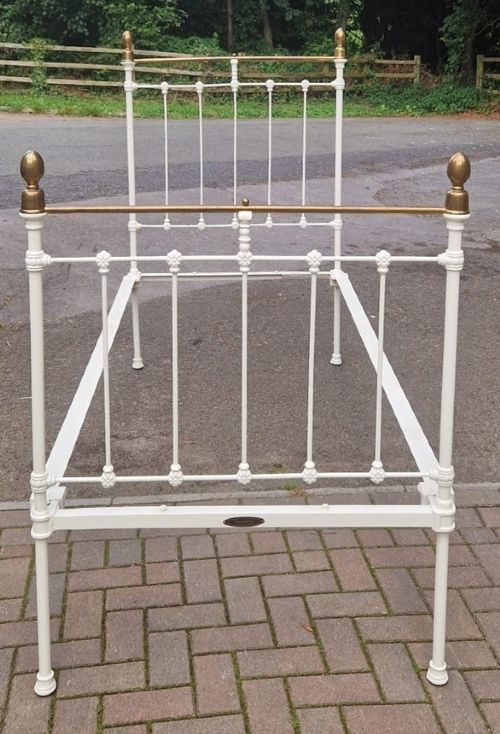
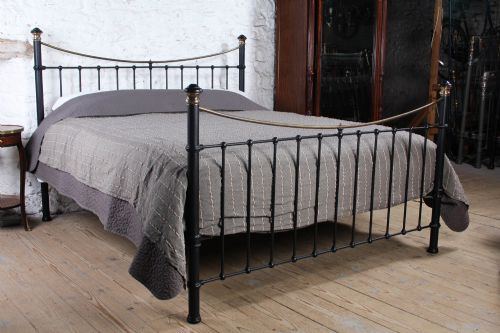
When you search for a brass rail bedstead, you are looking at sturdy frames built from iron and brass dating from the late nineteenth century through to the Edwardian period. The versions most commonly met on this page combine robust cast and wrought iron frames with polished brass rails and decorative castings.
These items arrive in various sizes including single, double, king size, and super king dimensions, often featuring either dip rails or straight rails at the head and foot. Many retain their original painted finishes in colours such as black, cream, green, or white alongside the warm metallic sheen of brass.
The construction serves both practical sleeping needs and decorative interior requirements, offering substantial weight and lasting structural integrity. Such frames bridge the gap between industrial utility and domestic Victorian or Edwardian style.
How they were made
Makers constructed these frames by combining heavy cast iron and wrought iron for the structural support, integrating brass tubing and detailed brass castings for the headboards and footboards. Metal components were joined securely to withstand regular domestic use while incorporating castors for mobility where fitted.
Surfaces were finished with durable painted coatings in dark or neutral shades, contrasting sharply against the bright polished brass rails and finials. Ornate junctions often utilised decorative metal castings to join the structural posts with the horizontal rails.
Brass Rail Bedstead Retail Price Guide 2026
Typical asking prices for brass rail bedstead among the pieces listed under this phrase on Sellingantiques today, from the lower quarter to the upper quarter. They describe what is for sale here now, not the wider market.
Several examples include original castors, ready to roll across your bedroom floor much as they did in nineteen hundred.
What varies in quality
Quality in these pieces is dictated by the complexity of the brass detailing, the weight and robustness of the ironwork, and the preservation of original painted surfaces. Finer examples display elaborate brass castings and substantial dip rails rather than simpler straight rail configurations.
The integrity of the metal components and the retention of original fittings, such as castors and branded or numbered castings, separate standard domestic frames from more decorative or substantial boudoir pieces.
The Brass Rail Bedstead Glossary
- Dip rail
- A headboard or footboard rail that curves downward in the centre, commonly seen on Edwardian designs. This shape softens the silhouette of the metal frame.
- Straight rail
- A horizontal upper rail on a bedstead that remains level across the entire width without dipping. It provides a clean, architectural boundary to the bed end.
- Castor
- A small wheel fitted to the base of the legs to allow easy movement of heavy iron and brass frames. These are frequently original to the Victorian or Edwardian period.
- Casting
- A metal object formed by pouring molten metal into a mould, used here for the decorative joints and ornate ornaments on the bed ends.
Brass Rail Bedstead: Frequently Asked Questions
What sizes are available?
These pieces appear in single, double, king size, and super king formats to suit various room dimensions. Each size maintains the characteristic metal construction.
Larger versions often incorporate more elaborate brass detailing and substantial iron corner posts.
How do I clean the brass?
Maintenance involves dusting the iron framework and gently polishing the brass components with a suitable metal cleaner. Care should be taken to avoid staining original painted iron surfaces.
Regular light wiping preserves the metallic lustre without wearing down the historic finish.
Are modern mattresses suitable?
Most of these frames accommodate standard modern mattress sizes depending on the specific width and length of the antique rails. Proper slat support systems are usually required to bridge the frame correctly.
Checking the internal dimensions ensures a snug fit for contemporary bedding.
How do I date these beds?
Dating relies on stylistic clues such as the presence of dip rails, the complexity of brass castings, and typical Victorian or Edwardian proportions. Iron and brass combinations evolved from mid-nineteenth-century industrial methods into more decorative domestic designs by nineteen ten.
Factory stamps and specific casting marks occasionally provide further chronological clues.