






Brass Putto Lamp
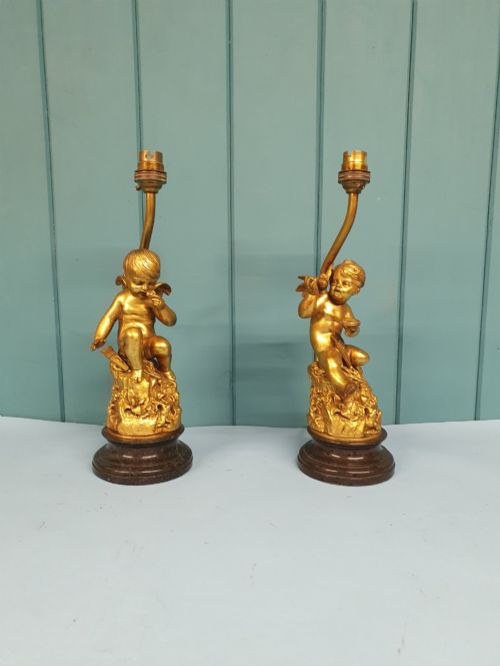
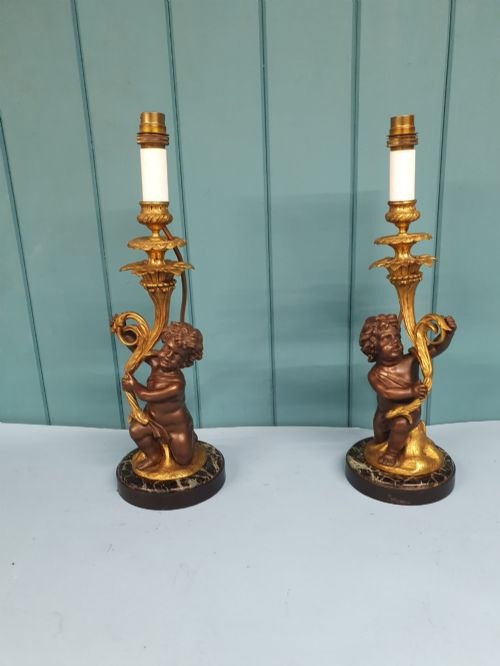
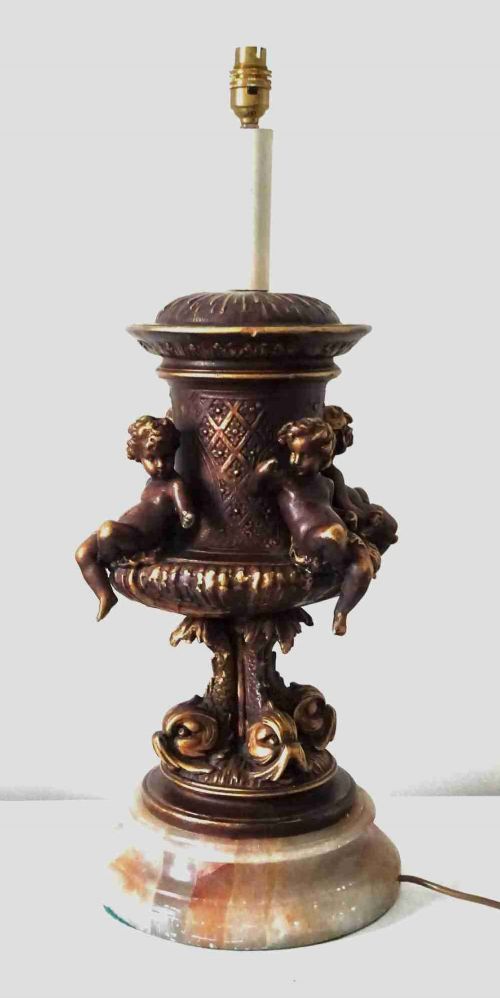
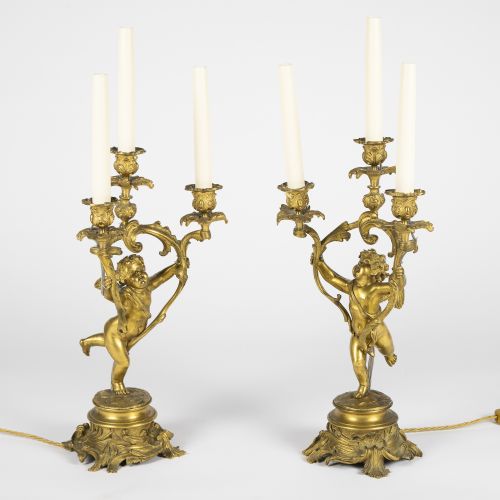
A brass putto lamp brings sculptural presence and warm illumination to a room through cast metal figures of winged infants.
Brass Putto Lamp
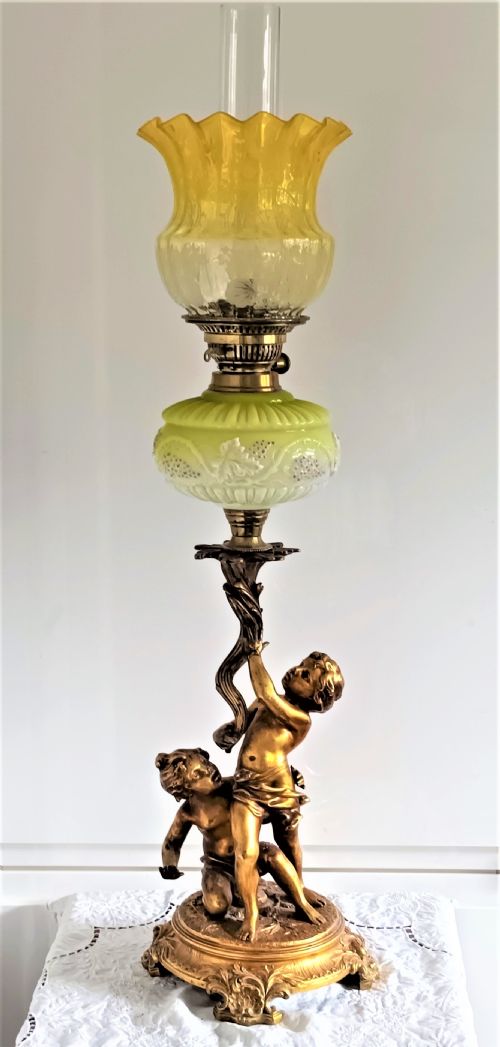
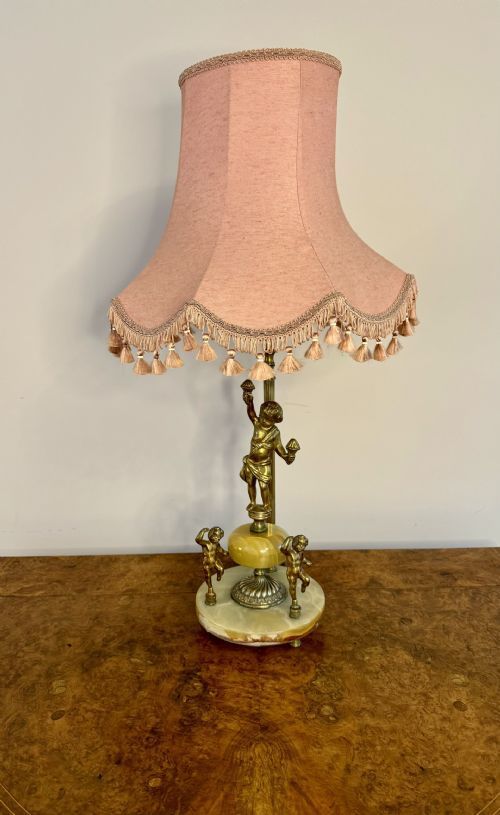
A brass putto lamp unites figural casting with functional lighting, centring on the motif of the winged cherub or putto. These pieces take various forms across the selection, ranging from table lamps and oil lamps to wall sconces, chandeliers, and ceiling lights.
The objects span from the Victorian era into the early twentieth century, drawing on French Rococo Revival, Edwardian, and Art Nouveau styles. Buyers encounter single statuettes converted to electrical use as well as matched pairs supported by marble, onyx, glass, or porcelain bases.
Materials and construction methods
Foundry work relies on casting brass, bronze, and gilt bronze, often complemented by hand-chased detailing on the figures and mounts. Metal components join with glass shades, fabric elements, and carved marble or onyx plinths.
Ceramic bodies from factories like Meissen and Sitzendorf appear alongside tole peinte and majolica in composite lighting designs. Individual metal and ceramic components connect via threaded rods, screws, and traditional joinery methods appropriate to each period.
Brass Putto Lamp Retail Price Guide 2026
Typical asking prices for brass putto lamp among the pieces listed under this phrase on Sellingantiques today, from the lower quarter to the upper quarter. They describe what is for sale here now, not the wider market.
Several putti share lamp duties with dolphins, proving that mythical sea mammals make surprisingly sturdy table companions.
Distinctions in craftsmanship
Structural integrity depends on the quality of the base materials, such as heavy genuine marble or thick brass, and the secure alignment of multi-part assemblies like chandeliers and oil lamps.
Sitzendorf·Meissen
The Brass Putto Lamp Glossary
- Putto
- A representation of a chubby, naked male infant, frequently winged, derived from classical art and popular in Renaissance and Revival design.
- Ormolu
- Gilt bronze, created by applying a finely ground high-carat gold mercury amalgam to a bronze object before firing.
- Tole peinte
- Painted sheet metal, commonly used for decorative lamp shades and bodies during the nineteenth century.
- Majolica
- Tin-glazed earthenware featuring colourful opaque glazes, seen on ceramic lamp bases from the period.
- Sitzendorf
- A nineteenth-century German porcelain factory known for producing elaborate figural ceramics and lamp components.
Brass Putto Lamp: Frequently Asked Questions
How do I wire an old lamp?
Rewiring requires running modern insulated cable through the original channels of the lamp, replacing perished wiring while preserving the external metal or ceramic body. A qualified electrician should handle the internal connections to ensure safety.
Original brass and bronze fittings can often be retained alongside new lamp holders to keep the historic appearance intact while meeting current electrical standards.
Were these lamps converted from oil?
Many nineteenth-century table lamps and oil lamps began their working lives burning paraffin or colza oil before conversion to electricity during later decades. Burner assemblies were replaced or adapted to house bulb holders.
This evolutionary history is normal for period lighting and adds character to pieces that transitioned alongside domestic technology.
How do I clean gilt bronze?
Dusting with a soft, dry brush prevents the accumulation of dirt in the recesses of the cast putto figures without harming the delicate metal surface. Avoid abrasive polishes that strip away gilding or alter the historic patina.
Gentle cleaning with a lint-free cloth maintains the finish developed over the course of the nineteenth and twentieth centuries.
Can I match a single lamp?
Finding an exact counterpart for a single brass putto lamp presents a challenge due to the handmade nature of nineteenth-century castings and ceramic bodies. Pairs listed together offer a matched appearance from the outset.
Using a single lamp as an accent piece on a desk or side table highlights its sculptural qualities without requiring a symmetrical pair.