

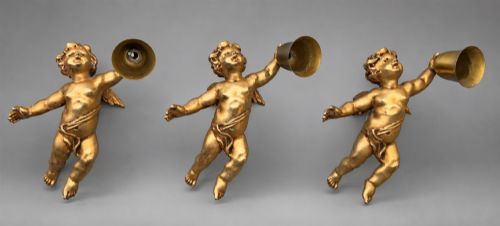
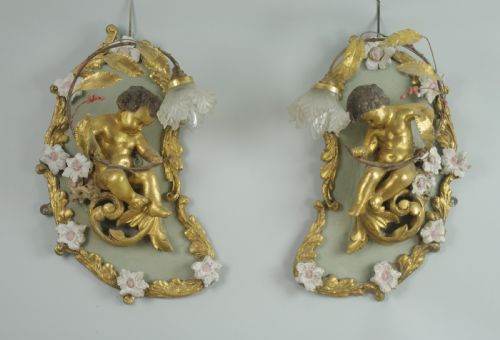
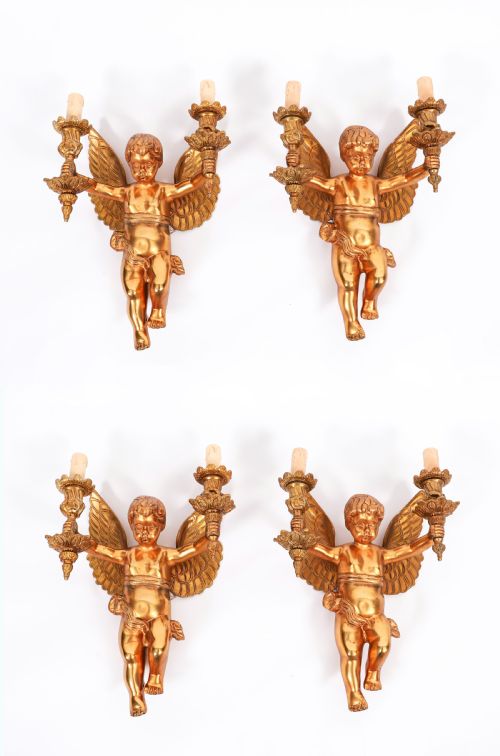
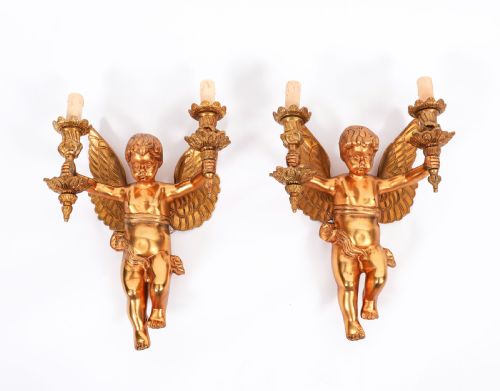


Brass Putti Wall Sconces
Brass putti wall sconces bring sculptural charm and period illumination to a room, featuring winged figures rendered in metal.
Brass Putti Wall Sconces
Brass putti wall sconces are lighting fixtures mounted to walls that incorporate sculptural cherubs or putti figures into their design. When searching for brass putti wall sconces, buyers encounter light fittings fashioned in styles such as Rococo Revival, French Neoclassical, and Arts and Crafts. These fixtures span periods from the nineteenth century through the early twentieth century, including dates around 1880, 1900, 1920, and 1930.
The objects appear in configurations ranging from single lights to pairs, trios, and sets of four branches. Forms include wall lights, wall sconces, and lustre wall lights equipped with shades. Origins represented in the evidence include French and Italian workshops producing ornate metalwork.
How they were made
These fixtures utilise metals such as brass, bronze, gilt bronze, ormolu, and gilt metal to shape the figures and arms. Artisans cast the putti and branch structures, often finishing the surfaces with gilding to achieve a rich metallic lustre.
Some examples incorporate glass elements, porcelain components, or giltwood details to complement the metal armature. The combination of casting techniques and applied finishes defines the physical construction of these wall fittings.
Design influences represented in the selection span Rococo Revival, French Chateau, Art Nouveau, Neoclassical, and Louis XVI styles.
What varies in quality
Quality in these wall lights is determined by the crispness of the casting in the putti figures and the weight of the metal utilised. Superior examples display fine anatomical detail in the cherubs and sophisticated chasing on the branches.
The choice of material also dictates the standard of the piece, with gilt bronze and ormolu demonstrating a different depth of finish compared to standard gilt metal or brass. The harmony between the lighting arms and the sculptural figures separates standard production from finer decorative work.
The Brass Putti Wall Sconces Glossary
- Putti
- Depictions of plump, often winged male infants used as decorative motifs in art and sculpture. They appear frequently on these wall lights.
- Ormolu
- A technique of applying finely ground high-carat gold to a bronze object using a mercury amalgam. It provides a bright golden finish on period hardware.
- Rococo Revival
- A nineteenth-century style reviving the asymmetrical, ornate scrolls and natural motifs of the eighteenth-century movement. It influences many of the cherub sconces from this era.
- Lustre
- A type of wall light or hanging fixture adorned with glass pendants or prisms. These catch and refract the illumination from the bulbs.
Brass Putti Wall Sconces: Frequently Asked Questions
What periods do these wall sconces come from?
The available pieces originate from the nineteenth century and the early decades of the twentieth century. Specific dates noted in the evidence include 1880, 1900, 1920, and 1930.
Design characteristics often reflect historical revivals such as French Rococo or Neoclassical styles popular during those decades.
How do I clean gilt metal and ormolu?
Dust these fixtures gently with a soft, dry brush or microfiber cloth to prevent accumulation in the crevices of the putti figures. Avoid harsh chemical cleaners or abrasive polishes that can strip away the delicate gilt surface or patina.
If deeper cleaning is necessary, consult a metal conservation specialist to preserve the original finish.
What is the difference between gilt bronze and brass?
Gilt bronze, or ormolu, consists of a bronze base covered with a gold layer, offering a warmer and deeper golden hue. Brass is an alloy of copper and zinc that tends to have a brighter yellow metallic appearance when unpolished.
Both materials were utilised for their durability and suitability for intricate casting work.