

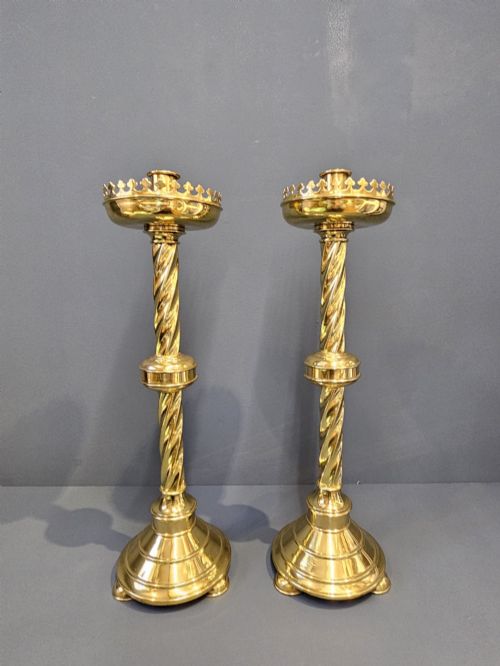
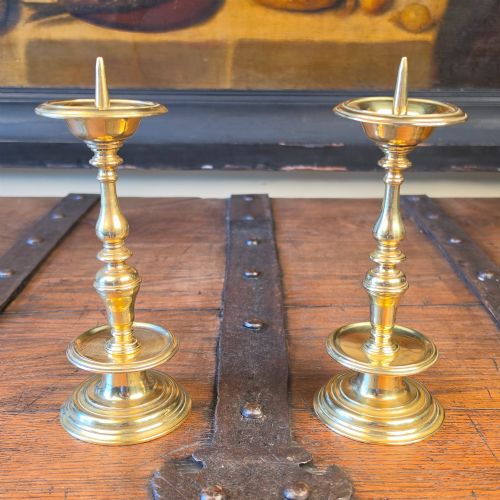
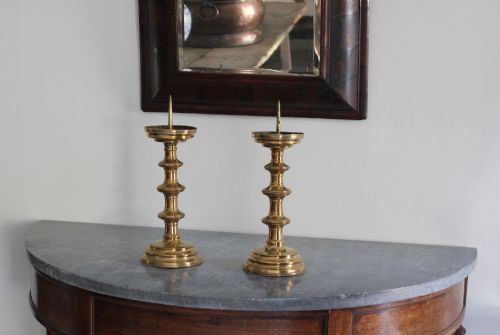
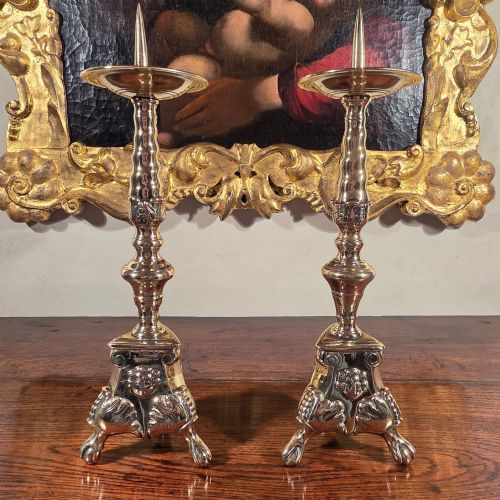
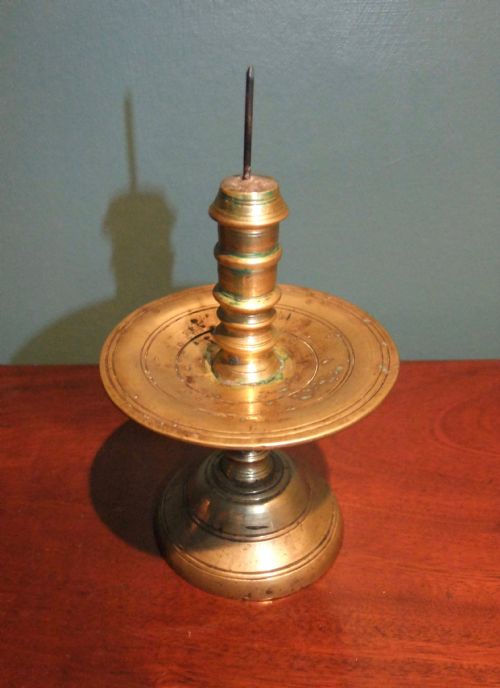


Brass Pricket Sticks
Brass pricket sticks are altar candlesticks featuring an upright spike to secure a large candle, prized for their imposing ecclesiastical presence and warm metal surfaces.
Brass Pricket Sticks
Brass pricket sticks are utilitarian ecclesiastical objects designed to hold large candles upon altars or tables. When you search for brass pricket sticks, you encounter forms ranging from heavy church candlesticks to smaller domestic examples originating across several centuries.
The pieces appearing in these records span the sixteenth, seventeenth, eighteenth, and nineteenth centuries, alongside specific Victorian interpretations. Forms vary from simple turned shafts to ornate Gothic Revival designs and Flemish Baroque styles.
Most examples survive in pairs, though sets of four and single items also appear. Alongside standard candlesticks, the selection occasionally includes table lamps and altar lamps adapted from similar ecclesiastical lighting forms.
How they were made
These items rely principally upon brass, cast brass, bronze, and gilt bronze, occasionally combined with iron or gilt metal. The heavy weight of many examples derives from traditional casting methods used to shape molten metal into robust shafts and broad drip pans.
Surface finishing involves turning on a lathe to create smooth profiles, alongside detailed hand engraving on select pieces. Ormolu and fire gilding appear on continental variants, providing a bright golden finish to the bronze substrates.
Brass Pricket Sticks Retail Price Guide 2026
Typical asking prices for brass pricket sticks among the pieces listed under this phrase on Sellingantiques today, from the lower quarter to the upper quarter. They describe what is for sale here now, not the wider market.
Materials in these records include cast brass, bronze, gilt bronze, ormolu, and iron.
What varies in quality
The distinction between standard items and exceptional examples lies in the crispness of the casting and the depth of the chased or engraved detail. Heavier gauge metal and complex multi-tiered bases separate more ambitious ecclesiastical commissions from simpler utility pieces.
Proportion and balance dictate visual success, particularly on larger floor-standing and church altar sticks where structural integrity matters. The preservation of original surface patination and unpolished metal further distinguishes superior historical examples.
The Brass Pricket Sticks Glossary
- Pricket
- A sharp metal spike projecting vertically from the centre of a drip pan to hold a candle securely in place. This method predates the common use of sockets with wax-catching rims.
- Gilt Bronze
- Bronze metal coated with a thin layer of gold or gold amalgam to impart a brilliant golden sheen. It appears frequently on continental altar ornaments from the eighteenth century.
- Baroque
- An ornate European style characterised by dramatic curves, rich detail, and heavy proportions. Pieces bearing these traits often originate from the seventeenth century or later revivals.
- Gothic Revival
- An architectural and decorative movement drawing inspiration from medieval forms, prevalent during the Victorian era. Items in this style display pointed arches, tracery, and ecclesiastical motifs.
- Ormolu
- Finely ground high-carat gold applied in a mercury amalgam to a bronze object, creating a durable golden finish. The technique was widely utilised by French makers on decorative metalwork.
Brass Pricket Sticks: Frequently Asked Questions
What is a pricket stick?
A pricket stick is an altar candlestick that uses an upright metal spike instead of a socket to secure the base of a candle.
This method was common in churches before socket candlesticks became standard for domestic lighting.
How old are these candlesticks?
The pieces span multiple periods, ranging from sixteenth-century examples up through seventeenth-century Flemish work and nineteenth-century Victorian Gothic revivals.
Dates are determined through manufacturing techniques, material composition, and stylistic traits typical of each era.
Where were they used?
These sticks were primarily utilised in churches and chapels upon altars to provide illumination during religious services.
Over time, many ecclesiastical pieces transitioned into domestic interiors as decorative antique furnishings.
How should I clean brass pricket sticks?
Most collectors prefer to leave the natural patination and age accumulated on antique brass untouched.
If cleaning is necessary, use a soft cloth without harsh abrasive polishes to preserve the historical surface.