


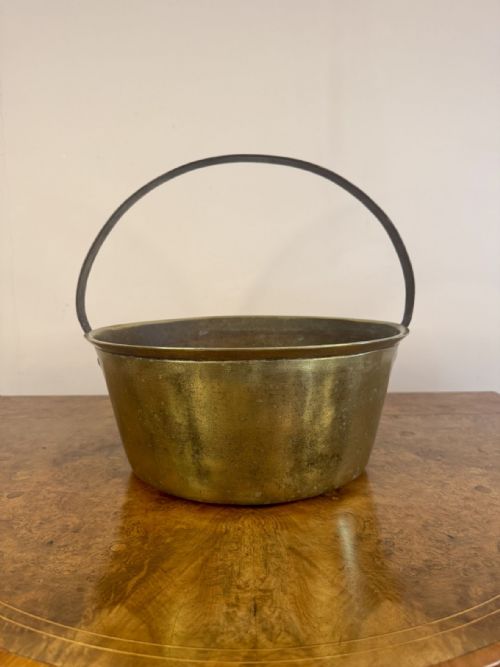
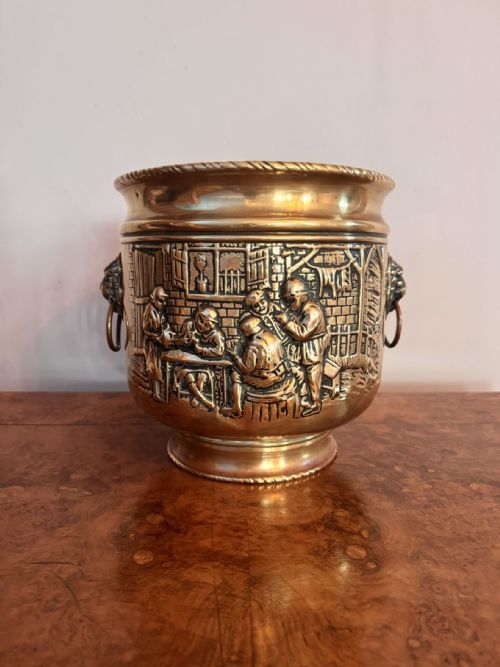
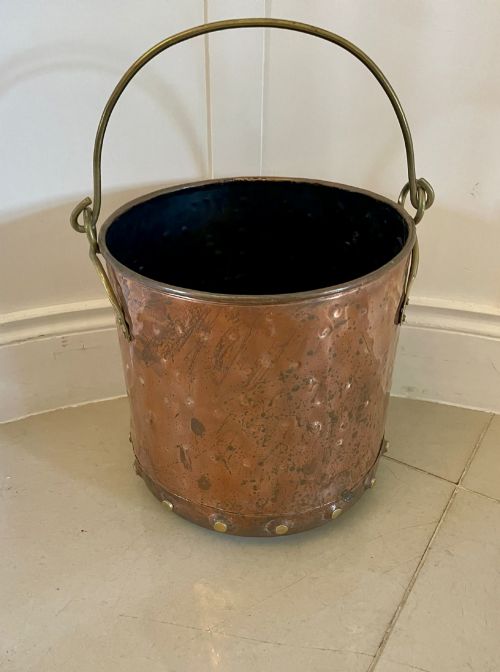

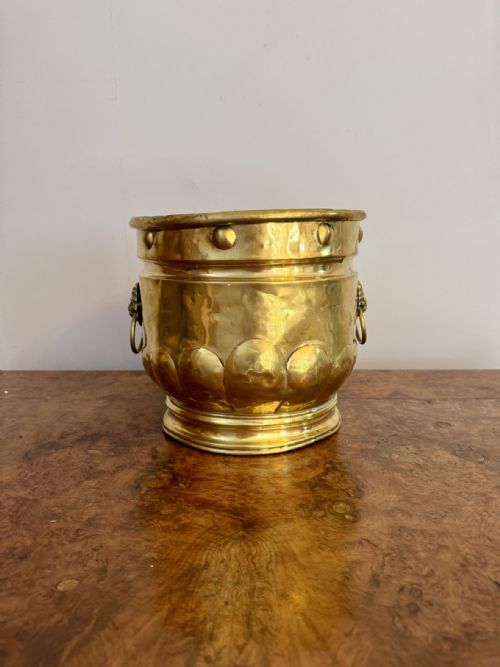
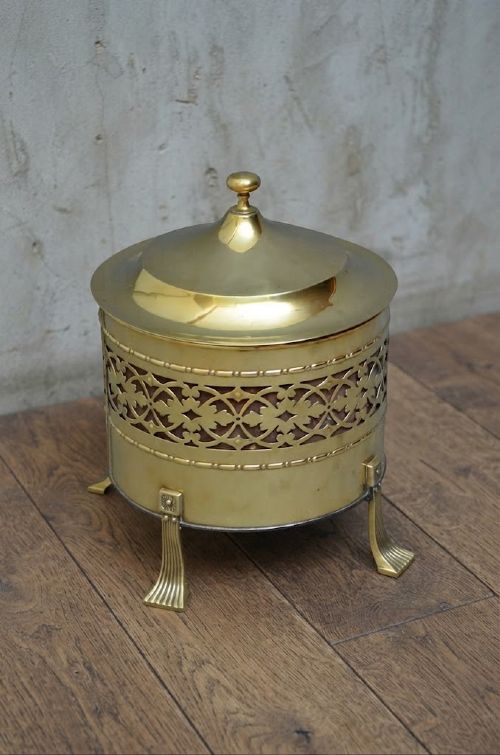
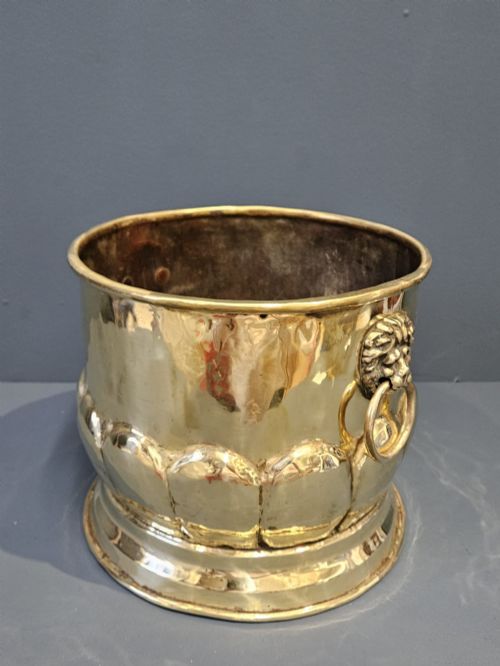
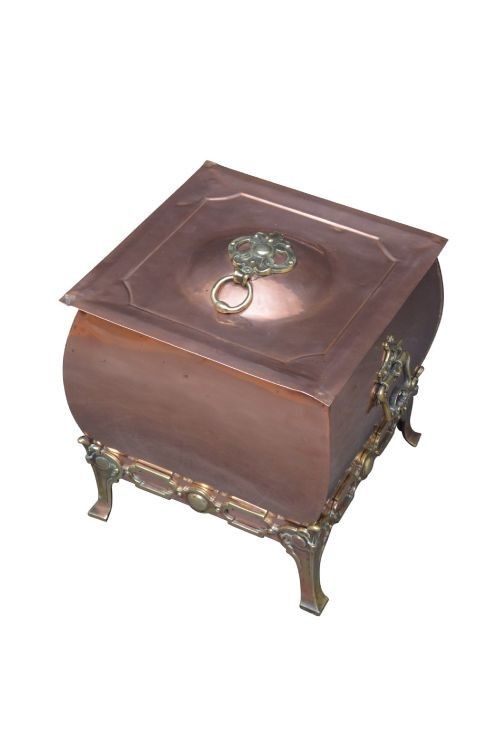


Brass Planter Bucket
These brass planter bucket vessels bring tactile warmth and rich metallic tone to a room, functioning as practical holders for plants or fuel.
Brass Planter Bucket
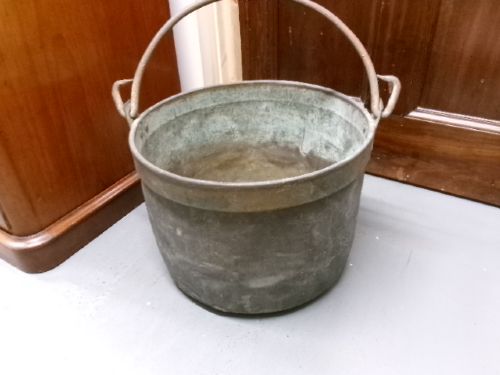
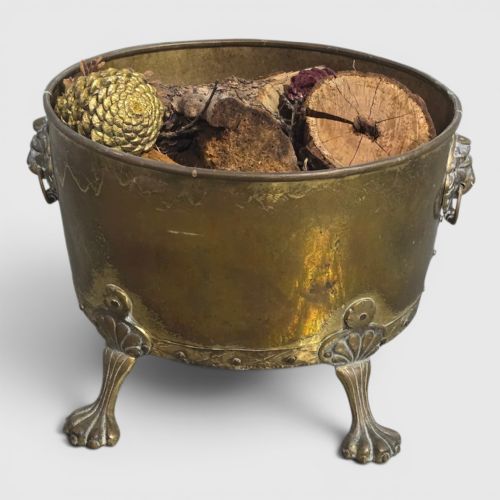
A brass planter bucket spans multiple centuries of domestic utility, originating in Georgian, Victorian, and Edwardian periods as functional vessels for coal, peat, wine, or logs before finding new life as horticultural containers. When searching for a brass planter bucket, buyers encounter various historical forms, including coopered wooden barrels with metal bands, riveted copper bodies, and heavy brass jardinieres.
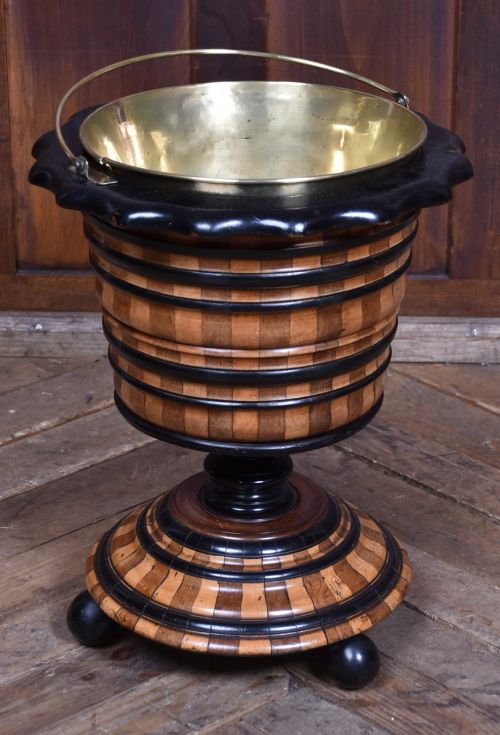
The objects listed on this page frequently cross boundaries between fireplace accessories and plant containers, reflecting their adaptable utility in historic interiors. Pieces range from large floor-standing wine coolers and coal scuttles to table-top tea stoves and decorative jardiniere vessels.
Origins stretch across British, French, Dutch, and Chinese workshops, introducing distinct regional characteristics such as fretwork galleries, heraldic crests, and boat shapes. Victorian and Edwardian examples dominate the selection, often utilising contrasting metals like copper and iron alongside primary brass components.
Materials and construction methods
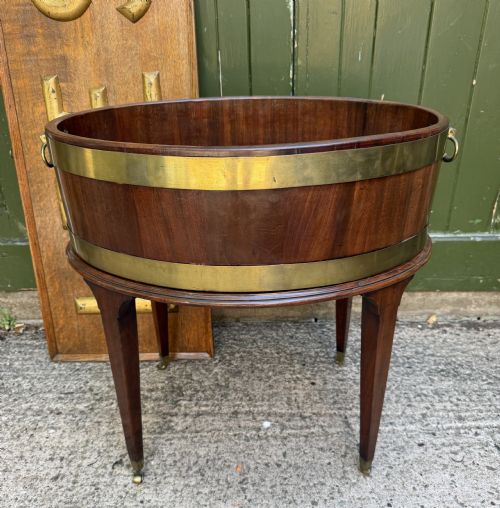
Makers constructed these vessels primarily using sheet brass and copper, frequently pairing them with structural timbers such as mahogany, oak, and walnut. Coopered examples utilise wooden staves held tightly together by heavy brass bands or hoops, requiring precision joinery to maintain watertight integrity.
Metalworkers shaped bodies through hand-hammering, riveting, and casting, producing durable containers with distinct textural qualities. Many items incorporate interior metal liners made of zinc or brass to protect the exterior structure from moisture and soil.
Decorative detailing relies on applied brass crests, pierced fretwork galleries, swing handles, and inlaid wood accents. These mechanical and artisan techniques ensure each container survives centuries of heavy domestic service.
Brass Planter Bucket Retail Price Guide 2026
Typical asking prices for brass planter bucket among the pieces listed under this phrase on Sellingantiques today, from the lower quarter to the upper quarter. They describe what is for sale here now, not the wider market.
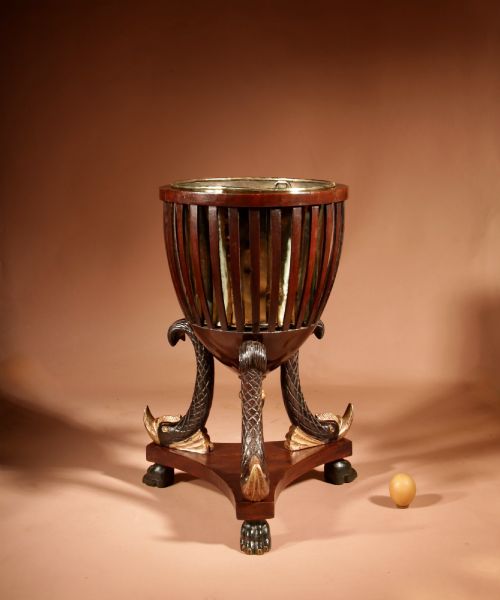
One versatile nineteenth-century mahogany masterwork doubles simultaneously as a tea stove, peat bucket, and a knitting basket.
Judging the standard of workmanship
Quality depends heavily on the weight of the metal and the integrity of the original construction, distinguishing robust coopered frames from lighter decorative reproductions. Superior examples display crisp hand-hammering, secure riveting, and substantial brass mounts that retain their original patination.
The presence of period-correct interior liners and matching stands elevates a piece, whereas replacements alter historical authenticity. Refined details like inlaid mahogany bodies, engraved crests, and intricate fretwork separate standard utilitarian fuel buckets from exceptional decorative items.
The Brass Planter Bucket Glossary
- Coopered
- Constructed from wooden staves bound together by metal hoops, similar to barrel-making techniques used for casks and buckets.
- Jardiniere
- A large ornamental pot or stand designed to hold growing plants or flowers indoors.
- Cellarette
- A lockable container or fitted box used for storing bottles of wine and spirits near the dining table.
- Teestoof
- A traditional Dutch heating device or foot stove, often adapted as a small bucket or jardiniere.
- Scuttle
- A metal coal bucket featuring an angled opening and a carrying handle for hearth maintenance.
Brass Planter Bucket: Frequently Asked Questions
What is a brass planter bucket used for?
These vessels originally served various domestic hearth and dining functions, including holding coal, peat, firewood, or chilling wine bottles.
Today, owners primarily utilise them as decorative holders for large potted houseplants and floral arrangements.
Can these buckets hold water for plants?
Many surviving examples include original metal liners designed to contain moisture and soil safely away from the outer shell.
For pieces lacking an original liner, placing a modern plastic pot inside protects the historic wood or metal structure from water damage.
How do I distinguish a coal bucket from a wine cooler?
Wine coolers and cellarettes often feature fine cabinet timbers like mahogany, occasionally resting on dedicated matching stands with interior bottle divisions.
Coal buckets tend to utilise heavier forged brass or copper bodies equipped with robust swing handles for hearth-side transport.
Are these pieces strictly British origin?
While many items reflect English Georgian and Victorian cabinet-making traditions, the inventory includes significant continental examples from France and the Netherlands.
Dutch coopered buckets and French Empire designs bring distinct regional proportions and decorative motifs to the selection.