
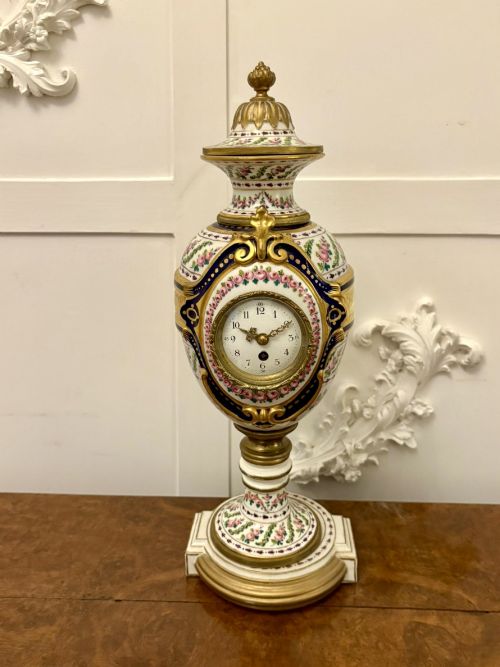
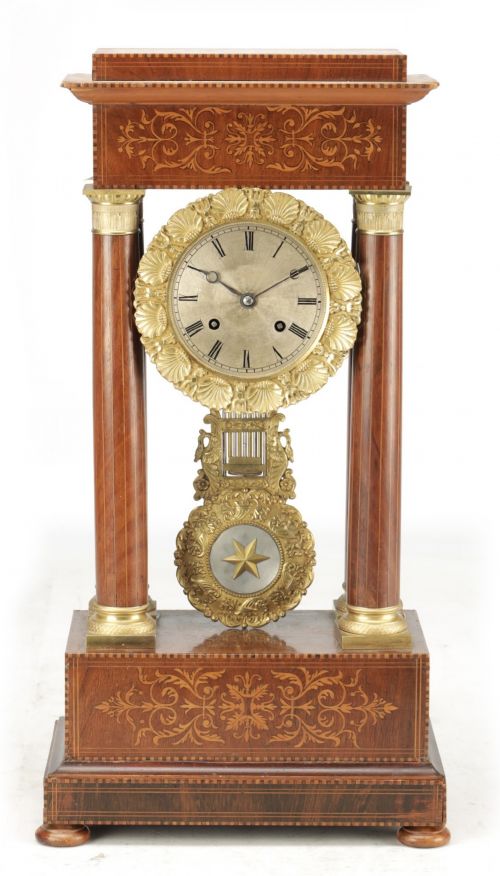
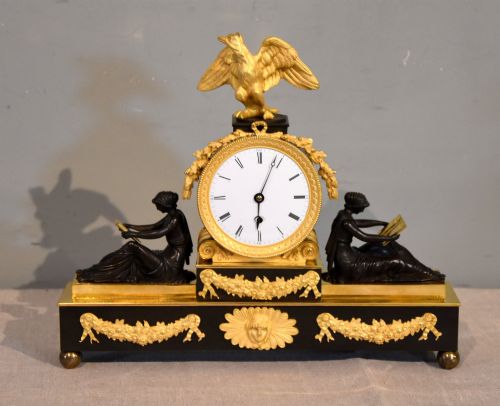
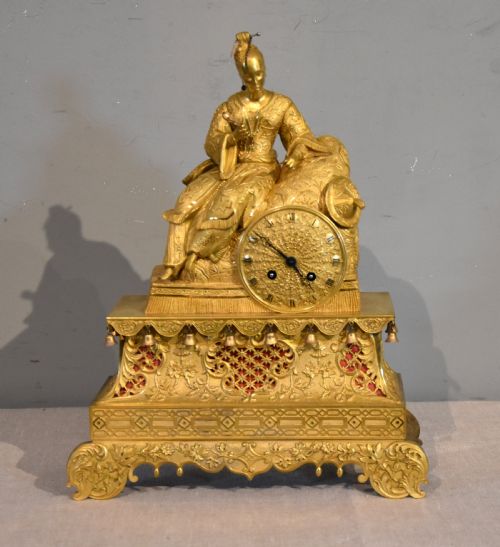




Brass Ormolu Mantle Clock
These brass ormolu mantle clock pieces bring nineteenth-century French and English precision, gilt bronze, and porcelain into a room.
Brass Ormolu Mantle Clock
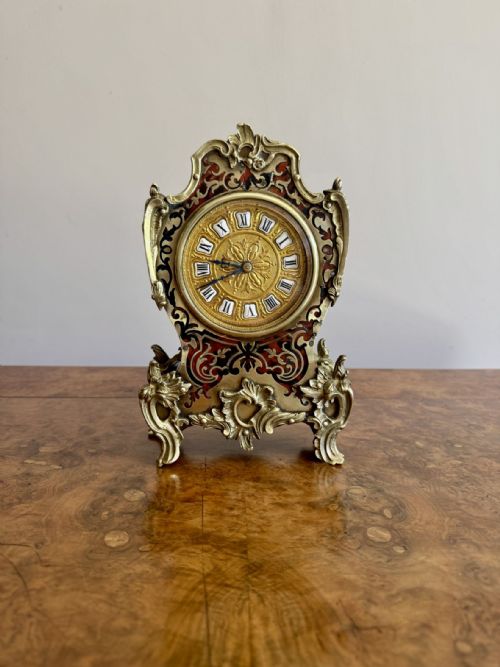
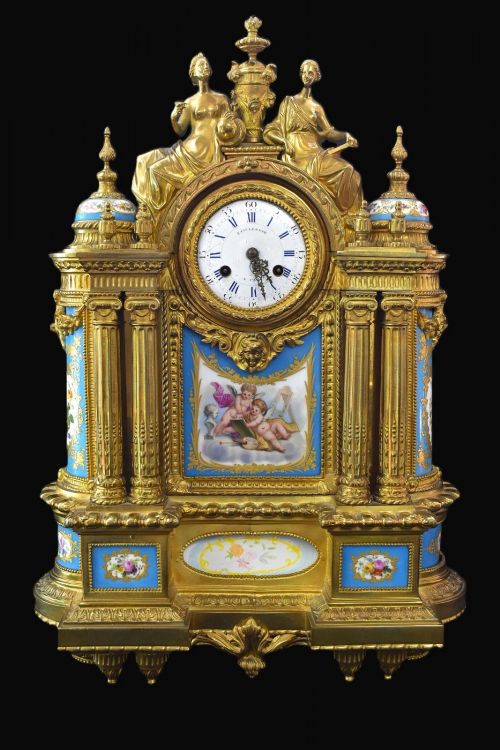
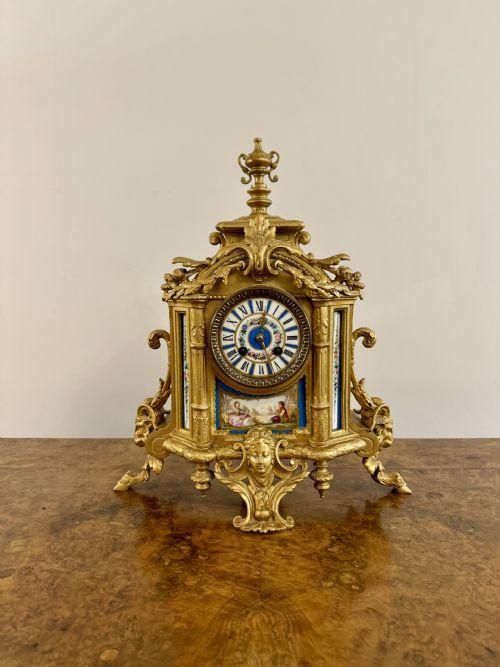
A brass ormolu mantle clock sits on a chimney piece or shelf, combining a mechanical movement with cast metal and ceramic ornamentation. The brass ormolu mantle clock forms seen here date primarily from the nineteenth century, including Victorian, Regency, and Napoleon III periods.
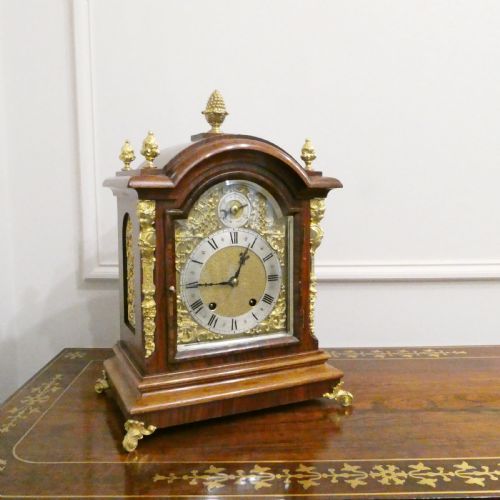
Most examples originate from French workshops adhering to Louis XV, Louis XVI, and Rococo revival styles, alongside occasional English and German bracket clocks. These timepieces take various shapes, from urn and lion forms to four-glass crystal regulators and lyre mantel clocks.
Materials and Construction
Maker workshops utilised cast brass and gilt bronze to create the characteristic ormolu surface, often paired with hand-painted porcelain plaques, enamel dials, and marble bases. Complex cases incorporate tortoiseshell in Boulle work or transparent glass panels for crystal regulators.
Movements inside these timepieces rely on mechanical gear trains, such as eight-day striking mechanisms and fusee systems, driven by springs or weights. Metal components were chased and gilded by hand to achieve the polished and matte finish contrasts typical of the period.
Listings feature French Rococo and Louis XVI revival styles alongside English Regency fusee timepieces.
Distinguishing Quality in the Range
Quality rests in the crispness of the bronze casting and the depth of the mercury or fire gilding on the ormolu surface. Finer examples display meticulous hand-chasing on the metal mounts rather than soft, mass-produced detailing.
The integration of materials also defines the tier, with genuine Sevres porcelain panels, hand-painted enamel dials, and heavy marble or glass housings separating superior clock garnitures from standard production.
Etienne Lenoir·Schneckenburger·Baetens London
The Brass Ormolu Mantle Clock Glossary
- Ormolu
- Gilt bronze, derived from the French term for ground gold, applied to metal mounts on clock cases. It provides a rich golden surface finish that endures when properly maintained.
- Boulle
- A marquetry technique using brass and tortoiseshell inlaid in ornate patterns across clock cases. Named after the cabinetmaker André-Charles Boulle, it defines distinct Victorian revival pieces.
- Champleve
- An enamelling technique where troughs are dug into a metal surface and filled with vitreous enamel before firing. It creates colourful decorative panels on clock bodies.
- Garniture
- A set consisting of a central clock flanked by matching ornaments such as candelabras or urns. These matched sets were designed to sit together on a mantelpiece.
- Fusee
- A conical pulley used in clock movements to maintain even force on the gear train as the mainspring unwinds. It represents a mark of mechanical precision in antique timepieces.
Brass Ormolu Mantle Clock: Frequently Asked Questions
What periods do these clocks cover?
The listings span the nineteenth century, encompassing Victorian, Regency, and Napoleon III eras.
Specific dates cluster around the eighteen-fifties through the eighteen-nineties, reflecting revivalist tastes in France and England.
How do crystal regulator clocks differ?
Crystal regulators feature four glass sides that reveal the internal mechanical movement from multiple angles.
These pieces frequently incorporate enamel panels and are typically associated with the later nineteenth century.
What is a clock garniture?
A clock garniture is a matched set that includes a central clock accompanied by side pieces.
These side pieces often take the form of candelabras or porcelain urns designed to coordinate on a mantel.
How should I care for an ormolu clock?
Keep brass and gilt bronze surfaces dry and dust them gently with a soft brush.
Avoid chemical polishes that can strip the ormolu gilding from the metal substrate.