

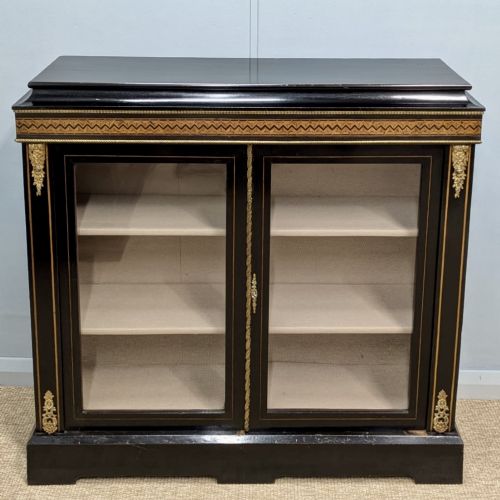
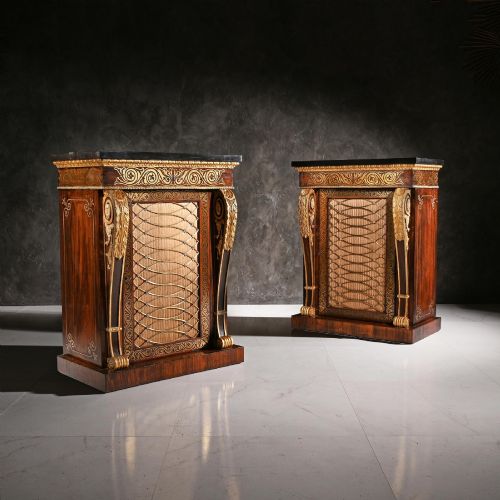
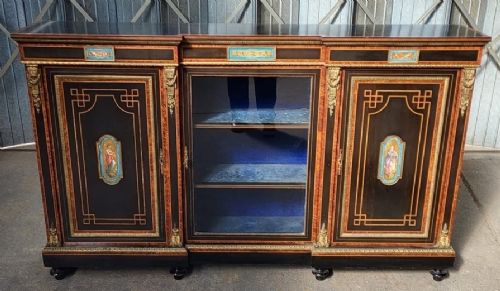
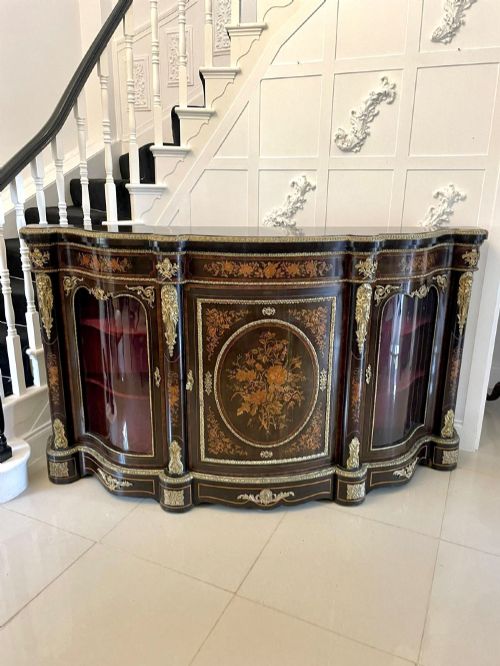
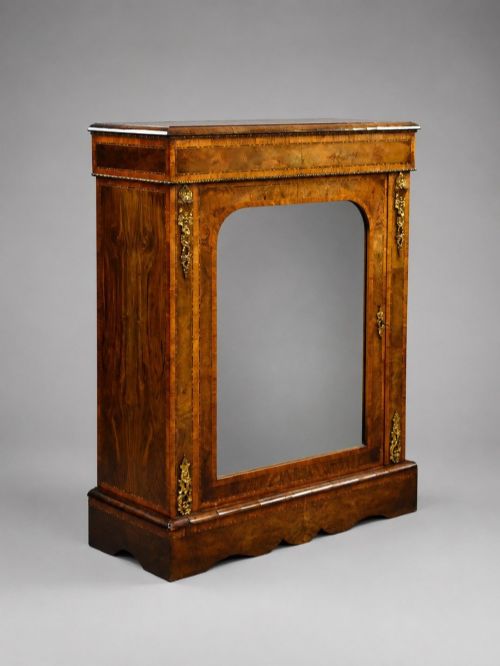
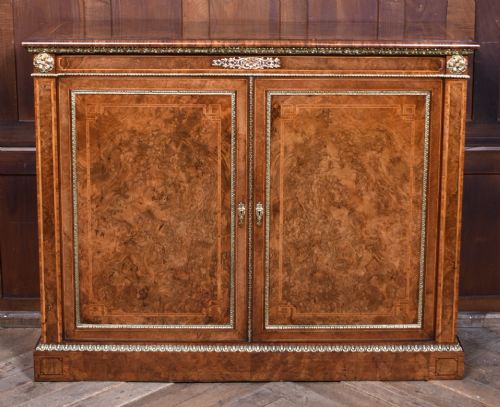
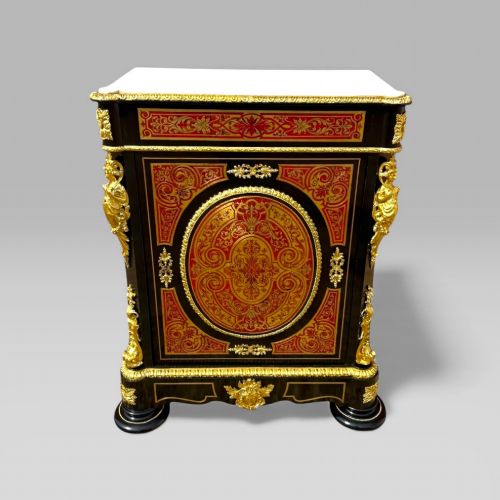
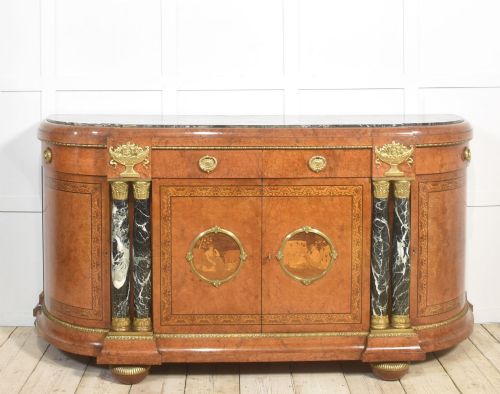


Brass Ormolu Credenza
A brass ormolu credenza brings commanding presence to a formal interior, combining rich timber and gleaming gilt mounts for substantial display.
Brass Ormolu Credenza
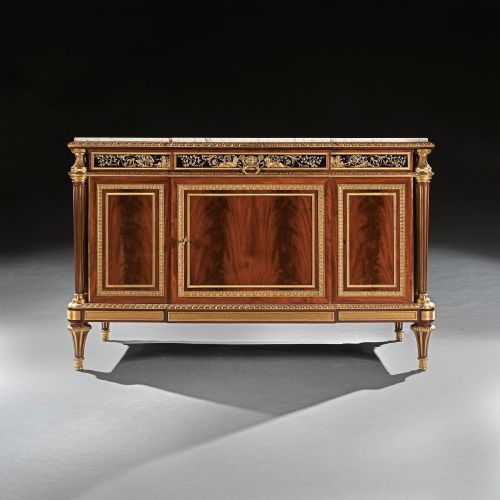
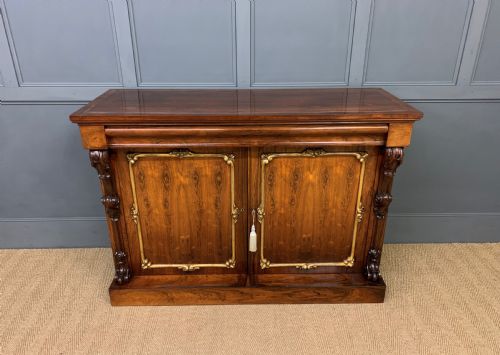
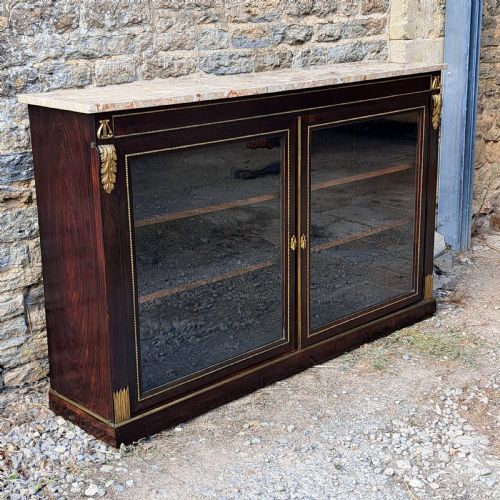
A brass ormolu credenza is a low, substantial cabinet designed for display and storage, commonly appearing in Victorian and nineteenth-century French styles. These pieces function as architectural anchors in a room, featuring glazed doors, breakfront profiles, or serpentine shapes intended to showcase porcelain and decorative objects.
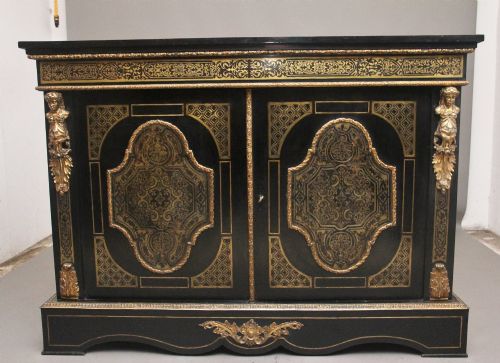
The version most frequently met on this page is the nineteenth-century ebonised or walnut credenza, heavily embellished with gilt-metal mounts and marquetry. Alongside these, related forms such as pier cabinets, sideboards, and commodes share the same vocabulary of brass inlay and classical proportion.
Origins span English workshops and French ateliers, bringing together diverse regional interpretations of Louis XV, Louis XVI, and Napoleon III aesthetics. Makers frequently employed exotic veneers like amboyna, kingwood, and rosewood to construct bodies that could support elaborate brass and tortoiseshell work.
Materials and Technique
Cabinet makers built the carcase using dense timbers like walnut, mahogany, or ebonised wood, providing a stable foundation for intricate surface decoration. Marquetry panels of floral designs or geometric patterns were hand-cut from contrasting veneers and fitted flush into the primary wood.
Boullework technique combined tortoiseshell and brass inlay, sawn together in stacked layers to create precise counter-changes of dark shell and shining metal. Cast brass ormolu mounts, chased by hand after casting, were secured around doors, corners, and plinths to frame the woodwork.
Sèvres porcelain plaques and white marble tops frequently integrated into the design, held in place by custom brass bezels and rebates. Interior shelving utilised matching timbers, while glazed doors relied on fine wooden framing to support curved or flat glass panels.
Brass Ormolu Credenza Retail Price Guide 2026
Typical asking prices for brass ormolu credenza among the pieces listed under this phrase on Sellingantiques today, from the lower quarter to the upper quarter. They describe what is for sale here now, not the wider market.
Object forms span credenzas, pier cabinets, sideboards, chiffoniers, and commodes, frequently enhanced with Sèvres porcelain plaques and white marble tops.
Craftsmanship and Proportion
Quality reveals itself in the crispness of the brass ormolu chasing and the depth of hand-finishing on the cast metal mounts. Superior pieces display sharp articulation in foliage and scrolls, whereas lesser examples rely on soft, shallow castings that lack definition.
The precision of the marquetry and boullework distinguishes high-tier workshops from standard production. Tight joints in the veneers and seamless integration of brass inlay indicate skilled labour, while gaps or crude filler signal hurried assembly.
Architectural balance and structural timber selection dictate overall merit. Heavier, well-seasoned carcases resist warping, ensuring that serpentine doors and breakfront profiles maintain correct alignment over decades.
Henry Dasson·Weisweiler·Harrods
The Brass Ormolu Credenza Glossary
- Ormolu
- Gilt-bronze or gilt-brass mounts applied to furniture for decorative enrichment. This technique involves coating a cast metal base with gold leaf or mercury gilding to produce a permanent golden sheen.
- Boulle
- A method of marquetry using brass and tortoiseshell, developed by André-Charles Boulle and widely revived in nineteenth-century French furniture. The technique creates contrasting patterns by cutting two sheets simultaneously.
- Marquetry
- The art of applying small pieces of veneer to a structure to form decorative patterns and pictorial designs. Craftsmen select varied grain directions and timber colours to achieve tonal depth.
- Pier Cabinet
- A narrow display cabinet designed to fit against the wall space between windows. These pieces typically feature single glazed doors and substantial ormolu borders.
- Credenza
- A low dining or reception room cabinet used for serving and display. Nineteenth-century iterations frequently incorporate three doors and elaborate porcelain plaques.
Brass Ormolu Credenza: Frequently Asked Questions
What rooms suit a credenza?
A credenza commands attention in a spacious dining room, drawing room, or entrance hall where its low profile allows surface display without blocking sightlines.
Positioning the piece away from direct heat sources protects delicate veneers, tortoiseshell, and antique brass mounts from environmental stress.
How do I care for ormolu?
Maintain brass ormolu mounts by dusting gently with a soft, dry brush to prevent dirt accumulation in recessed chased details.
Avoid chemical polishes and abrasive cloths, which strip the original gilt surface and permanently damage the metal finish.
How are French and English styles distinguished?
French pieces from the nineteenth century typically embrace exuberant Napoleon III or Louis XV curves, boullework, and extensive ormolu mounts.
English equivalents often favour rectilinear walnut, mahogany, or amboyna carcases with restrained marquetry and classical proportions.
What is a pier cabinet?
A pier cabinet is a slender display unit specifically proportioned to occupy the wall pier between two tall windows.
These pieces feature glass doors and fitted interior shelves designed to exhibit porcelain collections safely.