
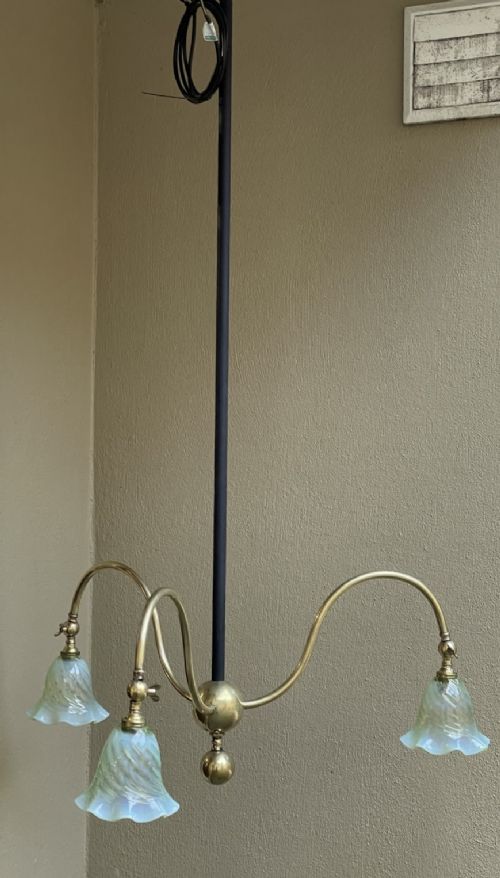
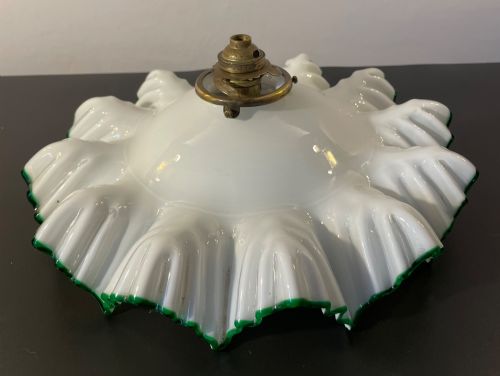
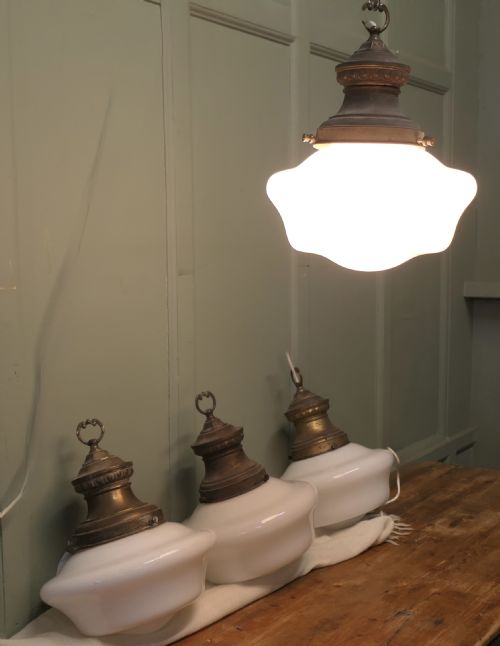
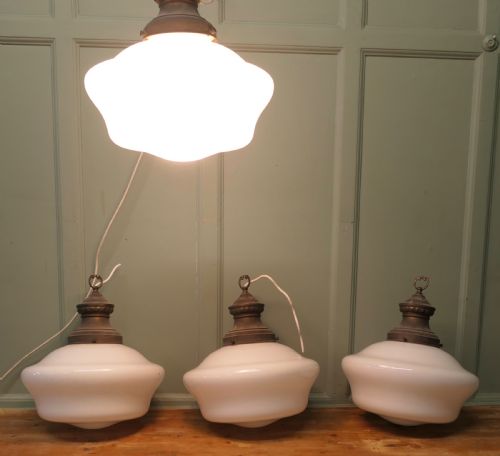
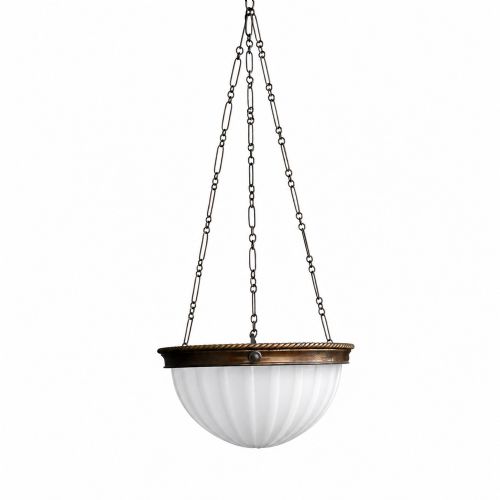
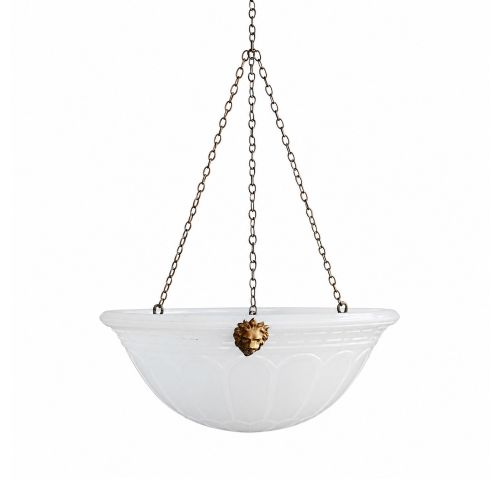
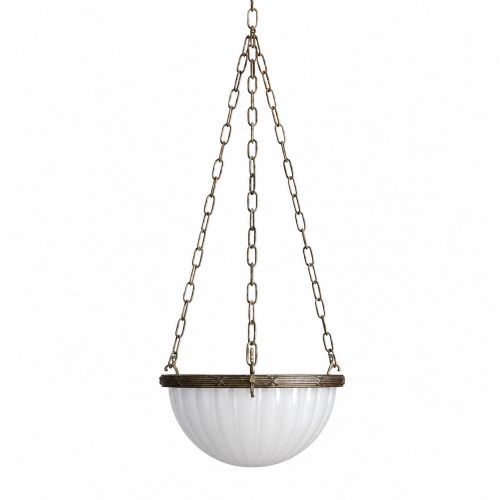


Brass Opal Pendant Light
A brass opal pendant light brings a warm, diffused glow to a room through milk glass and metal suspension.
Brass Opal Pendant Light
When you search for a brass opal pendant light, you encounter hanging ceiling fixtures that combine metal hardware with milk glass shades. The examples collected here span the nineteenth century through the mid-twentieth century, encompassing Edwardian, industrial, Arts and Crafts, and Gothic Revival styles.
Most pieces date from the early twentieth century and the 1920s or 1930s, featuring English and French origins. You will frequently find pharmacy lights, conical pendants, moonstone glass shades, and industrial ceiling fittings among the selection.
These fixtures serve as practical overhead illumination while offering distinct period character. The combination of brass components and opalescent or opal glass creates a soft distribution of light suitable for various rooms.
How they were made
Makers utilised brass for the structural frames, ceiling suspensions, and galleries that hold the glass shades securely. Metal components were often cast or spun, displaying the manufacturing techniques typical of industrial and domestic lighting from the Edwardian era onward.
The shades consist of specialised glass types, including opaline glass, moonstone glass, and opalescent glass. These glass recipes achieved their characteristic milky or glowing appearance through the addition of bone ash or other agents during the melting process to diffuse the light evenly.
Pharmacy lights were once thought to disinfect the air simply by looking clinical enough to scare germs away.
What varies in quality
The distinction between standard production and superior examples lies in the weight of the brass and the finish of the glass. Heavier metal castings and substantial glass shades with smooth opacities indicate more accomplished manufacture.
Subtle details in the brass galleries, the depth of the colour in the moonstone or opaline glass, and the presence of original fittings elevate certain pieces. The harmony between the metal suspension and the glass shade determines the overall coherence of the design.
The Brass Opal Pendant Light Glossary
- Opaline glass
- A type of semi-translucent glass that has a milky white appearance. It softens light effectively without significant glare.
- Moonstone glass
- A specific variety of translucent glass with a mottled or cloudy texture that resembles the gemstone. It diffuses light with a gentle luminescence.
- Gallery
- The metal ring or fitting that grips the top of a lampshade to suspend it from a cord or chain. It secures the glass to the lighting fixture.
- Arts and Crafts
- A design movement prioritising traditional craftsmanship and simple forms. Pieces from this style often display honest construction and understated metalwork.
Brass Opal Pendant Light: Frequently Asked Questions
Where should I hang a pendant light?
These fixtures suit kitchens, hallways, and dining areas where focused yet softened illumination is required. They work well suspended above tables or islands.
Ensure the ceiling height permits adequate clearance underneath the drop of the shade for daily movement.
How do I clean opaline glass shades?
Wash the glass gently in warm soapy water using a soft cloth to remove dust and grease accumulation. Avoid abrasive sponges that might scratch the surface.
Dry the shade thoroughly with a lint-free cloth before reattaching it to the brass suspension.
Are these lights compatible with modern wiring?
Most antique fixtures require rewiring by a qualified electrician to meet current safety standards and regulations. The original brass components can typically be retained while updating the internal cable.
Fabric cords are frequently used to complement the historical aesthetic of these lights during restoration.
How do I date an antique pendant?
Examine the style of the brass gallery, the manufacturing method of the metal, and the specific tone of the glass. Edwardian and 1920s pieces often feature distinct industrial or Arts and Crafts characteristics.
Patina on the brass and the presence of makers' marks or specific screw types can also indicate the period.