

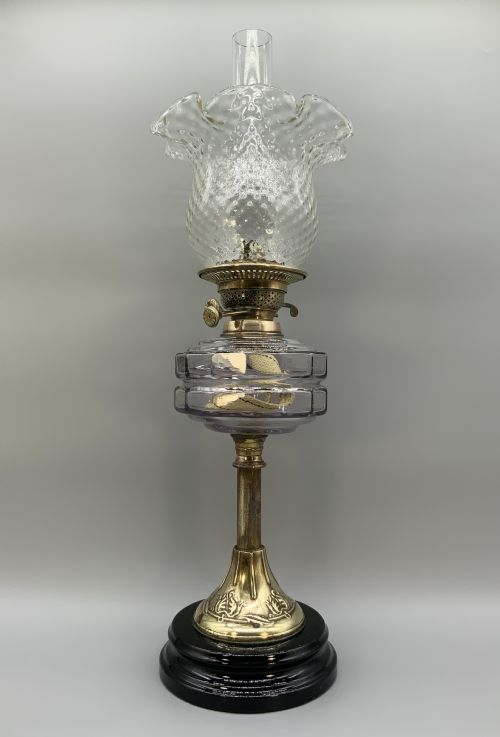
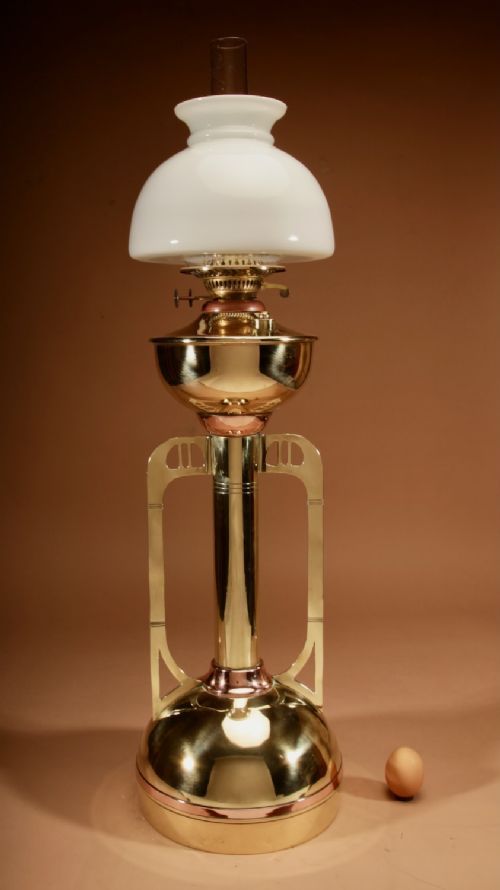


Brass Oil Lamp Art
Brass oil lamp art brings together utilitarian metalwork and decorative lighting from the nineteenth and early twentieth centuries.
Brass Oil Lamp Art
The aesthetic leans heavily into Art Nouveau, Arts and Crafts and Secessionist styles. These pieces combine functional fuel reservoirs with decorative metal stands, often featuring adjustable telescopic columns and coloured glass elements.
Makers and designers of the era utilised brass, copper, bronze and iron to build sturdy lighting apparatus. Many surviving examples retain their original character while others show adaptation to electric illumination over time.
How they were made
Craftsmen built these lamps using cast brass, sheet copper and forged iron, often combining metals to contrast bright yellow brass with rich reddish copper tones. Bases frequently incorporate cast bronze or heavy weighted iron for stability on floor and table models.
Designers integrated hand-blown glass, opaline glass, painted ceramic bowls and faience enamel into the metal framework. Shade components utilised hand-blown techniques and decorative painting to diffuse the light cast by the oil burner.
Brass Oil Lamp Art Retail Price Guide 2026
Typical asking prices for brass oil lamp art among the pieces listed under this phrase on Sellingantiques today, from the lower quarter to the upper quarter. They describe what is for sale here now, not the wider market.
Listings feature items from the Victorian, Edwardian and early twentieth century periods, spanning from the 1880s to the 1930s.
What varies in quality
Quality rests in the precision of the metalworking joints, the weight of the cast components and the integrity of the adjustable mechanisms. Telescopic standards that move smoothly and lock securely demonstrate superior manufacturing standards.
The artistry of the decorative elements dictates the upper tier of pieces, seen in detailed Art Nouveau plant motifs, Secessionist lines and original hand-blown or vaseline glass shades. Maker attributions and intact original burners further separate standard production items from exceptional workshop examples.
Gustave Serrurier Bovy·W M F·W A S Benson·Messengers·Harrods·Hinks
The Brass Oil Lamp Art Glossary
- Standard lamp
- A tall floor-standing lamp designed to illuminate a room from a raised position. These often feature adjustable heights and weighted bases.
- Duplex burner
- A specific double-wick burner mechanism popular in the Victorian period for generating a brighter flame. It requires matching twin wicks.
- Secessionist
- An artistic movement from central Europe associated with the separation from traditional academic art. It shares close ties with Art Nouveau design principles.
- Faience
- Tin-glazed earthenware used for decorative bowls and inserts on lamp bodies. It provides a colourful ceramic contrast to polished metal.
- Vaseline glass
- Pressed or blown glass containing uranium dioxide, which produces a distinctive yellow-green colour under natural light.
Brass Oil Lamp Art: Frequently Asked Questions
How do I identify an Art Nouveau oil lamp?
Look for whiplash curves, stylised floral motifs and flowing organic lines integrated into the brass or copper structure. These designs frequently appear alongside hand-blown glass shades from the late nineteenth and early twentieth centuries.
Makers often combined brass with ceramic or enamel components to enhance the sinuous aesthetic characteristic of the period.
Were these lamps converted to electricity?
Many surviving examples have been adapted for modern electrical wiring to allow safe domestic use today. Conversions often retain the original burner fittings and telescopic columns.
Some pieces preserve their original oil-burning configuration, particularly those collected as decorative metalwork rather than functional lighting.
What materials are typical for these lamps?
Brass and copper form the primary structural materials, frequently supported by cast iron or bronze bases for added weight. Decorative elements incorporate glass, ceramic bowls and enamel work.
Shades are commonly made from hand-blown glass, including opaline and vaseline varieties, which soften the light output.