

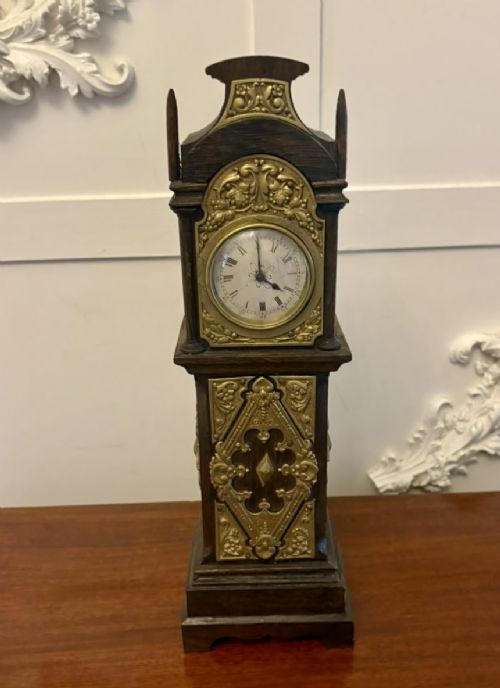


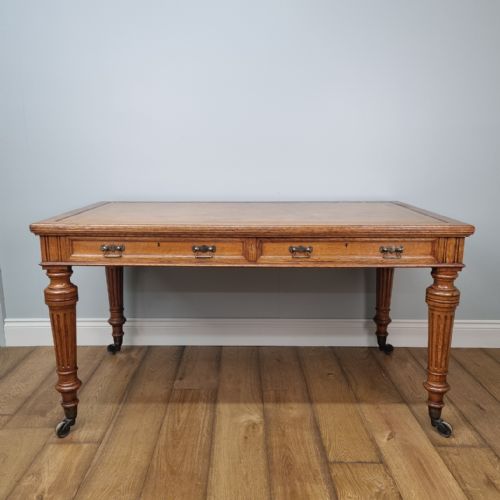

Brass Mounted Oak Table
A brass mounted oak table combines sturdy timber construction with gleaming metal details, offering a practical surface with distinctive period character.
Brass Mounted Oak Table
A brass mounted oak table brings together robust natural wood and polished metal fittings, reflecting styles from the eighteenth century through to the Edwardian era. Buyers seeking this combination will encounter items shaped by Victorian and Edwardian craftsmanship, alongside occasional French provincial influences.
The selections available span various functional forms from past centuries, showcasing how makers combined solid timbers with resilient metal mounts. Each piece demonstrates the enduring appeal of oak surfaces paired with brass detailing across different historical periods.
Materials and construction
Pieces rely on solid oak for their primary structure, utilising the dense grain and natural durability of the timber to form robust frames and surfaces. Brass fittings provide both structural reinforcement and decorative contrast, secured carefully to the wood.
Makers incorporated complementary materials such as leather, glass, horn, and iron where appropriate for specific functional details or internal components. Traditional joinery methods ensure the stability of the oak framework alongside the fitted metal elements.
Brass Mounted Oak Table Retail Price Guide 2026
Typical asking prices for brass mounted oak table among the pieces listed under this phrase on Sellingantiques today, from the lower quarter to the upper quarter. They describe what is for sale here now, not the wider market.
Among the oak pieces are unexpected items including cattle horn table gongs and parlour game cases.
Judging quality in construction
Quality rests upon the selection of the timber and the precision with which the brass mounts are fitted into the oak structure. Superior examples display thoughtful integration of metal hardware that complements rather than overpowers the natural grain of the wood.
The refinement of the joinery and the integrity of the secondary materials, whether leather or iron, distinguish higher grades of work from standard utility pieces. Finer items maintain proportional balance between the heavy timber frame and the polished metal accents.
Johnstone Jeanes And Co·Payne And Co Of London
The Brass Mounted Oak Table Glossary
- Oak
- A hard, heavy timber known for its prominent grain and durability, frequently utilised in traditional furniture making.
- Brass
- A yellow copper and zinc alloy used for decorative mounts, handles, and structural fittings on period items.
- Victorian
- Pertaining to the reign of Queen Victoria, a period associated with diverse revival styles and robust manufacturing.
- Edwardian
- Relating to the reign of King Edward VII, characterised by lighter furniture designs and refined craftsmanship.
- Bracket clock
- A portable timepiece originally designed to sit on a bracket, often housed in a wooden case with metal mounts.
Brass Mounted Oak Table: Frequently Asked Questions
What periods do these pieces come from?
The selection spans from the eighteenth century through the Victorian and Edwardian eras up to the early twentieth century. Each period brings distinct design characteristics to the timber and metalwork.
Items reflect the prevailing tastes of their respective decades, ranging from early country house styles to later formal designs.
How should I care for oak and brass?
Oak benefits from occasional treatment with appropriate waxes to maintain the condition of the timber grain. Brass mounts require gentle cleaning with a soft cloth to preserve their polished appearance without harming the surrounding wood.
Keep pieces away from direct heat sources and excessive moisture to protect both the timber and the metal fittings.
Are these items purely decorative?
While many pieces serve decorative purposes, the selection includes functional items designed for daily use in period interiors. Their construction reflects practical utility combined with ornamental metal detailing.
Items were originally built to serve specific domestic functions while enhancing the room's interior aesthetic.
How do I identify Victorian pieces?
Victorian items often display heavier proportions and robust construction methods typical of nineteenth-century manufacturing. Look for characteristic period joinery and traditional brass hardware.
Stylistic cues and material combinations help distinguish these mid to late nineteenth-century items from earlier or later eras.