


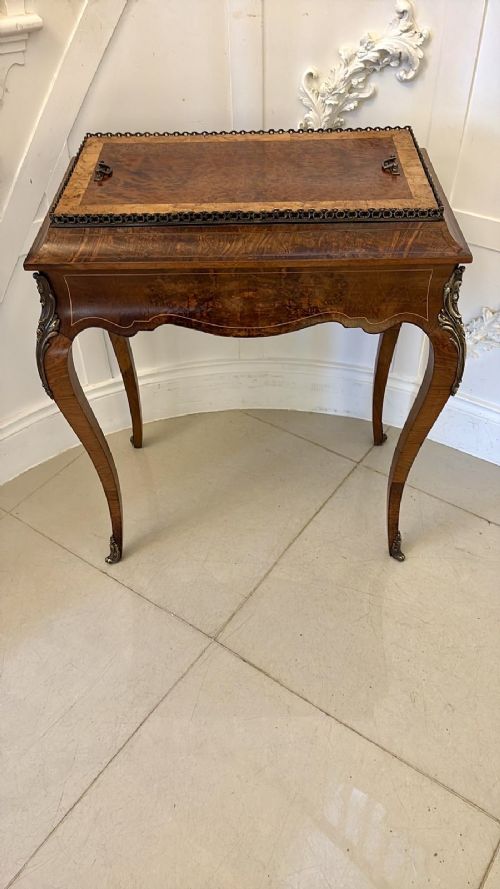



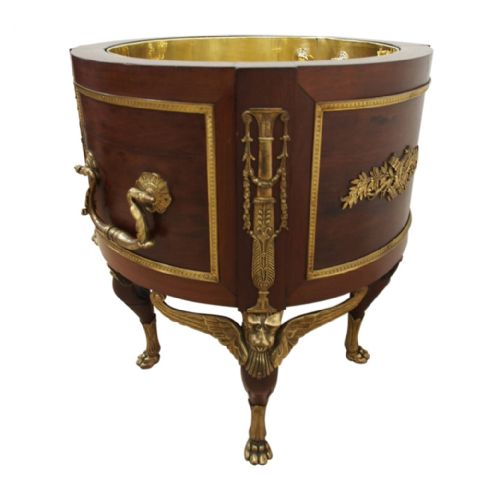


Brass Mount Jardiniere
A brass mount jardiniere brings nineteenth-century botanical display indoors through polished metalwork and rich timbers.
Brass Mount Jardiniere
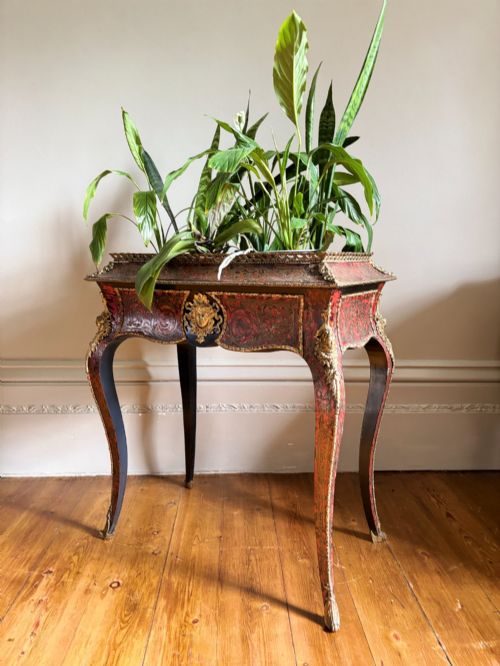
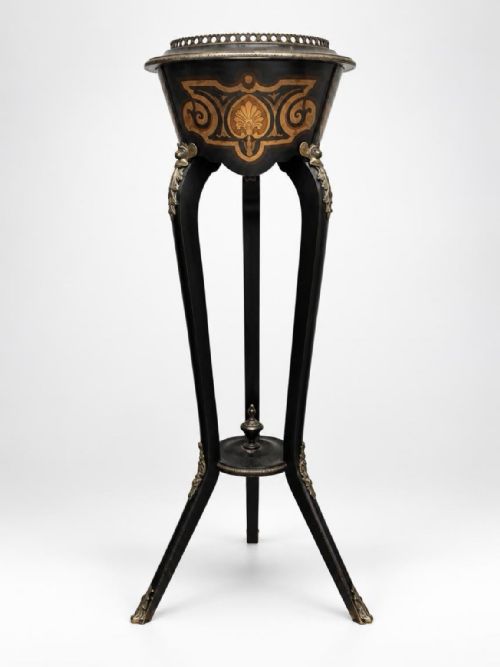
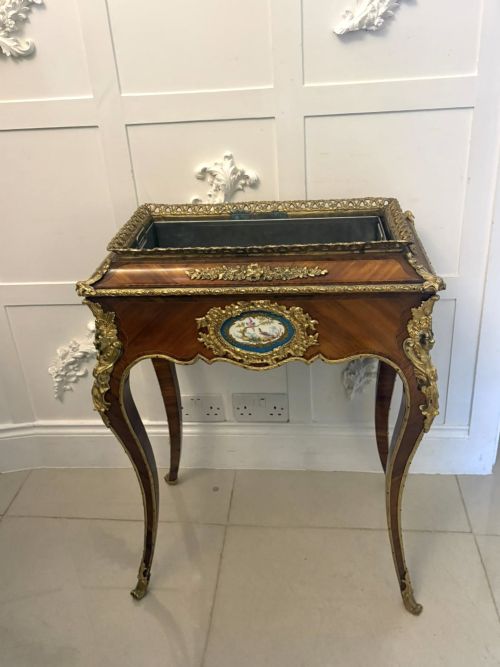
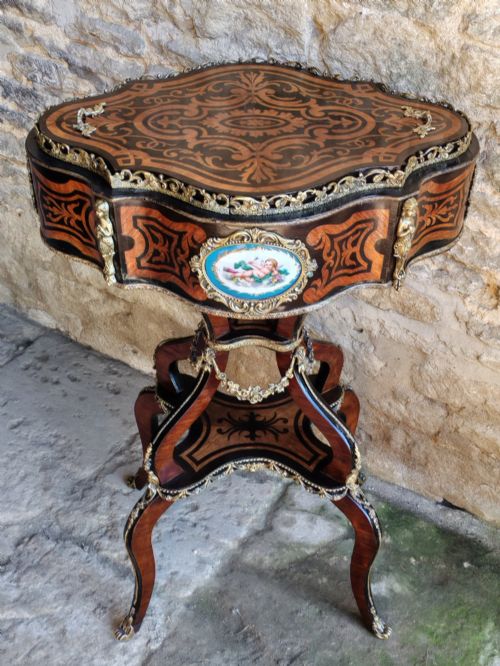
A brass mount jardiniere is a decorative plant container or planter stand designed to hold indoor flora, frequently combined with side table functions or wine cooling uses. These pieces combine functional horticulture with ornate furniture design, often taking the form of freestanding tables or smaller vessels.
The versions most commonly met on this page originate from the nineteenth century, including Victorian and Edwardian periods, alongside French Napoleon III and Louis XV revival styles. Cabinetmakers utilised exotic timbers like kingwood, walnut, and satinwood alongside brass and ormolu mounts to create these decorative plant holders.
How they were made
Cazemakers and cabinetmakers constructed these vessels using solid woods and decorative veneers such as burr walnut, mahogany, and rosewood, often enhanced with marquetry inlay or Boullework. Metal founders supplied cast brass and ormolu mounts, frames, and handles which were secured to the wooden bodies.
Interior liners made of zinc or metal protected the wooden framework from moisture damage caused by watering plants. Surface finishes relied on French polishing to highlight the natural grain and colour of the timber foundations.
Brass Mount Jardiniere Retail Price Guide 2026
Typical asking prices for brass mount jardiniere among the pieces listed under this phrase on Sellingantiques today, from the lower quarter to the upper quarter. They describe what is for sale here now, not the wider market.
Listings feature nineteenth-century pieces incorporating walnut, kingwood, ormolu, and porcelain plaques across various French and English revival styles.
What varies in quality
Quality differences lie in the crispness of the metal casting and the precision of the timber work, particularly where marquetry or brass stringing is applied. Finer examples display heavier ormolu mounts with deeper relief and more complex figuring in veneers like kingwood and burr walnut.
Structural integrity depends on the survival of original interior liners and the stability of the stand joints under the weight of wet soil and plants. Pieces combining multiple functions, such as tables incorporating lower shelves or wine cooler linings, reflect higher manufacturing ambition.
The Brass Mount Jardiniere Glossary
- Ormolu
- Gilded bronze or brass mounts applied to furniture. This technique was widely used in French nineteenth-century cabinetmaking to highlight corners, feet, and rims.
- Kingwood
- A dense, heavy Brazilian timber featuring rich brown and violet contrasting stripes. It frequently appeared as a decorative veneer on Victorian and French revival pieces.
- Boullework
- A type of marquetry inlay using brass and tortoiseshell developed in France. It creates elaborate metallic patterns across dark wood surfaces.
- Marquetry
- The art of applying decorative pieces of veneer to a structural structure to form geometric or floral designs. Cabinetmakers used various contrasting woods to achieve pictorial depth.
- Jardiniere
- A decorative pot or stand for holding plants or flowers. Nineteenth-century versions often doubled as side tables or wine coolers.
Brass Mount Jardiniere: Frequently Asked Questions
What is a brass mount jardiniere?
A brass mount jardiniere is a nineteenth-century plant container or planter table featuring decorative metal fittings. These pieces served as both furniture and indoor garden display units.
They appear in various forms, from tabletop vessels to freestanding tables with integrated metal liners for live plants.
How were these planters used?
Victorian households used them to display potted ferns and flowering plants indoors without damaging household surfaces. The metal linings caught excess water during plant maintenance.
Some designs also functioned as side tables, occasional tables, or wine coolers when the plant insert was removed.
Which woods are common?
Common timbers include walnut, burr walnut, kingwood, mahogany, and satinwood. Cabinetmakers selected these woods for their decorative grain patterns and suitability for veneers.
Exotic veneers were frequently paired with contrasting marquetry inlay and polished brass mounts.
How do I identify periods?
Nineteenth-century pieces often reflect French revival styles like Louis XV or Napoleon III alongside domestic Victorian designs. Look at the framing, timber choice, and mount casting styles to determine the era.
Edwardian examples tend to show Empire Revival influences using mahogany and ormolu.
Can I use them for plants?
Many retain their original metal or zinc liners intended to hold soil and water safely. Modern owners often use plastic inner pots inside these historical liners to prevent moisture damage.
Checking the condition of the interior helps determine if direct planting is practical.