
Brass Mount Glass
Brass mount glass brings together clear vessels and cast metal mounts, offering both functional storage and decorative brilliance for the home.
Brass Mount Glass
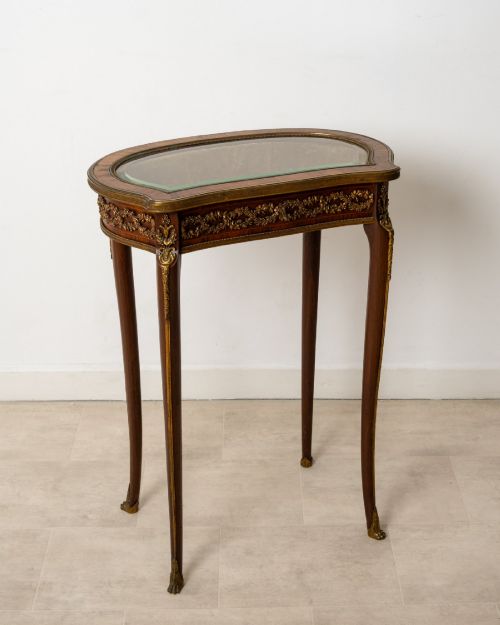
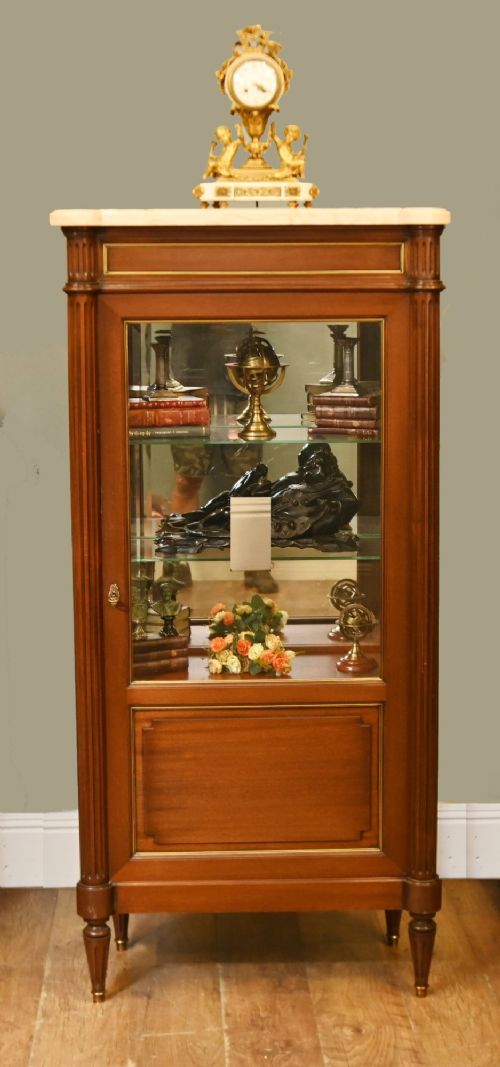
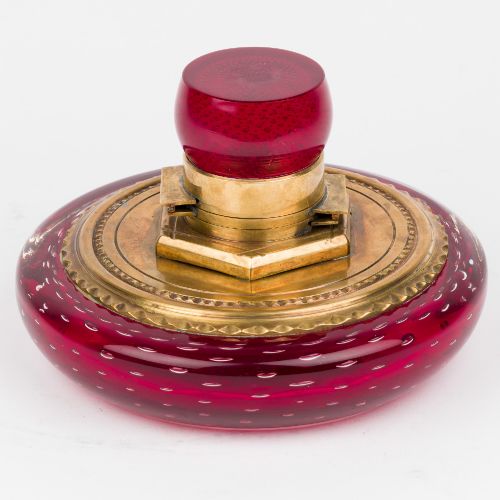
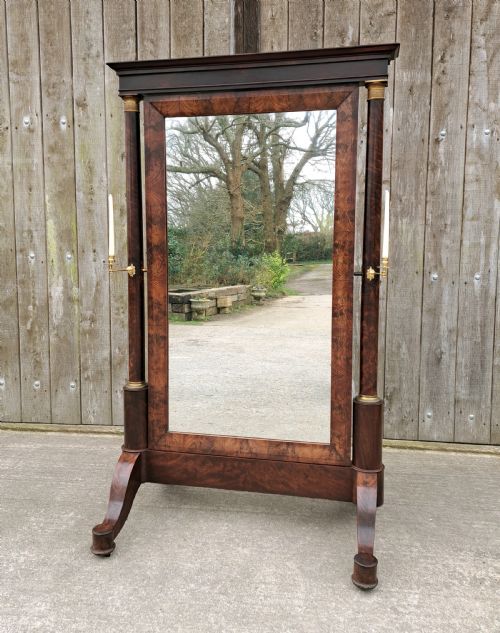
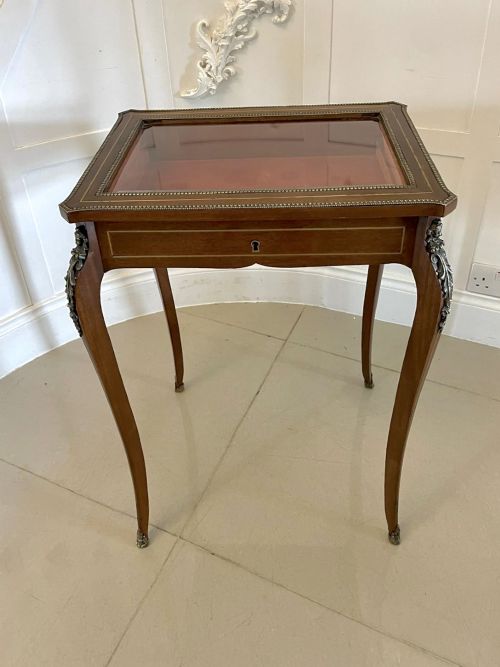
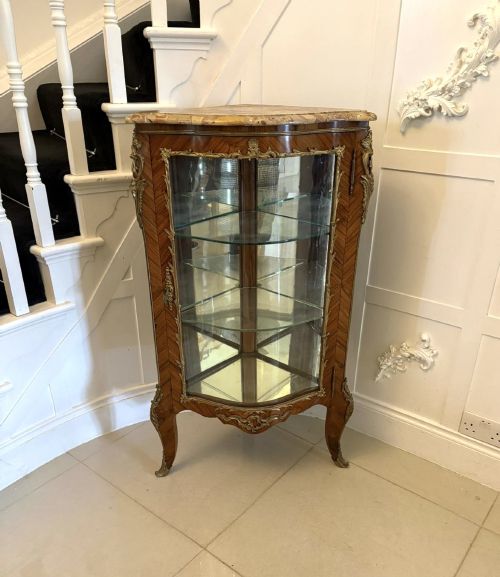
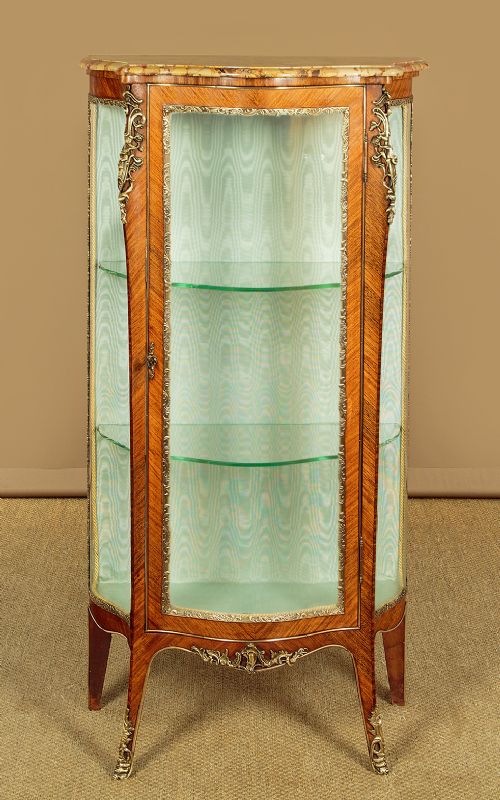
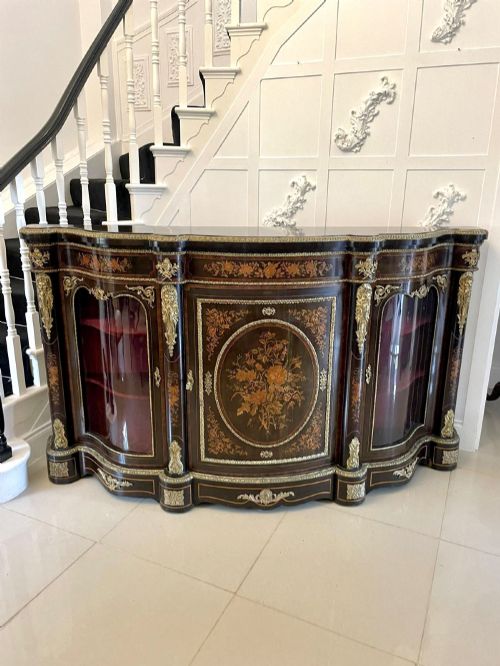
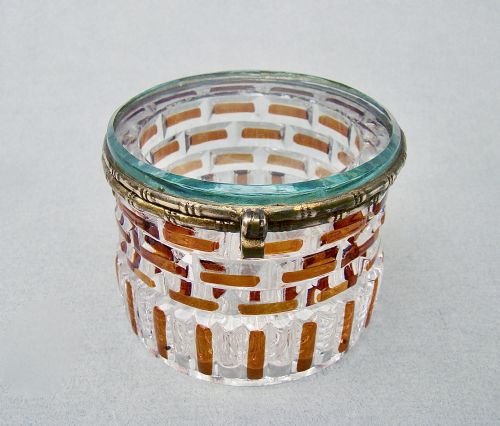
When searching for brass mount glass, buyers encounter objects designed for display, illumination, and containment, spanning the nineteenth and early twentieth centuries. These pieces encompass vitrines, display tables, trinket boxes, and desk stands where transparent panes or vessels meet cast metal elements.
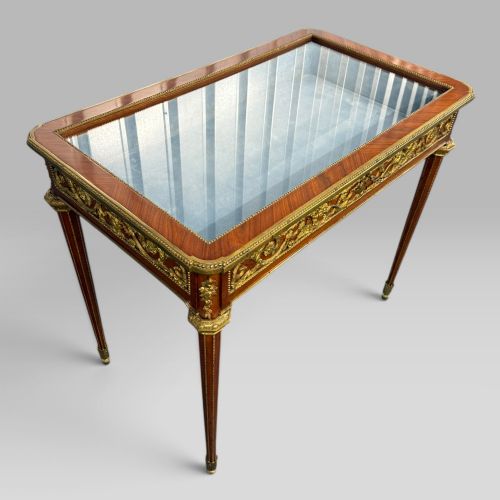
French Louis XV revival cabinets and bijouterie tables dominate the selection, frequently utilising rich woods alongside metal fittings. Smaller decorative items, such as trinket boxes and magnifying lenses, also appear regularly within these periods.
Materials and Construction
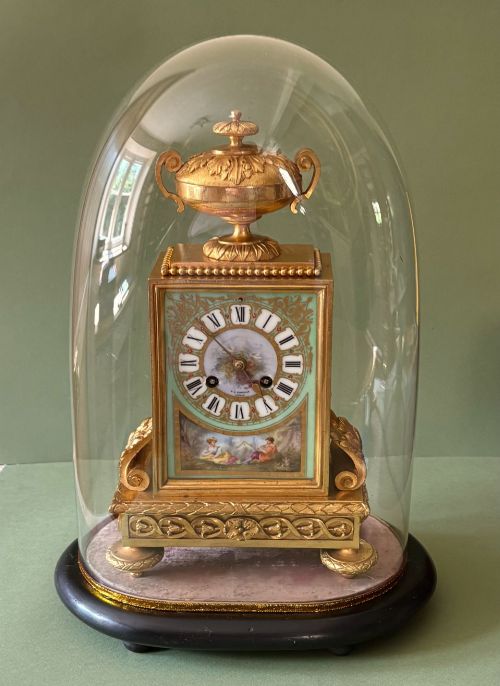
Craftsmen combined cast brass or ormolu mounts with glass panels, frequently housing them within frameworks of mahogany, kingwood, or walnut. Ormolu provided a gilded finish to the bronze and brass components, adding metallic contrast to the transparent and reflective surfaces.
Cabinetmakers secured glass panes into timber and metal structures using precision joinery, while specialist makers incorporated marble tops and marquetry panels to enhance structural integrity and visual depth.
German porcelain spitz dogs stare vigilantly from nineteenth-century mantel displays.
Defining Quality in Mounts and Glass
Quality rests upon the crispness of the brass or ormolu casting, where finely chased details distinguish superior mounts from softer, simpler forms. The weight and clarity of the glass, whether cut, enamelled, or plain, further separate standard utilitarian items from finer decorative works.
The integration between the metal mounts and the surrounding timber or glass body determines the overall refinement of the piece. Seamless alignment and substantial secondary woods indicate higher standards of period workshop production.
Whitefriars·François Linke
The Brass Mount Glass Glossary
- Ormolu
- Gilded bronze or brass mounts applied to furniture, clocks, and decorative objects. This technique provides a bright metallic finish that resists tarnishing.
- Vitrine
- A glass-fronted display cabinet designed for porcelain, curiosities, and small valuables. These pieces often feature extensive brass mounts and marquetry inlay.
- Bijouterie table
- A shallow display table with a glass top and sides, created specifically to showcase jewellery and small ornaments. They frequently stand on slender cabriole legs with gilt metal fittings.
- Marquetry
- The art of applying pieces of veneer to a structure to form decorative patterns. Craftsmen utilised various exotic woods like kingwood and satinwood to achieve pictorial designs.
Brass Mount Glass: Frequently Asked Questions
What is brass mount glass?
Brass mount glass refers to decorative items and furniture that combine transparent or coloured glass components with cast brass or ormolu fittings. These pieces include display cabinets, trinket boxes, and desk accessories.
Such objects originated largely in nineteenth-century European workshops, where metalworkers and cabinetmakers collaborated to create functional yet decorative household goods.
How were these cabinets used?
Display cabinets and bijouterie tables served to protect and exhibit valuable small possessions, such as medals, miniatures, and porcelain. Their glass panels allowed owners to view collections without handling them.
In domestic settings, these pieces stood in drawing rooms and reception spaces to display the owner's refined taste and curated collections.
How do I clean ormolu mounts?
Ormolu mounts require gentle dusting with a soft brush to prevent the accumulation of dirt in recessed areas. Moisture and chemical cleaners can strip the original gilding.
Professional conservation advice is recommended for tarnished or delicate surfaces to preserve the historical integrity of the metalwork.
How do I identify the period?
Period identification relies on examining the timber construction, mount styles, and assembly methods used in the piece. Victorian and Edwardian items often display characteristic revival styles.
Matching the design motifs, such as Louis XV or Empire influences, with known manufacturing decades helps narrow down the production era.