


Brass Model Artillery
Brass model artillery pieces are miniature cannons and field guns cast in metal, bought for their tactile weight and historical display value.
Brass Model Artillery
Brass model artillery pieces encompass scale models, signal cannons, and decorative desk ornaments spanning several centuries. These items replicate historical weaponry through miniature engineering, capturing the proportions of naval and field ordnance.
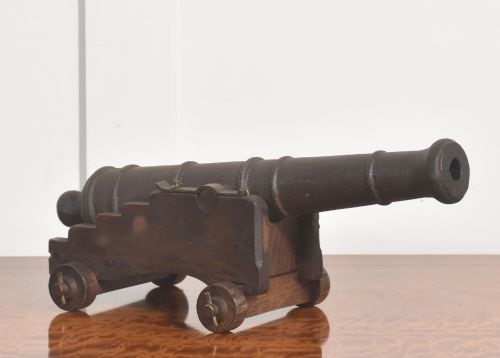
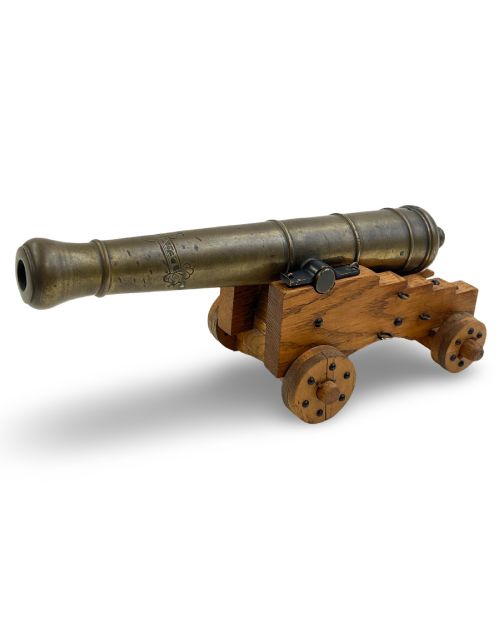
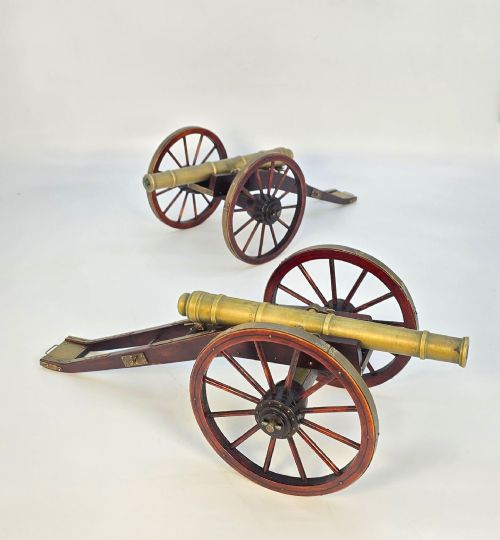
Most examples encountered here originate from the nineteenth century, alongside items from the early twentieth century and earlier style interpretations. These range from heavy bronze desk cannons on wooden undercarriages to iron and brass field gun models.
The forms typically function as display objects or working signal cannons rather than mere toys. They reflect periods of maritime and military history, often styled after French or English ordnance designs.
How they were made
Makers utilised cast bronze, brass, iron, and steel for the barrels and chassis, employing metal casting techniques to achieve crisp detail. These metal components are frequently paired with wooden carriages fashioned from oak, mahogany, or general hardwood.
Hand-built and hand-finished construction methods ensure each model displays individual tool marks and assembly methods. Wheels, barrels, and carriages are secured with metal pins or fasteners to create stable desktop or shelf display pieces.
Listings feature 19th Century and 18th Century pieces utilising brass, bronze, cast iron, and oak.
What varies in quality
The fidelity of the scale proportions and the crispness of the metal casting distinguish superior examples from simpler decorative items. Finer pieces exhibit carefully turned barrels and accurately rendered carriage fittings rather than crude, generalized shapes.
The choice of materials and the quality of the timber carriage influence the overall substance and longevity of the object. Heavy, dense woods and well-polished metal alloys demonstrate a higher standard of original craftsmanship.
The Brass Model Artillery Glossary
- Signal cannon
- A small cannon designed to create a loud report for starting races or signaling rather than firing shot. These versions often feature reinforced metal barrels.
- Carriage
- The mounting or support structure that holds the cannon barrel in place. They appear in wood, cast iron, and combined materials.
- Colubrina da Fortezza
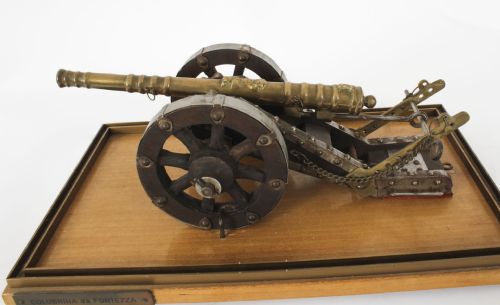
- A historical term describing a long-barreled fortress culverin style. Models replicating this design reflect specific historical artillery types.
- Gribeauval system
- A standardised artillery system introduced in eighteenth-century France. Models in this style feature specific carriage and barrel proportions associated with that design.
Brass Model Artillery: Frequently Asked Questions
What were brass model cannons used for?
Many of these pieces served as desk ornaments, paperweights, or decorative displays in studies and offices. Some functioned as actual signal cannons for maritime use or estate signaling.
Their substantial weight and intricate metalwork made them popular executive toys and conversation pieces for collectors of military history.
How do I date a brass model cannon?
Dating relies on identifying the metal casting quality, wear patterns, and the style of the wooden carriage. Materials such as unpolished oak or mahogany often correspond to specific nineteenth-century manufacturing trends.
Inscriptions, maker marks, or specific artillery styles like the Gribeauval system also help narrow down the period of production.
Are these models capable of firing?
Certain examples designated as signal cannons were built with vented touch-holes intended for firing blank charges. However, most decorative models are scaled representations not meant for live discharge.
Buyers should examine the barrel construction carefully before attempting any operation, as many surviving items are strictly decorative.
How should I clean polished brass and bronze?
Dusting with a soft, dry cloth is generally sufficient to maintain the metal surface without disturbing its patina. Avoid harsh chemical cleaners that strip the aged finish accumulated over decades.
Preserving the natural oxidation helps retain the historical character of the piece.