



Brass Meal Gong Stand
Brass meal gong stand pieces are sturdy frames designed to hold resonant dinner gongs, bringing traditional charm and function to a room.
Brass Meal Gong Stand
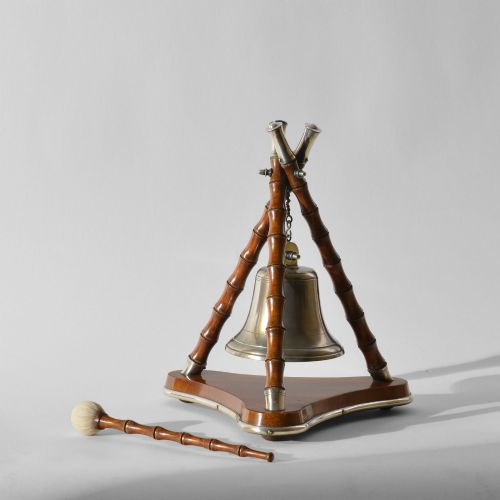
A brass meal gong stand supports a hanging metallic disc used historically to announce dinner service in large country houses. These items appear across the nineteenth century, including Victorian periods, alongside early twentieth-century examples from nineteen hundred and nineteen ten.
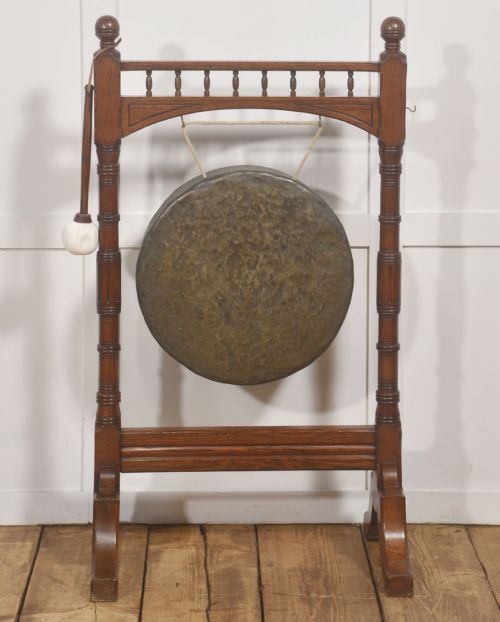
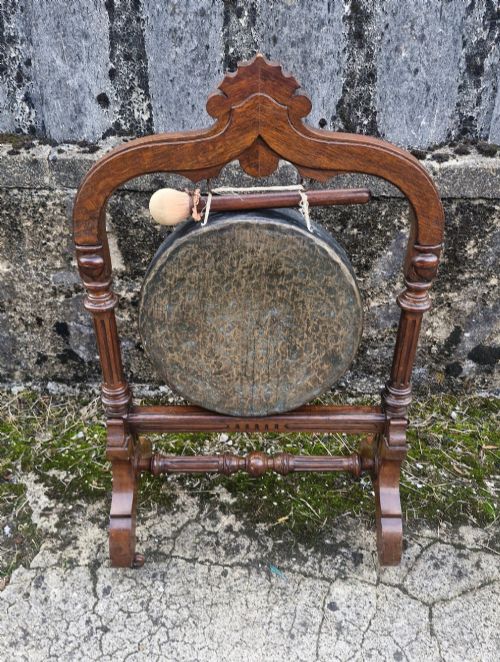
Most examples consist of a timber frame paired with metal components, utilising materials such as oak, mahogany, walnut, wrought iron, and cast iron. The structural forms range from simple wooden frames to elaborate Gothic Revival and Art Nouveau designs.
How they were made
Cabinetmakers constructed the wooden frames using solid timbers like oak, mahogany, and walnut, employing traditional joinery to ensure stability under the vibrations of the gong. Wrought iron and cast iron also provided robust structural alternatives for the supporting frames.
Brass formed the primary material for the hanging gongs themselves, while cord and fabric often suspended the metal disc from the upper crossbar. Metal elements were shaped through casting and hammering to achieve the required resonance and visual detail.
Brass Meal Gong Stand Retail Price Guide 2026
Typical asking prices for brass meal gong stand among the pieces listed under this phrase on Sellingantiques today, from the lower quarter to the upper quarter. They describe what is for sale here now, not the wider market.
Design styles span Victorian, Gothic Revival, Arts and Crafts, and Art Nouveau.
What varies in quality
The refinement of the decorative carving and the choice of timber distinguish standard frames from more ambitious works. Dense hardwoods like walnut and mahogany display greater crispness in stylistic details such as Gothic Revival tracery.
The weight and purity of the metal influence the acoustic resonance of the gong itself. Heavier cast brass and iron components yield a clearer tone and demonstrate superior craftsmanship compared to lighter variants.
The Brass Meal Gong Stand Glossary
- Dinner Gong
- A suspended metal disc struck with a mallet to produce a resonant tone. These objects served to summon household members to meals.
- Gothic Revival
- An architectural and decorative style drawing on medieval forms. This aesthetic is frequently seen in nineteenth-century woodwork.
- Arts and Crafts
- A design movement valuing handcraftsmanship and simple materials. Pieces from this tradition avoid excessive industrial ornamentation.
- Art Nouveau
- A style characterised by flowing, organic lines and natural motifs. It appears on iron and brass components from the turn of the century.
Brass Meal Gong Stand: Frequently Asked Questions
What is a brass meal gong stand?
A brass meal gong stand is a decorative and functional frame built to hold a suspended metal dinner gong. These pieces combine timber or iron structures with striking metal elements.
Historically placed in hallways or dining rooms, they were used to signal the start of meals in large houses. Today, they function as striking decorative furnishings with a distinct acoustic element.
How old are these gong stands?
The available pieces date primarily from the nineteenth century and the Victorian era. Some examples extend into the early twentieth century around nineteen hundred and nineteen ten.
Stylistic cues such as Gothic Revival tracery or Art Nouveau curves help indicate the specific period of manufacture. Oak, walnut, and mahogany frames reflect the prevailing cabinetmaking tastes of these decades.
What materials were used?
Makers utilised a combination of hardwoods and metals to construct these pieces. Oak, mahogany, and walnut form the primary wooden frames, while wrought iron and cast iron provide alternative structures.
Brass forms the resonant gong itself, suspended by cords or fabric from the upper frame. Each material contributes to both the visual presence and the structural integrity of the object.
How do I style a gong stand?
These pieces suit entrance halls, grand living spaces, or large dining rooms where their architectural presence can be appreciated. Their varied styles, from rustic oak to ornate Gothic designs, allow them to anchor traditional interiors.
Placing the stand against a solid wall highlights the timber grain and the metalwork of the frame. The accompanying mallet can rest neatly nearby for occasional use.