





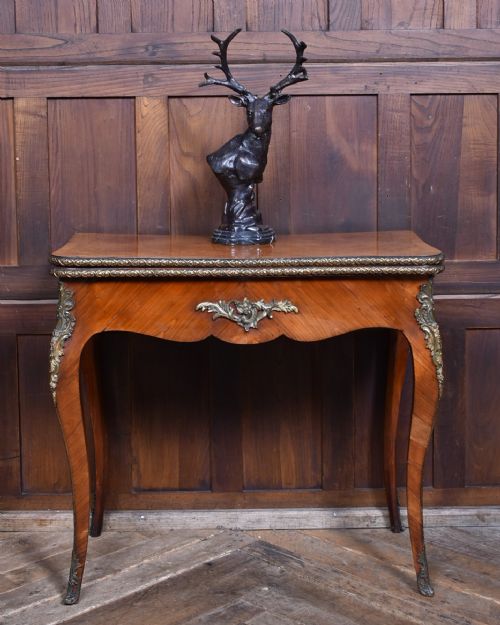

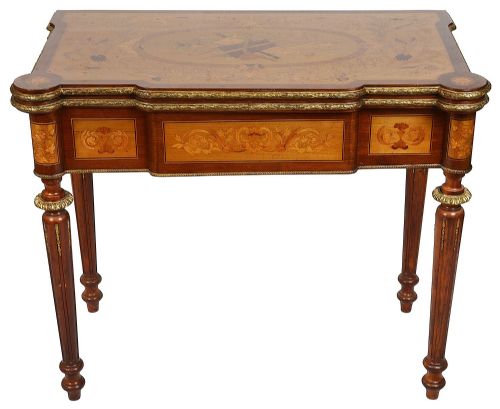
Brass Marquetry Card Table
A brass marquetry card table brings fold-over elegance and intricate metal inlay to the drawing room, combining practical utility with exceptional decorative warmth.
Brass Marquetry Card Table
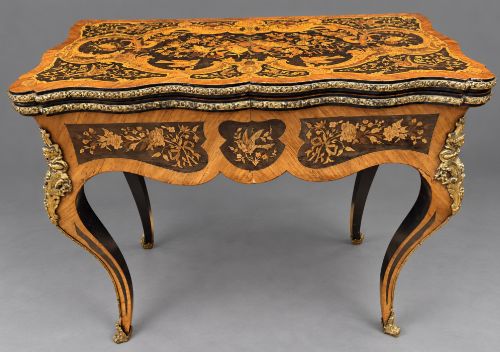
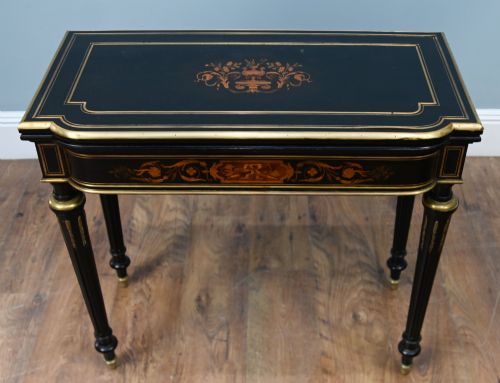
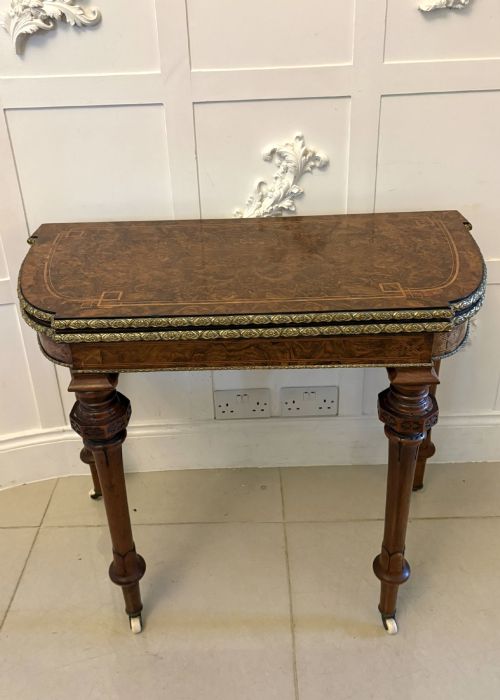
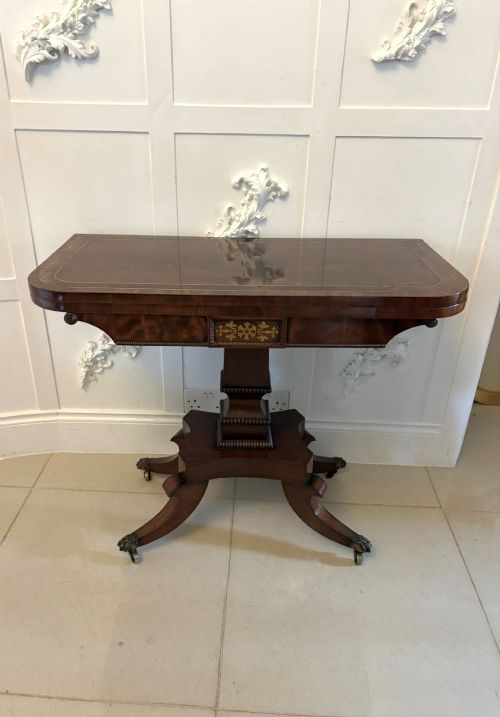
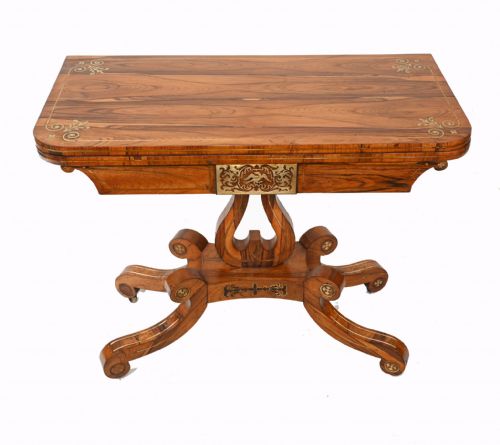
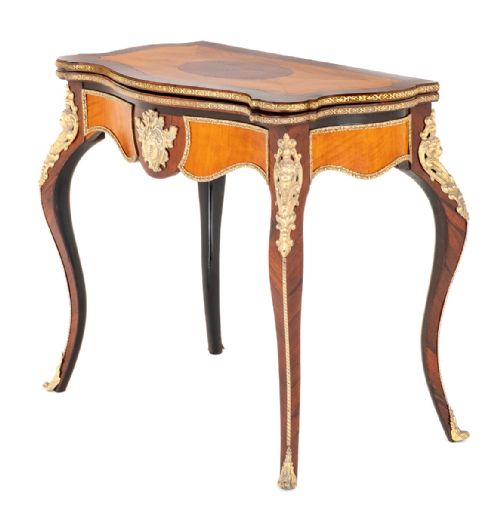
A brass marquetry card table provides a folding surface for evening games while doubling as a console or centre table when closed. The examples gathered here span the Regency and Victorian periods, alongside French Louis XV and XVI revival designs.
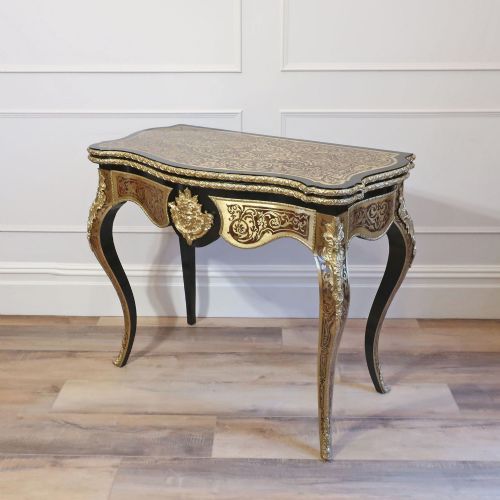
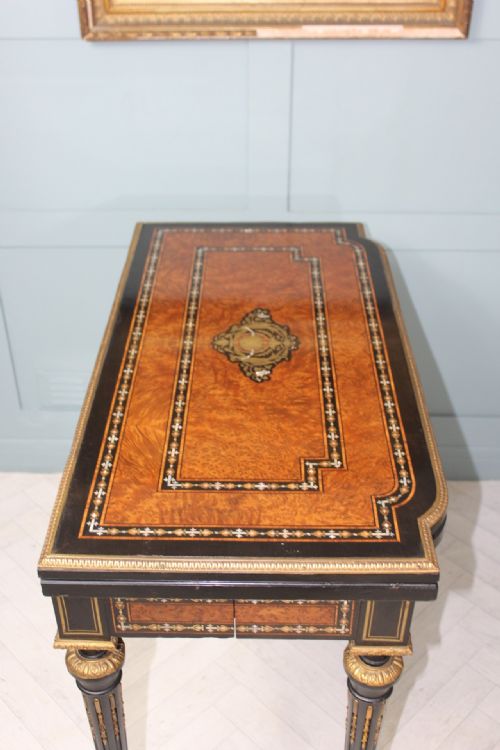
Most pieces combine timber structures with intricate metal work, taking the form of card tables, games tables, and side tables. Buyers encounter English Regency models alongside French Napoleon III and Boulle style interpretations.
The overriding form relies on a fold-over top that reveals a baize-lined interior designed for cards and entertainment. These tables served both social functions and decorative display in formal rooms.
Materials and Technique
Cabinet makers utilised dense exotic timbers such as rosewood, mahogany, walnut, and kingwood as the primary carcase materials. These woods provided stable, rich backgrounds for the contrasting metal decorations.
Craftsmen embedded brass and ormolu into the timber surface to create detailed floral and geometric motifs, often pairing the metal with mother-of-pearl or exotic wood veneers. Boulle techniques involved cutting sheets of brass and tortoiseshell together to produce interlocking patterns.
Brass Marquetry Card Table Retail Price Guide 2026
Typical asking prices for brass marquetry card table among the pieces listed under this phrase on Sellingantiques today, from the lower quarter to the upper quarter. They describe what is for sale here now, not the wider market.
Many a Victorian card player relied on these tables to hide losing hands within secret storage wells beneath the baize.
Craftsmanship and Proportion
Quality rests in the precision of the metal inlay and the tightness of the timber joints around the folding mechanism. Superior pieces maintain crispness in the brass engraving and seamless alignment when the top is closed.
The choice of secondary timbers and the richness of the grain figure, particularly in burr walnut and figured rosewood, separate standard production from exceptional cabinet work.
George Bullock·Maison Millet·Edwards & Roberts
The Brass Marquetry Card Table Glossary
- Marquetry
- Decorative veneer patterns applied to the surface of furniture, forming pictures or abstract designs. Craftsmen cut thin sheets of wood, brass, or other materials together to fit tightly within the design.
- Ormolu
- Gilded bronze mounts applied to furniture for decorative effect. This technique was widely utilised on French revival and nineteenth century salon pieces.
- Boulle
- A method of marquetry using brass and tortoiseshell inlay developed in France. The technique produces contrasting positive and negative patterns across the table surface.
- Cross banding
- A border of veneer laid around the main panel of a top, with the grain running at right angles to the centre. This adds a neat framing effect to the edge.
- Console table
- A table designed to stand against a wall, frequently with legs at the front and brackets securing the rear. Many fold-over card tables function as console tables when closed.
Brass Marquetry Card Table: Frequently Asked Questions
How do I care for the brass inlay?
Dust the surface regularly with a soft, dry cloth to prevent dirt from settling into the engraved brass channels. Avoid modern chemical polishes that might damage the surrounding timber veneer.
Keep the table away from direct sunlight and strong heat sources to prevent the wood from shrinking and loosening the metal elements.
Are these tables sturdy enough for daily use?
While structurally sound, the folding tops rely on hinged mechanisms that require gentle handling. Opening the leaf should be done with care to support the rotating or swinging rear leg.
They function well for display and occasional games evenings, but heavy weights should not be placed on the extended leaf.
How can I tell English Regency from French Victorian?
English Regency pieces often feature clean architectural lines with restrained brass stringing and rosewood or mahogany carcases. French Victorian and Napoleon III examples lean toward heavier ormolu mounts and elaborate Boulle marquetry.
Examining the secondary woods and construction methods provides further clues to the origin of the workshop.
What is underneath the folding top?
Opening the fold-over top generally reveals a playing surface lined with felt or baize. Some versions also feature concealed wells or compartments for storing cards and gaming counters.
The interior timber surfaces often display matching veneer work or plain secondary woods depending on the grade of the table.