





Brass Lion Paw
Brass lion paw supports ground furniture and lighting from the Regency, Victorian, and Georgian eras, offering solid grounding for tables, cabinets, and column lamps.
Brass Lion Paw
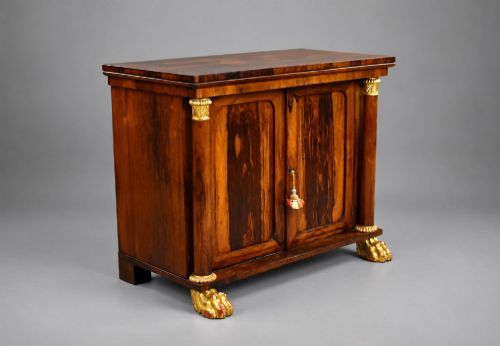
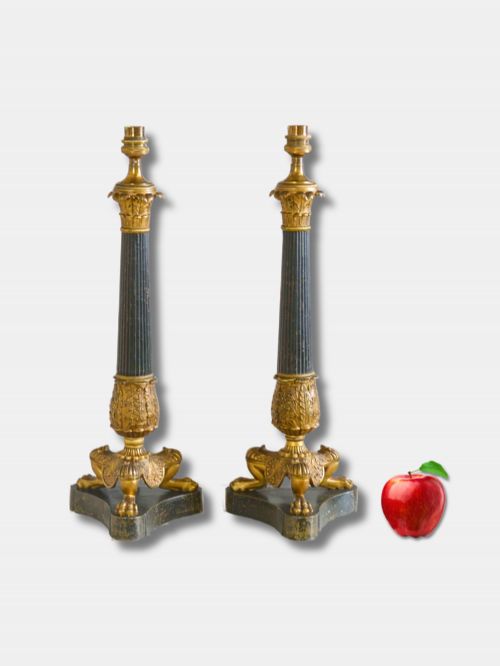
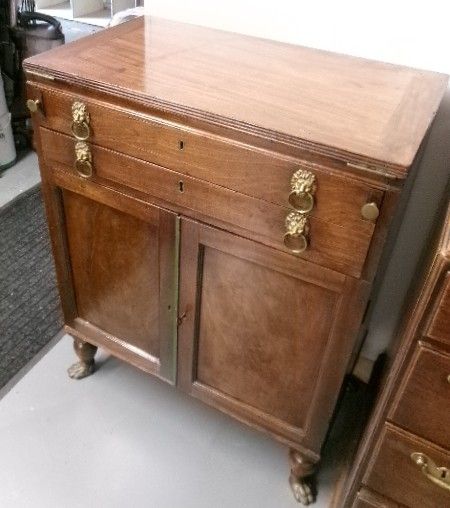
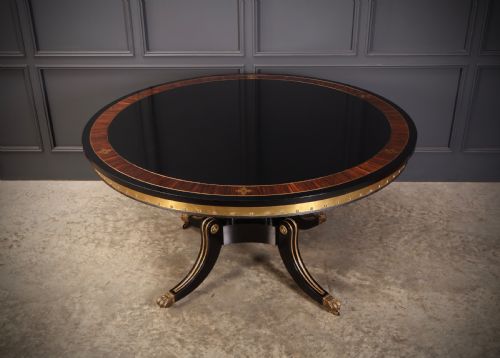
When searching for brass lion paw items, buyers encounter heavy support mounts cast and chased to resemble the foot of a great cat. These details anchor items such as rosewood cabinets, mahogany writing desks, wine coolers, and centre tables.
The objects span periods from the eighteenth century through the Victorian age, utilising styles from Regency to French Empire. They appear on domestic furniture and decorative lighting like column lamps.
Most examples combine the golden alloy with dense timbers including mahogany and rosewood. Others integrate marble, patinated bronze, and giltwood into larger furnishings.
Materials and construction methods
Metalwork relies on casting brass or ormolu to form the detailed claws and fur of the paw. These mounts are then secured directly to the base of furniture legs or lamp columns.
Cabinetmakers mounted these metal feet onto rich woods like mahogany and rosewood, often combining them with brass inlay or ebonised surfaces.
Gilt bronze and ormolu applications appear on lighting and decorative planters, using metalworking techniques that define the French Empire and Regency aesthetics.
Brass Lion Paw Retail Price Guide 2026
Typical asking prices for brass lion paw among the pieces listed under this phrase on Sellingantiques today, from the lower quarter to the upper quarter. They describe what is for sale here now, not the wider market.
Listings feature items from the eighteenth century, the Regency period, and the Victorian era, utilising brass, mahogany, and rosewood.
Understanding quality differences
The crispness of the chasing on the metal paws separates finer examples from plain castings. Superior work displays distinct claws and fur texture rather than smooth, indistinct surfaces.
The integration between the metal foot and the timber leg indicates the level of craftsmanship. High-quality pieces show seamless fitting where the heavy alloy meets dense woods like mahogany or rosewood.
The selection of the underlying materials shapes the overall standard of the piece. Dense primary timbers and heavy gauge cast brass elevate the significance of the item.
A. Solomon·Mack Williams And Gibton
The Brass Lion Paw Glossary
- Ormolu
- Gilt bronze produced by applying a finely ground high-carat gold mercury amalgam to a bronze object. This technique creates a rich golden surface found on nineteenth-century lighting and mounts.
- Regency
- A British design period spanning the early nineteenth century. It draws heavily on classical Greco-Roman motifs, featuring prominent metal mounts and dark woods.
- Centre table
- A freestanding table designed to be viewed from all sides rather than pushed against a wall. These often feature elaborate pedestal bases terminating in heavy metal feet.
- Jardiniere
- An ornamental pot or stand designed to hold plants or flowers. Examples from the eighteenth century utilise heavy metal construction for stability.
Brass Lion Paw: Frequently Asked Questions
What periods feature brass lion paws?
These decorative footings appear across Georgian, Regency, and Victorian items. They also feature in French Empire designs from around eighteen hundred.
Craftsmen utilised these motifs on both furniture and lighting through the nineteenth into the early twentieth century.
Which furniture types use these feet?
Makers placed these cast supports on writing desks, sofa tables, and serving tables. They also anchor heavy rosewood cabinets and round centre tables.
Lighting pieces such as column lamps incorporate the same design to ground tall structures.
How do I care for brass paw mounts?
Maintain the metal surfaces by dusting regularly with a dry cloth. Avoid harsh chemical cleaners that strip the historic patination from the alloy.
Treat surrounding timbers like mahogany and rosewood with appropriate furniture wax to preserve the finish.
Are these mounts always made of solid brass?
Most examples use cast brass or ormolu for the feet and decorative mounts. Some finer lighting and decorative objects employ gilt bronze instead.
The underlying structure varies depending on whether the piece is a timber cabinet or a metal coal bucket.