





Brass Letter Holder
A brass letter holder organises correspondence while bringing period metalwork to a desk or wall.
Brass Letter Holder
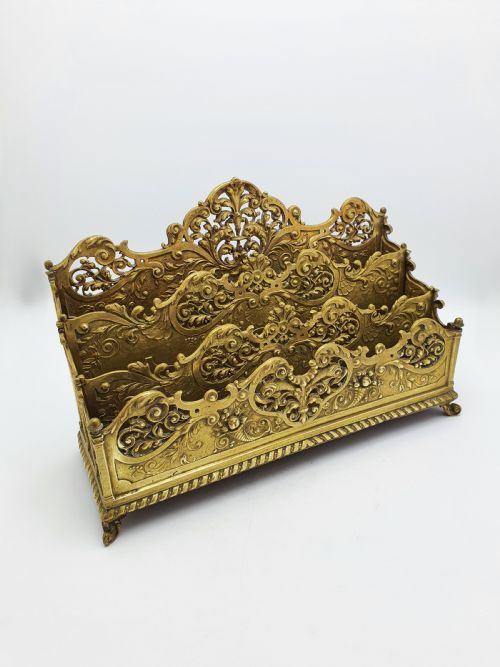
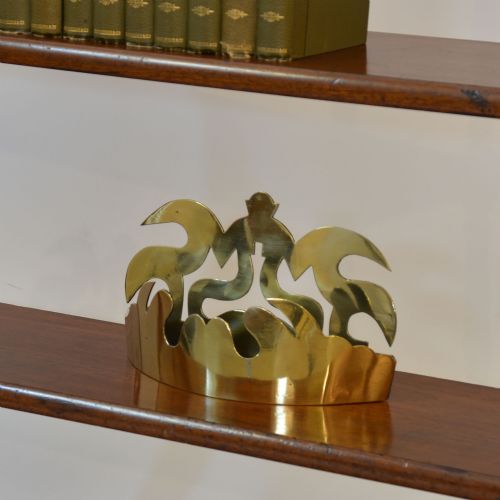
A brass letter holder serves as a desk accessory designed to keep incoming mail sorted and close at hand. These pieces range from simple spring clips and wall pockets to substantial stationery boxes and multi-slot letter racks.
The selections available span from the mid-nineteenth century through the Edwardian era and into the mid-twentieth century, encompassing English, French, and German origins. Common configurations combine metal framework with wooden backplates, glass panels, or leather accents.
Novelty and figural designs appear frequently alongside standard desktop stationery stands. Examples include sporting themes, animal motifs, and commemorative pieces tied to historical events.
How they were made
Foundry methods dominate the construction of these items, utilising cast brass, sheet brass, and copper components shaped into architectural or organic forms. Many incorporate stamped decorative motifs, pierced metalwork, or wire mesh divisions.
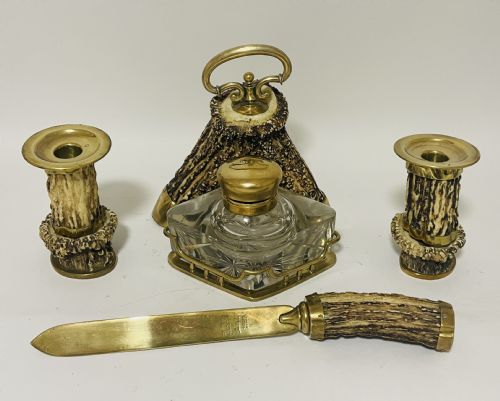
Mixed media construction pairs the metal framework with dense timbers such as oak, walnut, and mahogany. Additional materials like glass, leather, enamel, and carved stone appear as backing boards, panels, or decorative highlights.
Brass Letter Holder Retail Price Guide 2026
Typical asking prices for brass letter holder among the pieces listed under this phrase on Sellingantiques today, from the lower quarter to the upper quarter. They describe what is for sale here now, not the wider market.
Some Victorian desks once hosted mail stands shaped like cricket bats, leaping fish, and mythical figures.
What varies in quality
The standard of finishing distinguishes everyday items from exceptional examples of desk furniture. Heavier casting, crisp detail in figural elements, and robust joinery between the brass and timber components elevate a piece.
Design ambition separates basic stationery receptacles from grand Grand Tour items or signed workshop productions. Pieces retaining registered design marks, specific maker attributions, or complex figural themes demonstrate superior craftsmanship.
William Tonk and Sons·Whitehouse and Son·Maison Jansen
The Brass Letter Holder Glossary
- Letter rack
- A desktop or wall-mounted organiser featuring multiple dividers to separate incoming and outgoing mail. These often take the form of graduated metal arches or wooden slots.
- Stationery box
- A covered desk case designed to hold correspondence paper, envelopes, and writing implements. These frequently incorporate sloping lids and internal partitions.
- Standish
- An inkstand or tray incorporating inkwells alongside provisions for pens, sand, and letters. This traditional desk accessory consolidates writing equipment into a single unit.
- Wall pocket
- A hanging receptacle designed to mount on a wall or side of a piece of furniture. These items keep papers accessible while clearing desktop space.
Brass Letter Holder: Frequently Asked Questions
What is a brass letter holder used for?
These accessories organise letters, envelopes, and notes on desks, tables, or walls. They keep daily correspondence tidy and within reach in studies or hallways.
Historically, they formed part of a gentleman or lady's writing suite alongside inkwells and blotters. Today they serve a similar practical function while displaying period metalwork.
How do I date a brass letter holder?
Dating relies on stylistic clues, manufacturing techniques, and materials. Victorian examples often feature heavy cast brass, rococo revival scrolls, or figural motifs.
Later pieces from the Arts and Crafts movement or Edwardian period introduce cleaner lines, hammered copper, or oak mounts. Registration marks stamped into the metal can also pinpoint the exact year of production.
Are these letter holders purely decorative?
While highly decorative, these items remain entirely functional desk accessories. Sturdy brass divisions and weighted bases allow them to hold modern mail and cards securely.
Many designs incorporate practical additions such as sprung clips for notes or integrated calendar panels. They integrate easily into contemporary home offices or living spaces.
What styles are common in antique letter racks?
Common styles include ornate Victorian rococo revivals, structured Arts and Crafts copper pieces, and Edwardian oak combinations. Novelty items shaped like animals, sports equipment, or historical figures also appear.
French workshops frequently produced elegant mahogany and walnut stationery caddies with pierced brass galleries. Grand Tour souvenirs from the nineteenth century often display intricate architectural casting.