




Brass Knob Drawers
These brass knob drawers bring together practical storage and period character, offering functional furniture fitted with traditional metal hardware.
Brass Knob Drawers
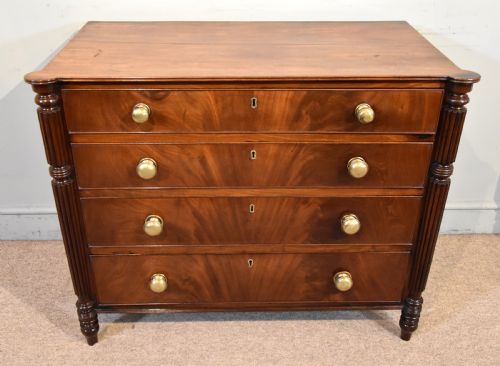
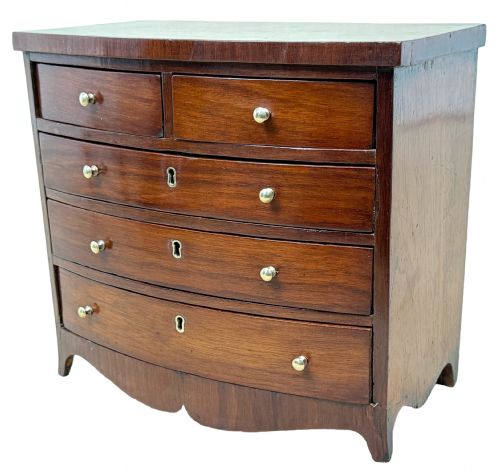
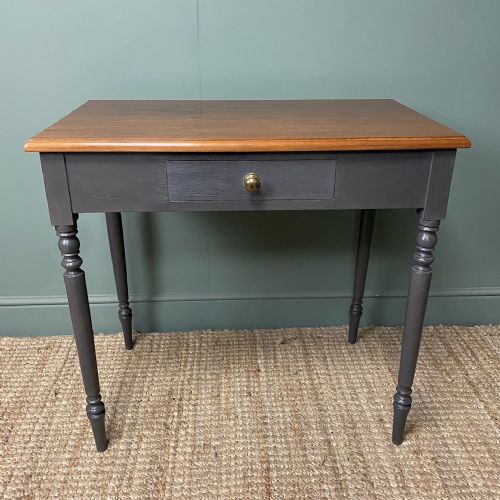
When you search for brass knob drawers, you encounter a selection of period case furniture defined by metal hardware fixtures. The inventory ranges from substantial chests of drawers and partner's desks to compact miniature chests and side tables.
You are most likely to meet mahogany and oak examples from the Georgian, Regency, and Victorian periods. These pieces often feature bow front profiles, multiple graduated tiers, and specialised forms like collectors chests or commodes.
The objects span full-scale domestic storage and smaller miniature items. Each piece relies on turned or mounted brass knobs to operate the internal compartments, connecting the timber structure to metalwork.
Materials and construction
Carpenters built these items primarily using solid timbers like mahogany, oak, pine, and rosewood. Selected pieces incorporate painted finishes, leather surfaces, or inlaid details to ornament the exterior carcase.
Makers integrated brass hardware directly into the drawer fronts, securing turned knobs alongside keyhole escutcheons. Internal components utilised secondary timbers like pine and oak for drawer linings and structural framing.
The listings show pieces spanning the Georgian, Regency, and Victorian periods, constructed from mahogany, oak, pine, and rosewood.
Assessment of quality
The distinction between standard and superior pieces rests in timber selection and the integrity of the original hardware. Superior examples display carefully matched grain patterns across mahogany or rosewood surfaces and retain their period-correct brass fittings.
Construction methods also separate the grades of furniture. Refined pieces show precise dovetail joinery in the drawers and well-proportioned carcase designs, whereas lesser items rely on simpler assembly methods or replaced elements.
The Brass Knob Drawers Glossary
- Bow front
- A convex curved front contour popular on chests and desks during the Georgian and Regency eras. This shape softens the profile of large case furniture.
- Escutcheon
- A protective plate surrounding a keyhole, frequently cast in brass alongside the drawer knobs. It prevents wear to the surrounding timber.
- Partners desk
- A large double-sided desk designed for two people to work opposite one another. These often incorporate numerous drawers fitted with brass handles.
- Miniature chest
- A small-scale model of a full-sized chest of drawers, often used as an apprentice piece or for delicate storage. They duplicate the proportions and hardware of larger items.
- Collectors chest
- A specialised cabinet housing shallow drawers designed to hold specimens or small objects. The internal compartments operate with small turned knobs.
Brass Knob Drawers: Frequently Asked Questions
What periods do these pieces span?
The inventory covers items from the eighteenth, nineteenth, and early twentieth centuries. Georgian, Regency, and Victorian eras dominate the available designs.
Craftsmen during these periods utilised traditional timber and metal techniques. The resulting furniture ranges from formal mahogany chests to painted domestic tables.
Are the brass knobs original?
Many items retain their original turned or cast brass hardware, which developed a natural patina over time. Some pieces feature period replacements that match historical fixing methods.
Examining the metalwork and interior mounting points reveals whether the fittings belong to the original period of manufacture.
How do I identify a Regency chest?
Regency chests typically exhibit classical proportions, mahogany or rosewood veneers, and clean architectural lines dating from the early nineteenth century. They frequently feature bow front configurations.
The inclusion of brass knob handles alongside mahogany-lined drawers serves as a common characteristic of this period.
What woods were used in construction?
Makers relied heavily on dense hardwoods like mahogany and oak for exterior surfaces and structural frames. Pine frequently appears as a secondary timber for internal drawer construction.
Selected pieces also incorporate rosewood veneers, painted timber finishes, and leather inserts depending on the specific furniture type.