

Brass Inlay Console
A brass inlay console brings polished timber and bright metal together into a functional table suited to reception rooms and hallways.
Brass Inlay Console
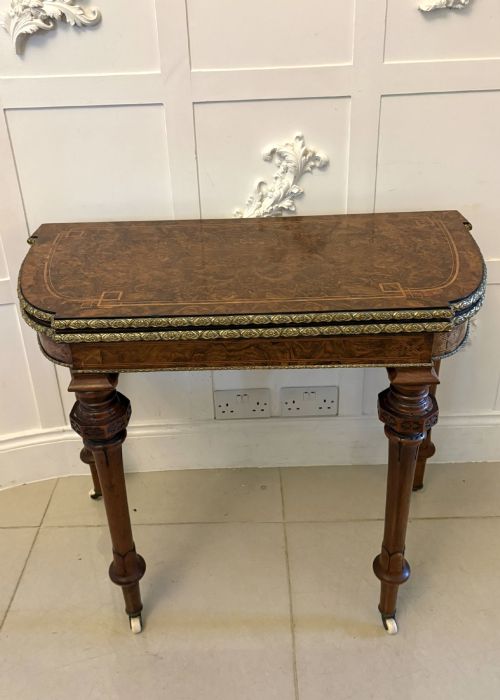
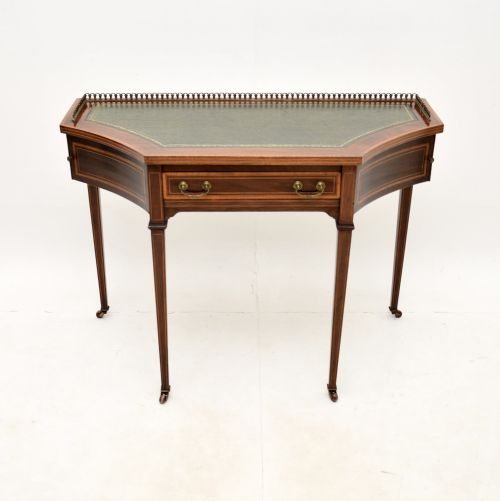
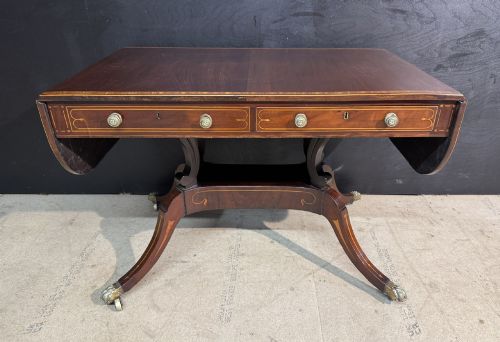
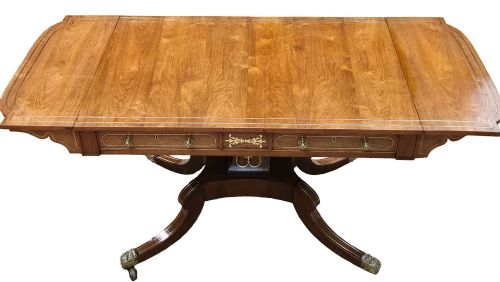
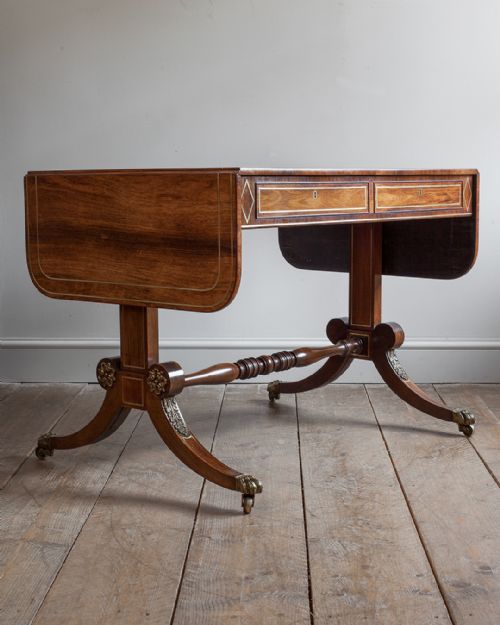
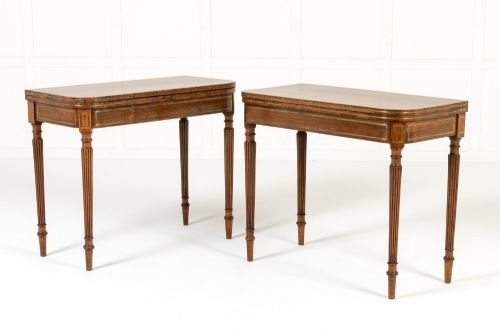
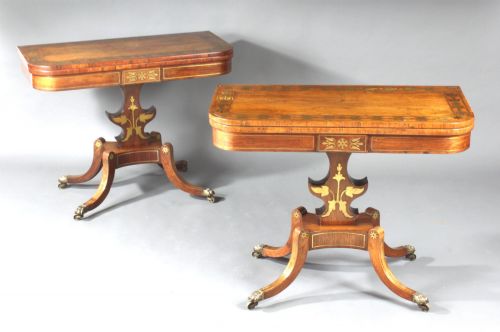
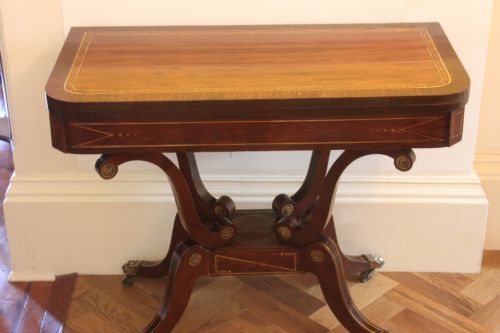
A brass inlay console is primarily encountered as a card table, sofa table, or games table dating from the Regency and Georgian periods through the nineteenth century. These pieces function as side furniture, often featuring fold-over tops designed for cards or writing.
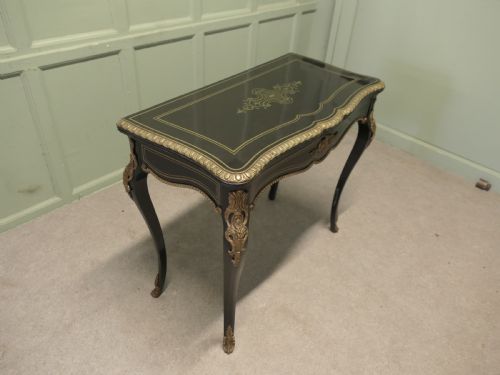
Makers working in the Regency and George III styles frequently utilised rosewood and mahogany as the primary timbers. Examples span English workshops and French influences, including Louis styles and French Empire designs.
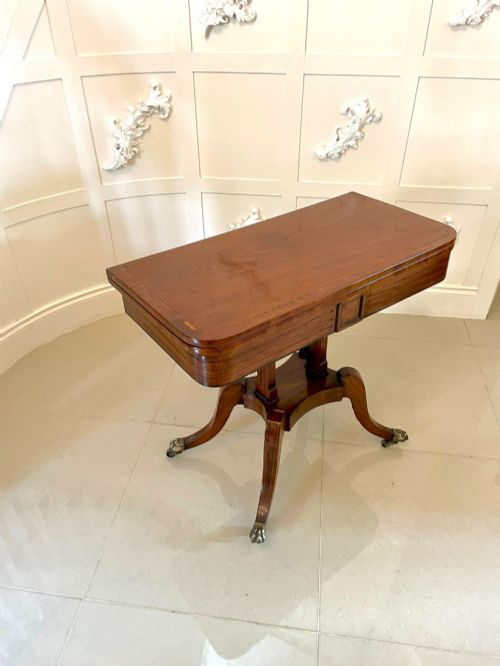
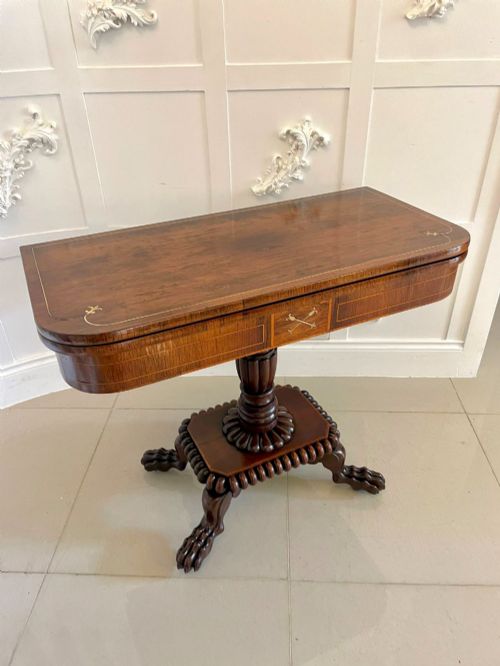
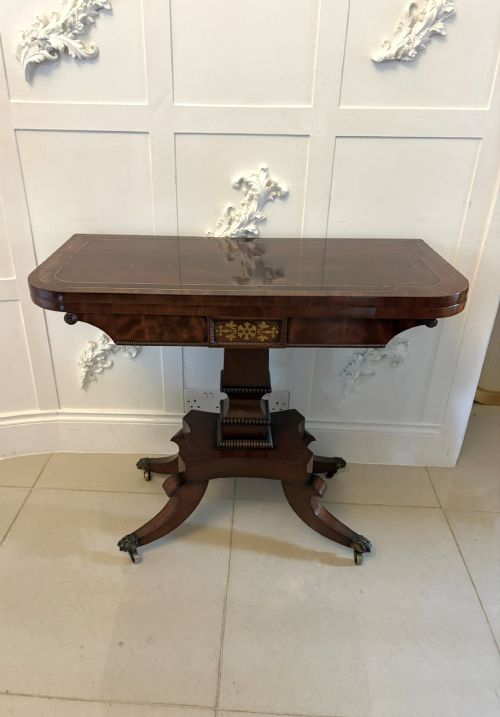
The version most frequently met on this page is the Regency rosewood card table with brass inlay and fold-over top, supported on a pedestal base with castors.
Materials and technique
Cabinetmakers constructed these tables using dense hardwoods such as rosewood, mahogany, satinwood, and walnut, often applying veneers over secondary timbers. Brass strips and mounts were meticulously channelled into the wood surfaces.
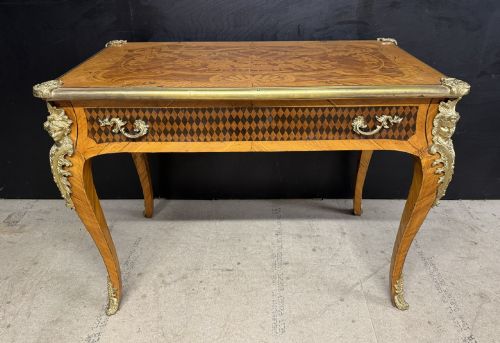
Inlay work required precise hand-cutting of both the brass and the surrounding timber to achieve a flush fit. Ormolu mounts, castors, and sabots completed the structural assembly on finer pieces.
Several tables arrive with hidden folding mechanisms designed specifically to relieve nineteenth-century guests from the anxiety of where to put their whist hand.
Judging quality
The distinction between tiers rests upon the precision of the brass inlay work and the selection of figured timber veneers. Superior examples display tight joins around the brass channels and rich grain patterns in the rosewood or mahogany.
Carved details on pedestals, scroll bases, and the integration of quality ormolu mounts separate standard production tables from cabinetwork attributed to known makers.
George Bullock
The Brass Inlay Console Glossary
- Console table
- A table designed to stand against a wall, frequently fixed or supported by front legs and wall brackets. These serve decorative and display functions in formal rooms.
- Card table
- A small folding table designed for evening card games, typically featuring a baize-lined interior and a rotating or swinging top.
- Ormolu
- Gilded bronze used for decorative mounts and sabots on nineteenth-century furniture. It provides a bright metallic contrast to dark woods.
- Sabot
- A metal fitting applied to the foot of a furniture leg for protection and decoration. Brass sabots match the inlay work on many Regency tables.
- Marquetry
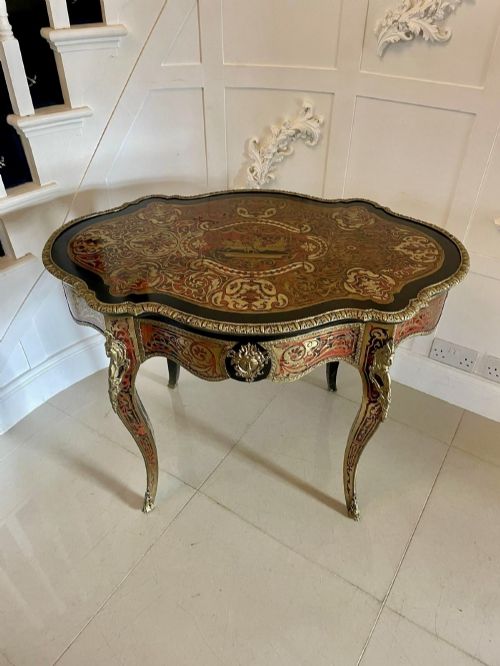
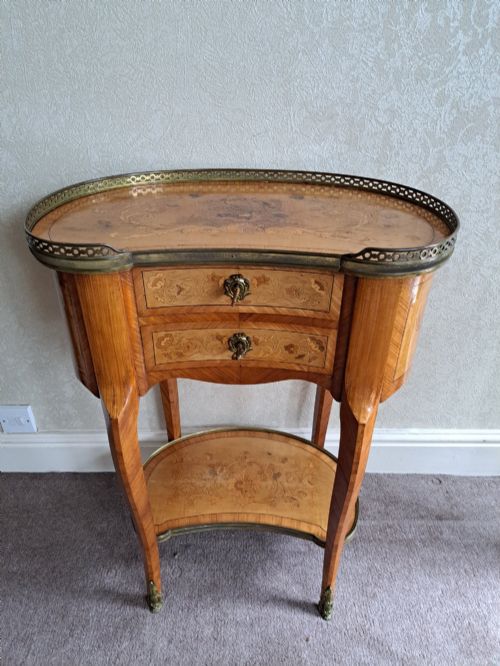
- The art of applying pieces of veneer to a structure to form decorative patterns. This technique appears on French centre tables and bureau plat examples.
Brass Inlay Console: Frequently Asked Questions
What is a brass inlay console?
A brass inlay console is a period table, often configured as a card or sofa table, featuring decorative metal lines set into timber.
These tables date primarily from the Regency and nineteenth-century eras, combining functional surfaces with ornamental metalwork.
How were card tables used?
Card tables remained folded against a wall until required for evening entertainment. Players opened the hinged top to reveal a baize or felt playing surface.
When not in use, the folded top functioned as a side or console table.
Where should I place a console table?
These tables suit hallways, living rooms, and reception spaces where surface space is required against a wall. Fold-over versions can be pulled out and opened when extra space is needed.
Keep them away from direct heat sources to protect the timber and brass inlay.